He left Wall Street and McKinsey to fix the part of healthcare that happens between appointments.
The completion of an EMR encounter isn't the end of a patient's journey, it's just the beginning.
A doctor finishes a visit, types up the note, closes the chart. For most of American medicine, that click is the finish line. Gokul Mohan built a company on the conviction that it is actually the starting gun.
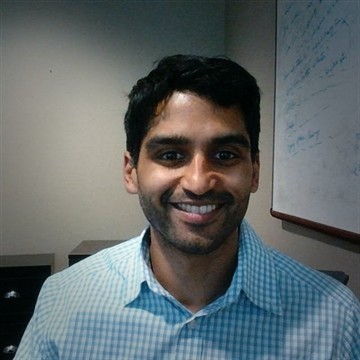
Mohan is the co-founder and CEO of CareHarmony, a Brentwood, Tennessee company that handles the unglamorous, high-stakes work of chronic care management and care coordination for hospitals and health systems. The pitch is deceptively simple: between appointments, patients with diabetes, heart failure, and other chronic conditions are mostly on their own. CareHarmony fills that gap with a blend of around-the-clock clinical staff and machine learning that decides which patient needs what, and when.
The company describes its approach as human-driven and machine-enhanced - nurses and care coordinators doing the calling, the checking-in, the follow-through, with software pointing them at the patients who need attention most. The signature technology carries a name that sounds more like a toy set than a clinical platform: CareBlocks, modular pieces meant to personalize a patient's journey at a scale that hand-built care plans never could.
CareHarmony serves more than 40 hospitals and health systems across over 20 states. In 2022 it raised a $15 million Series A led by Maverick Ventures, with returning backer Nashville Capital Network joining in. The company says 95% of its programs have hit Medicare Shared Savings Program success - the kind of statistic that matters when your customers only get paid if patients actually get better.
Encounter-based care - simply put, it doesn't scale.
What if access to fully coordinated, personalized care could be afforded to every patient, not just 1-5% of the population?
Mohan did not arrive in healthcare by the clinical door. He came through finance and consulting, the two fields that tend to view hospitals as spreadsheets rather than waiting rooms. He started in 2010 as an investment banking analyst at Morgan Stanley, then moved in 2011 to McKinsey & Company as a consultant.
Somewhere in that climb, the analytical view of healthcare collided with a more stubborn observation: the system is built around the encounter - the billable visit, the discrete episode - while patients live their lives in the long, unbilled stretches in between. In 2015 he co-founded CareHarmony to attack that mismatch, and took the CEO seat in 2016.
His academic background reads like a deliberate mashup of his two instincts. At the University of Pennsylvania, he earned a BSE in Finance and Entrepreneurship from Wharton and a BAS in Biomedical Engineering - money and medicine, studied at the same time. It is a rare combination, and it shows up in how CareHarmony talks about itself: equal parts care delivery and unit economics.
In 2022, the Nashville Entrepreneur Center named Mohan and co-founder Stephen Stewart winners of its NEXT Awards "Healthcare Market Mover" category - a hometown nod in a city that has quietly become one of the country's healthcare-services capitals. By 2023, CareHarmony had landed a strategic partnership with Ardent Health Services to deploy its chronic care program across Ardent facilities.
With our CareBlocks platform, it's a complete paradigm shift to focus on novel data sets that just didn't exist before.
Profile compiled from public sources including CareHarmony, BusinessWire, MedCity News, Healthcare IT Today, Axios, Crunchbase, and Ardent Health Services. Facts current as of mid-2026.