Rock Health lives in a peculiar place: close enough to startup founders to hear the hopeful version, close enough to healthcare executives to hear the procurement version, and close enough to market data to notice when the two stories part company. Since 2010, the San Francisco organization has made a business of occupying that gap. It invests in young digital-health companies, advises the enterprises that might buy from them, and publishes the numbers that tell the sector whether the party is starting, ending, or merely moving rooms.
That description can sound like three companies stapled together. In practice, the arrangement is the point. Rock Health Capital backs pre-seed, seed, and Series A founders. Rock Health Advisory sells strategy consulting and an insights membership to companies across biopharma, medical devices, health systems, insurance, technology, retail, and private equity. RockHealth.org, an independent nonprofit in the same family, supports equity-centered innovators and health needs that ordinary market incentives may neglect.
The shared mission is broad - transform health for all humanity and bring greater humanity to healthcare - but the daily work is specific. Should a pharmaceutical company launch a patient-facing service? Which startup could fill a capability gap for a health system? Is a market category large enough, mature enough, and purchasable enough to enter? Is a founder seeing a neglected need before everyone else, or simply selling into a category with no viable buyer? Rock Health gets paid, directly or indirectly, to make those questions less foggy.
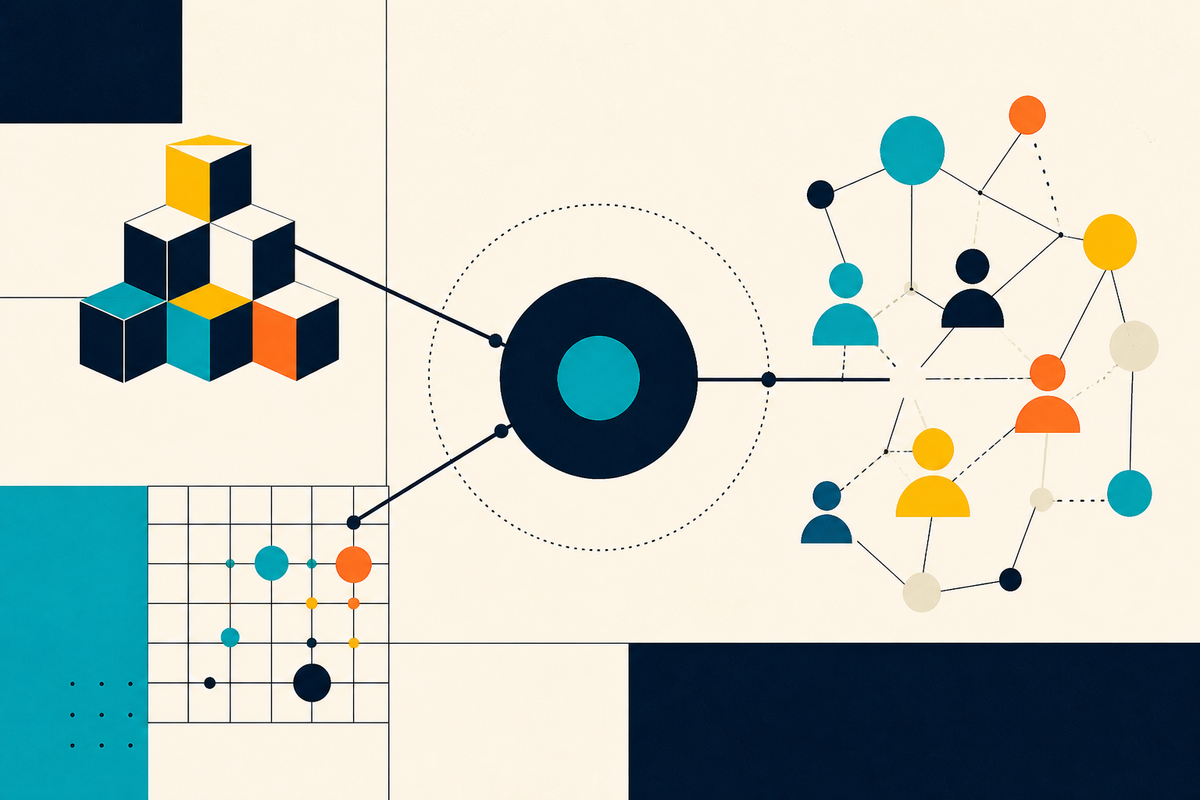
The product is a better decision
Rock Health's advisory menu reads like the missing middle between a boardroom thesis and an operating plan. Its consultants assess markets and competitors, test products with buyers, providers, and patients, design go-to-market strategies, scout partners or acquisition targets, run due diligence, and build accelerators or internal innovation programs. Custom research supplies the evidence when no clean benchmark exists.
The membership business makes that intelligence continuous. Subscribers get access to proprietary data on venture funding, acquisitions, partnerships, companies, and consumer behavior, plus expert analysis and curated connections. The public sees quarterly funding reports and consumer surveys; members can ask narrower questions of the underlying machinery. That is a familiar information-business pattern, but Rock Health's subject matter makes it unusually valuable. Healthcare categories are hard to define, the buyer is often not the user, and a promising clinical workflow can still die in security review, reimbursement, integration, or budgeting.
Capital
Early checks and company-building support for digital-health founders.
Advisory
Strategy, proprietary intelligence, validation, and partner selection for enterprises.
Equity
Nonprofit programs for innovators and health needs the market routinely underserves.
Featured advisory clients include CVS Health, GSK, Labcorp, Mayo Clinic, Pfizer, Samsung, Sutter Health, athenahealth, Boston Children's Hospital, and Wolters Kluwer. These are not customers looking for another generic trends presentation. They are organizations with regulated products, long sales cycles, clinical stakeholders, and expensive ways to be wrong. For them, a recommendation becomes useful only when it survives contact with purchasing behavior and care delivery.
“When everyone has AI, the technology stops being the differentiator.”Rock Health, Q1 2026 market analysis
A 2026 engagement with Astellas's Rx+ Business Accelerator shows the work in miniature. Astellas was considering a patient-facing digital support concept for post-acute specialty care. Rock Health did not merely estimate a market. It examined clinical reality, buyer and patient demand, adjacent business models, partnership options, and the route to commercialization. The value was permission to proceed with a clearer plan - or to stop before optimism acquired a payroll.
A category grows up around its cartographer
Rock Health began before “digital health” was the roomy industry label it is today. Halle Tecco and Nate Gross founded the organization in 2010 while at Harvard Business School. Its first startup class arrived in 2011 for a five-month program that offered a $20,000 grant, San Francisco office space, mentorship, and access to medical, legal, design, and business expertise. The premise was simple: software entrepreneurs needed a guide to an industry whose customers, regulators, and incentives looked nothing like consumer technology.
By 2013, Rock Health had increased the funding offer to $100,000 and moved toward year-round applications. Eventually, the accelerator became an institutional venture fund. The organization reported in 2021 that it had reviewed more than 9,000 pitches and that its portfolio companies had attracted more than $4 billion in follow-on capital. The original service - helping founders cross healthcare's moat - remained. The financial structure grew up.
Research became the connective tissue. Rock Health built databases that classify a company not only by what it calls itself, but by value proposition, technology, clinical indication, customer, and end user. That last distinction matters. A patient may use a service paid for by an employer, insurer, hospital, or drugmaker. Confuse adoption with purchasing and a generous total-addressable-market slide can become expensive fan fiction.
This taxonomy work is less visible than a demo day, and possibly more durable. Public reports make Rock Health legible to the entire market. Proprietary access supports subscriptions and consulting. Deal data improves investment context. Founder and enterprise conversations reveal where the classification system is missing something. Each activity supplies the next one with better questions.
From evangelism to filtration
Early Rock Health had to persuade investors that healthcare software deserved a category. Today's challenge is filtering an overgrown one. In 2023, U.S. digital-health startups raised $10.7 billion across 492 deals, the lowest annual dollar total since 2019. The market recovered unevenly: 2025 reached $14.2 billion, but Rock Health called it a year of “haves and have-nots.” In the first quarter of 2026, $4 billion flowed across 110 deals, and 12 rounds of at least $100 million captured 59 percent of all capital.
The more revealing 2026 decision was methodological. Rock Health stopped reporting AI-enabled startups as a distinct financing category. Artificial intelligence had become too common to separate meaningful signal from background noise. If every serious pitch includes AI, the important questions move elsewhere: Does the product sit inside a real workflow? Can it access the right data? Who is accountable when it fails? Is distribution defensible? Do the economics improve after implementation?
That shift captures where Rock Health fits in the market. Generalist venture firms can write larger checks. Global consultancies can deploy larger teams. Financial-data platforms can cover more industries. Accelerators can offer tighter cohorts. Rock Health's difference is the combination: sector-specific capital, a buyer-facing advisory, proprietary longitudinal research, public credibility, convening power, and a nonprofit designed around overlooked needs. It can observe both startup supply and enterprise demand without pretending they naturally match.
The awkward work after the announcement
Nowhere is that gap clearer than partnerships. Rock Health counted more than 2,000 digital-health partnerships from 2020 through 2024 - more than one per day. Yet a signed agreement is not a functioning product, much less a return on investment. In a 2024 workshop with CVS Health Ventures, Rock Health brought roughly 50 enterprise clients and startup leaders together to examine what happens after the cheerful press release.
The answers were operational: set ownership, define success, prepare workflows, align incentives, and keep enough flexibility to change course. This is not glamorous advice. It is also where healthcare innovation tends to become real or quietly expire. A pilot can impress executives and still burden clinicians. A consumer app can delight users and lack a payer. A partnership can create reach and destroy unit economics. Rock Health's consulting business exists because “interesting” and “implementable” are not synonyms.
The nonprofit lane applies a similar realism to equity. RockHealth.org's Innovation Fellowship supports U.S.-based, pre-seed through Series A founders whose work is shaped by lived experience and serves underserved populations. The nine-month program offers leadership support, market awareness, network access, and entry to Rock Health convenings. The premise is not that proximity guarantees a good company. It is that founders closest to neglected problems often lack equal access to the rooms where capital, distribution, and recognition circulate.
Even the culture allows one small wink. Rock Health Advisory's public team roster is full of researchers, consultants, operators, and client-experience specialists - plus office dogs bearing titles such as “Bark Strategy Specialist” and “Research Fellow, Chew Toys.” It is a modest joke, but a telling one. The company works in a sector of clinical risk, regulatory constraint, and spreadsheet seriousness. Someone still remembered that institutions are occupied by humans.
A map, not a magic wand
Rock Health cannot make a hospital buy faster, make a reimbursement code appear, or turn a mediocre product into a clinical necessity. What it offers is a better map: where money is concentrating, how consumers are behaving, which buyers have an unmet need, which partners fit, and what assumptions deserve an uncomfortable question. Founders can approach its fund. Enterprises can buy focused strategy or continuous intelligence. Equity-centered founders can enter the nonprofit's programs. The broader market can use its public research to replace anecdotes with proportions.
The model's cleverness lies in repetition. A fund sees what builders believe. An advisory sees what buyers will approve. A research operation measures what actually happened. A nonprofit looks for the people and problems those systems exclude. None produces certainty. Together, they produce pattern recognition - the kind earned by watching the same difficult market from several angles for 15 years.
Keep exploring
Rock Health's own channels offer the most direct route into its current investment thesis, advisory work, datasets, market commentary, interviews, and founder programs.