food-safety
(24)
Before lunch, a little cross-examination
IEH Laboratories and Consulting Group tests the food, questions the label, and helps factories act on the answer. Its most useful trick is making evidence arrive while there is still time to change what ships.
Logile, Inc. and the hidden arithmetic of a supermarket
A supermarket sells dinner, but runs on thousands of small decisions. Logile connects the forecast, the shift and the fresh-food counter so those decisions can finally agree.

Little Spoon turned a lost shelf into a seat at the family table
A stalled supermarket deal sent Little Spoon straight to parents. Their replies helped turn fresh baby purées into a business that now follows children from the first bottle to the lunchbox.
Intertek Alchemy and the trouble with “trained”
A worker can pass a quiz and still get the job wrong. Intertek Alchemy has built a business around the distance between knowing the answer and doing the work.
Checkit wants to catch the fridge before it fails
Behind the cold doors of hospitals, laboratories and supermarkets, Checkit turns readings into jobs people can act on. Its next test is making that everyday usefulness pay.
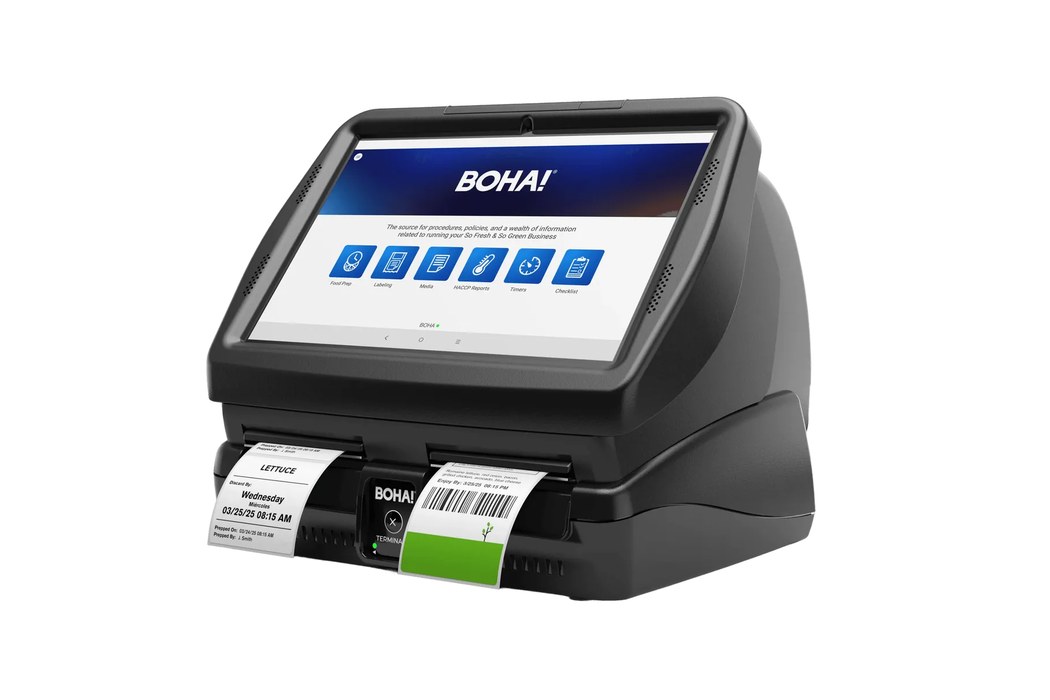
TransAct Paid $3.55 Million to Stop Renting Its Software Future
The 30-year-old printer maker built a useful software business on code it did not control. Now it owns a perpetual license, runs BOHA! on Azure, and is weighing what to do with the casino unit that still pays most of the bills.
How Egg Farmers of Canada Runs a 937 Million Dozen-Egg Balancing Act With 85 People
It does not own the hens, grade the cartons or sell you breakfast. It runs the rules, forecasts and trust marks that help 1,270 regulated farms keep a perishable national market supplied - even when disease, demand and trade all move at once.
Dairy Farmers of Ontario Runs a $3.1 Billion Milk Machine - Here's the Simple Brand Playbook Marketers Can Steal
Behind the friendly blue Milk logo is a regulated operating system that moves more than 3.1 billion litres a year. Its playbook mixes quotas, quality tests, tanker routes, Minecraft lessons and a patch on one of hockey's most scrutinized sweaters.
The Lab Test That Found Its Market in Cannabis - Then Went Hunting for Salmonella
PathogenDx spent years turning a three-dimensional DNA microarray into a commercial test. Cannabis labs supplied the opening; poultry processors may supply the scale.
Ryp Labs Built a Sticker That Can Double Fruit's Shelf Life - Then Learned Where Waste Actually Hurts
A Malaysian fruit-stall problem became a Seattle biotech company, an $8.1 million round, and a lesson most deep-tech founders learn late: the best market is not always the biggest one - it is the one already paying for the pain.

The AI Startup Teaching Machines to Read Matter - Before the Lab Calls Back
HyperSpectral began with a three-hour COVID testing line and a failed ad-tech bet. Now it is building a software layer that promises to turn light into answers - across blood samples, bioreactors, food lines and defense supply chains.

The Chocolate Maker That Burned Down, Then Went Sugar-Free
A five-alarm fire took Barchemy's main plant in 2022. Three years later the Donora, Pennsylvania ingredient shop runs three facilities, quietly supplies the chocolate inside better-for-you bars, and has private equity money behind it.
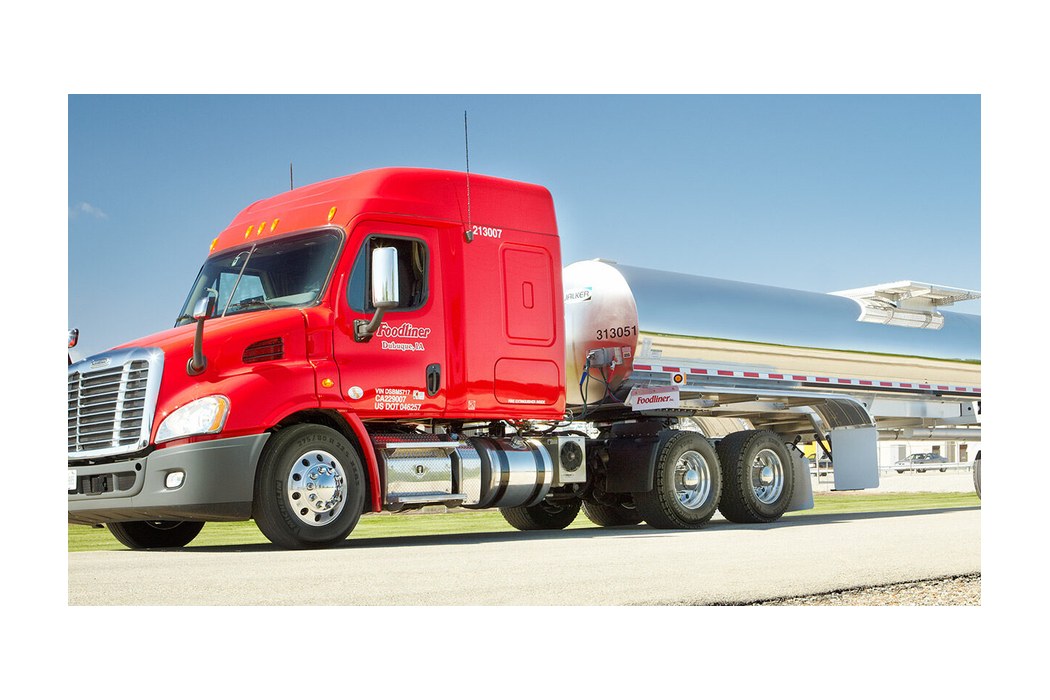
The Trucks Behind the Ingredient List
Flour, sweetener and vegetable oil do not arrive at a factory by magic. Foodliner built a continental business around the sanitary tanks, careful handoffs and local terminals that keep the ingredient economy moving.
What Chefs Want!
A one-van produce hustle in Louisville turned into a 16,000-restaurant food-distribution machine by doing the one thing the national giants would not: picking up the phone and asking the chef.

US Foods
The trucks are the boring part. The second-largest food distributor in America is really a menu consultant, a private-label factory and a fintech-for-restaurants wearing a delivery company's coat.

Smithfield Foods
Smithfield Foods is betting that the future of pork belongs to the company that can control the animal, the factory, the brand and the refrigerated truck - then make all four work as one.

ProfilePrint - AI-driven Ingredient Quality Platform
ProfilePrint is a Singapore-based B2B platform that turns the molecular signature of a food ingredient into a digital fingerprint and uses AI to predict its identity, origin and quality within seconds. Built on patented digital food Identity-as-a-Service (IDaaS) technology, it pairs proprietary near-infrared hardware with custom machine-learning models so agribusinesses can grade coffee, cocoa, tea, dairy, oils and other ingredients without slow, subjective lab work. Founded in 2017 by Alan Lai, the company is deployed across roughly 50-60 locations on six continents and counts industry giants such as Cargill, Olam, Louis Dreyfus and Sucafina as investors and customers.
Oxipital AI
Oxipital AI is a Bedford, Massachusetts company building AI-enabled machine vision systems for food processing, agriculture and consumer-goods manufacturing. Emerging in 2024 from the rebrand of Soft Robotics after that company sold its gripper hardware line to Schmalz, Oxipital AI now centers on its V-CORTX vision platform and VX2 hardware, which use synthetic data and computer vision to handle quality inspection, foreign-object detection, yield optimization and vision-guided robotic picking in high-variability production lines.
RegASK
RegASK is a Singapore-based regtech company building an agentic AI regulatory intelligence platform for life sciences and consumer products teams. It monitors regulatory change across 160+ markets, pairs autonomous AI agents with a global community of 1,800+ regulatory experts to validate insights, and automates the workflows that turn regulatory updates into compliant action. Founded in 2018 by Caroline Shleifer, the company raised a $10M Series A in 2022 and in 2025 became the first vertical regulatory intelligence platform certified to ISO/IEC 42001 for AI management.

AEssenseGrows
AEssenseGrows is a Silicon Valley precision AgTech company that builds automated aeroponic 'SmartFarm' platforms for commercial indoor growers. Founded in 2014 by Robert Chen, the company pairs its AEtrium aeroponic hardware with Guardian Grow Manager software and Aerix LED lighting to deliver zero-pesticide, sensor-controlled cultivation - claiming up to 40% faster plant growth and repeatable, data-logged 'grow recipes' for cannabis and fresh-produce producers worldwide.
Clear Labs
Clear Labs is a San Carlos, California genomics company that builds Clear Dx, a fully automated next-generation sequencing platform. It turns whole genome sequencing - normally a slow, expert-heavy lab process - into a push-button diagnostic used by food manufacturers and public health labs to detect pathogens like Salmonella and Listeria, characterize SARS-CoV-2 and TB, and identify bacteria and fungi from clinical specimens, often with next-day results.
FloVision Solutions
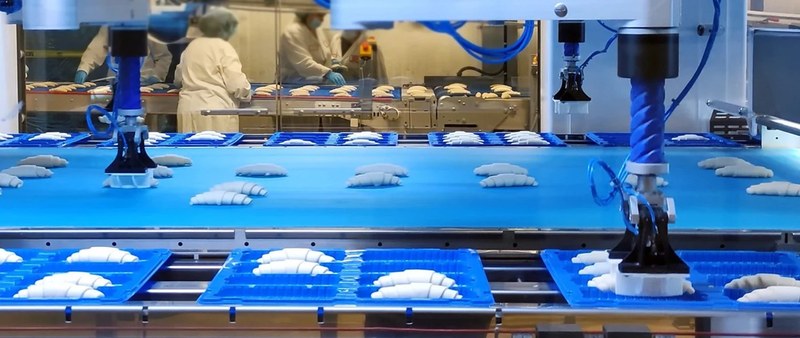
FloVision Solutions builds AI-powered sensors that bolt onto food processing lines to measure yield, monitor quality, and track staff performance in real time. Founded in 2020 by Rian McDonnell and Elise Weimholt, the South Bend, Indiana company helps beef and poultry processors recover lost yield and cut waste at the source. Its compact vision, depth, and load-cell sensors have scanned over 23.2 million kilograms of food across North America, Europe, and Australia, with customers reporting up to 1.5% yield recovery and as much as 15x ROI. In July 2025 it raised an $8.7M Series A led by Insight Partners.
Wobot AI
Wobot AI is a video intelligence company that turns the cameras businesses already own into an operational analyst. Its AI-first SaaS platform plugs into existing CCTV systems to monitor standard-operating-procedure compliance, food safety, drive-thru speed of service, and loss prevention across restaurants, retail, manufacturing, hospitality, and pharma. Founded in 2017 and backed by Sequoia/Surge, Wobot helps multi-location operators cut the cost of manual monitoring and convert raw video feeds into actionable, real-time business insights.
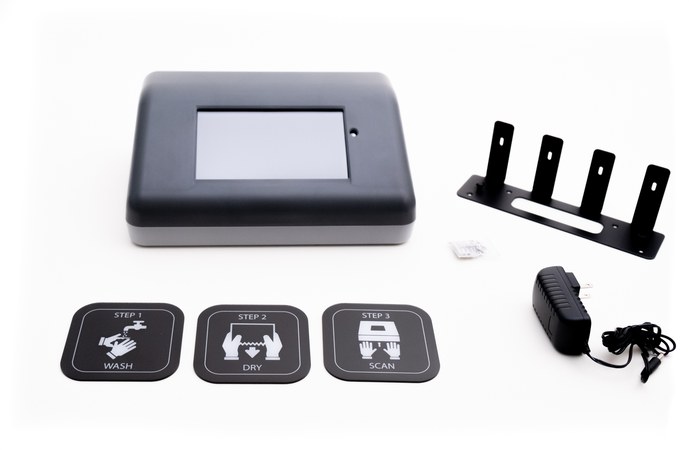
PathSpot
PathSpot is a New York-based health and safety company for the food service industry. Its flagship HandScanner uses visible-light fluorescence spectroscopy to detect invisible contaminants on employees' hands in about two seconds, flagging the molecules that carry norovirus, E. coli, Salmonella, Listeria and Hepatitis A. Around that scanner the company built SafetySuite, a connected hardware-and-software platform covering temperature logging, digital task lists and food labeling. PathSpot operates in more than 10,000 food service locations worldwide.