A bag of spinach can look perfectly innocent. In 2006, an E. coli outbreak associated with bagged spinach made that innocence difficult to trust. Costco subsequently required its fresh-greens suppliers to bag their products and hold them while testing took place. Lunch acquired a waiting room. IEH Laboratories and Consulting Group belongs to the business behind that pause: finding out what food contains before the answer becomes somebody else’s emergency.
The story in three bites
- IEH combines food testing with advice on how factories should respond.
- Its work covers microbes, misleading ingredients and chemical contaminants.
- The practical lesson: connect the result to a decision before food ships.
Three cents, and a different clock
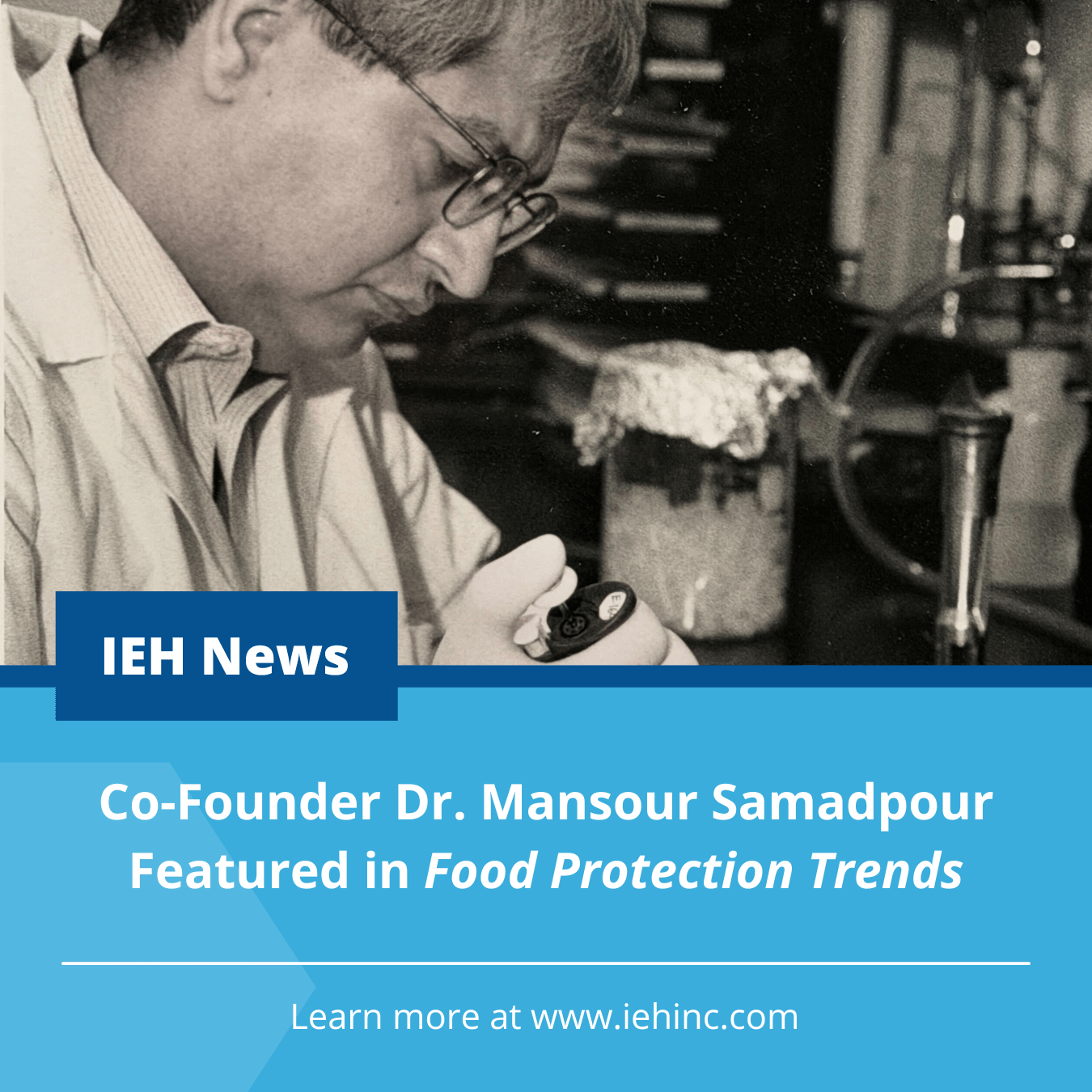
There is a small economic argument hiding inside the salad bag. A Bloomberg report archived in 2015 described an Earthbound testing program designed by IEH co-founder Mansour Samadpour as adding three cents per bag. That historical figure belongs to a particular program. Yet it makes the tradeoff wonderfully tangible: a modest extra cost, multiplied across production, purchased another chance to intercept trouble.
Historical added cost per bag for the Earthbound testing program. A reported estimate, not a current IEH price.
IEH was founded in 2001 by Dalia Alfi and Samadpour. It remains family-owned and operated, growing through acquisitions as well as its existing operations. Its published mission concerns efficient, sustainable production of wholesome food. The catalog expresses the practical ambition with unusual economy:
“Our goal is to facilitate production, not hinder it”IEH service catalog
This is a delicate assignment. Production managers want throughput. Food-safety teams need defensible answers. IEH offers microbiology testing with an advertised turnaround of one to five days, depending on the analysis. The clock therefore belongs in the purchasing conversation alongside the method. An answer has to arrive while somebody can still use it.
The label takes the witness stand
Some problems arrive wearing an excellent label. Fish can be misidentified; a meat product can contain an unexpected species; a botanical ingredient can be something other than the promised plant. IEH’s authenticity services investigate those identities through analytical testing. Stable isotope analysis adds another line of inquiry, examining chemical signatures relevant to adulteration and origin.
The company announced expanded honey testing in April 2026 and juice testing in August. For juice businesses, the offer includes checking for added water or sugar syrups, alongside microbiology, composition, residues and shelf-life work. Producers, importers, retailers and brand owners are the intended buyers. Here, the laboratory supplies evidence for promises that marketing has already made.
Chemical contamination widens the brief further. In December 2024, IEH announced a PlasticList collaboration testing nearly 300 everyday foods for phthalates and bisphenols. That project illustrates a different customer need: measuring substances that cannot be spotted by looking more closely at the plate.
A swab needs an address
A factory result becomes more useful when it has a location. IEH’s MicroMap software places sample sites and test results on a facility floor plan. It integrates laboratory services with recurring sampling, alerts and reporting. A manager can follow patterns through the building rather than interrogate a stack of disconnected reports.
How a result becomes a response
- 01MapLocate sample sites
- 02SampleCollect on a schedule
- 03ReviewConnect results to places
- 04ActInvestigate and correct
IEH also offers Process Control Testing. It examines broad microbial groups and generates a proprietary Process Control Index. Higher scores generally indicate greater biodiversity; thresholds can flag increased process risk. The company provides statistical process control charts without additional charge to facilities using the test. The index supplies a signal to investigate, rather than a universal verdict on safety.
When the question becomes where contamination came from, molecular epidemiology enters. IEH lists whole genome sequencing among its methods for comparing isolates, tracking supplier connections and investigating outbreaks. Matching evidence can narrow an investigation; unrelated isolates can help eliminate a suspected connection.
Buying a result, borrowing a brain
The business model follows the problem. Manufacturers buy laboratory analysis, technical consulting and training; ongoing monitoring creates reasons to return. IEH advertises more than 100 locations worldwide. Its consulting services cover sanitation, process validation, allergen controls, recalls and regulatory support. A customer can ask both what the sample shows and what the plant should change.
The advisers explain part of the appeal. Donald Zink, who leads food and regulatory compliance, previously served as an FDA chief scientist. Executive vice president Craig Wilson spent more than two decades at Costco overseeing quality assurance and food safety. On October 5, 2026, IEH added former FDA import-operations leader Dan Solis to its technical team.
Eurofins offers overlapping food testing and consulting services. IEH’s particular combination of its own monitoring software, process-control approach and specialist advisers gives buyers concrete features to compare. The sensible shortlist asks which laboratory covers the method, which accreditation scope applies, and which adviser understands the production process.
From the petri dish to the coffee bean
Recent acquisitions stretch the company’s reach. In January 2026, IEH announced the purchase of Switzerland’s QualySense, whose QSorter inspects agricultural products bean by bean. In August it announced Tekran, a Toronto manufacturer of ultra-trace mercury instruments. These additions bring inspection and measurement equipment into the wider group.
Environmental testing also matters. In September 2026, group company Nautilus Environmental announced accreditation for two aquatic toxicity methods, including one using rainbow trout gill cells. The portfolio now follows questions from food ingredients into the environments around production.
The useful pause
A manufacturer can copy the discipline: define the question, choose a suitable test, plan the sampling and decide who acts on the result. Holding product requires enough time and operational control to make the hold meaningful. Sparse sampling, an unsuitable method or a truck already dispatched can defeat the intention. A negative sample speaks for the analysis performed, not every corner of a batch.
That is the interesting thing about IEH. It sells ways to examine food, and expertise for the moment examination becomes inconvenient. The salad may look ready. The person responsible for releasing it needs something more persuasive.
Follow the questions
Watch the work
▶Samadpour on food safetyCNNMoney interview↗▶Discover the World With WatsonWatson PCR product video↗▶Inside the Seattle lab expansionIEH laboratory video↗