At Kisko, a Canadian maker of freeze pops, training had become a job within the job. Its operations leader described long days spent delivering instruction; recordkeeping required the equivalent of one and a half full-time employees. The factory was producing treats. Alongside it ran a smaller factory producing proof that people had been taught how to produce treats.
That second factory is where Intertek Alchemy earns its living. It sells training courses and learning software to frontline employers, then follows the lesson onto the production floor. Its central question is wonderfully awkward: when you say someone is trained, what exactly do you mean?
- Courses, quizzes, supervisor observations, and job qualifications answer different questions.
- Alchemy bundles training content with software designed for frontline work.
- Its customers include food producers, manufacturers, and distribution businesses.
- The useful lesson: check the task itself before declaring the training finished.
The signature has an alibi
A signed attendance sheet can be perfectly accurate and practically unhelpful. It establishes that a person was there. It cannot establish that they understood a rule, remembered it, or applied it when a machine stopped and the next shift was waiting.
Alchemy approaches that problem in stages. The learning platform delivers industry-specific courses and records responses. Coach gives supervisors structured observations for checking behavior. Playbook turns job-specific procedures into instruction and helps track who is qualified to perform a task. Each supplies evidence the previous stage cannot.
The distinction matters to employers whose people work at equipment, in warehouses, or along production lines. A conventional online course assumes someone can sit down and work through it. Alchemy also offers group delivery, company kiosks, and remote learning. There is room for a classroom without pretending the classroom is the whole workplace.
A remote control with a serious assignment
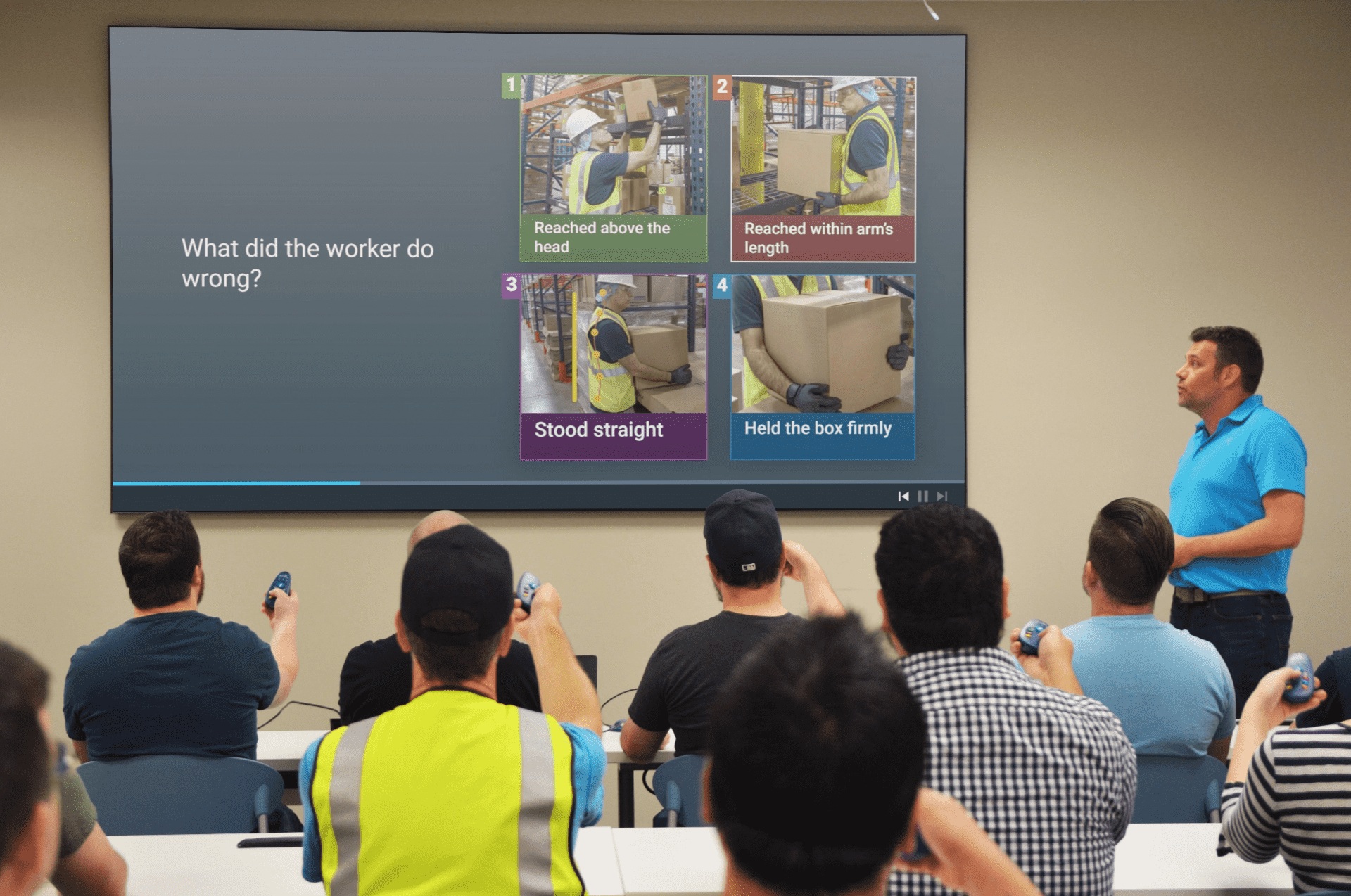
One of Alchemy’s distinctive tools is an audience-response system. Workers answer questions during group training using handheld remotes, giving the facilitator a view of comprehension while the session is happening. A wrong answer can prompt another explanation rather than remain invisible until something goes wrong.
The platform supports sessions of up to 150 employees, although Alchemy recommends a maximum of 30. That recommendation is more illuminating than the upper limit. Technical capacity and a sensible teaching group are different things. It can also deliver training in two languages simultaneously, a practical concession to the workforce rather than an ornamental software feature.
For a supervisor, the attraction is consistency: the same lesson, individual responses, accessible records. For an employee, a group session need not require publicly announcing every uncertainty. The company’s earliest food customer, J Bar B Foods, has described the value of responding privately through remotes while still documenting understanding.
Four kinds of evidence. A conceptual view of Alchemy’s training and validation approach, not a mandatory product workflow.
The freeze-pop arithmetic
Kisko introduced standardized courses, interactive responses, electronic records, and reporting that helped locate opportunities to improve production. Its case study reports efficiency increasing from about 68% to 88%, annual waste savings exceeding $500,000, and less management time spent administering training.
That efficiency change deserves careful reading. It is a gain of 20 percentage points. Relative to the starting value, it is roughly 29%, which explains the case study’s rounded 30% headline. These are customer-reported results associated with an operational training program; they do not isolate software as the sole cause.
+20 percentage points
About 29% relative improvement
Film the right habit
Some knowledge is local. A general course can explain a safety principle; it cannot automatically know the layout of a particular line or the agreed sequence for a particular piece of equipment. Creator lets customers edit courses and insert their own photographs, videos, work instructions, and questions. It works through PowerPoint, making familiar presentation software a route into interactive training.
Playbook brings that idea closer to the job. A team can record a task, build instruction around it, and connect training with qualification requirements. This is appealing because experienced workers often carry procedures in their heads. Capturing their knowledge makes it easier to share. It also forces a useful discussion about which version of the procedure belongs in the recording.
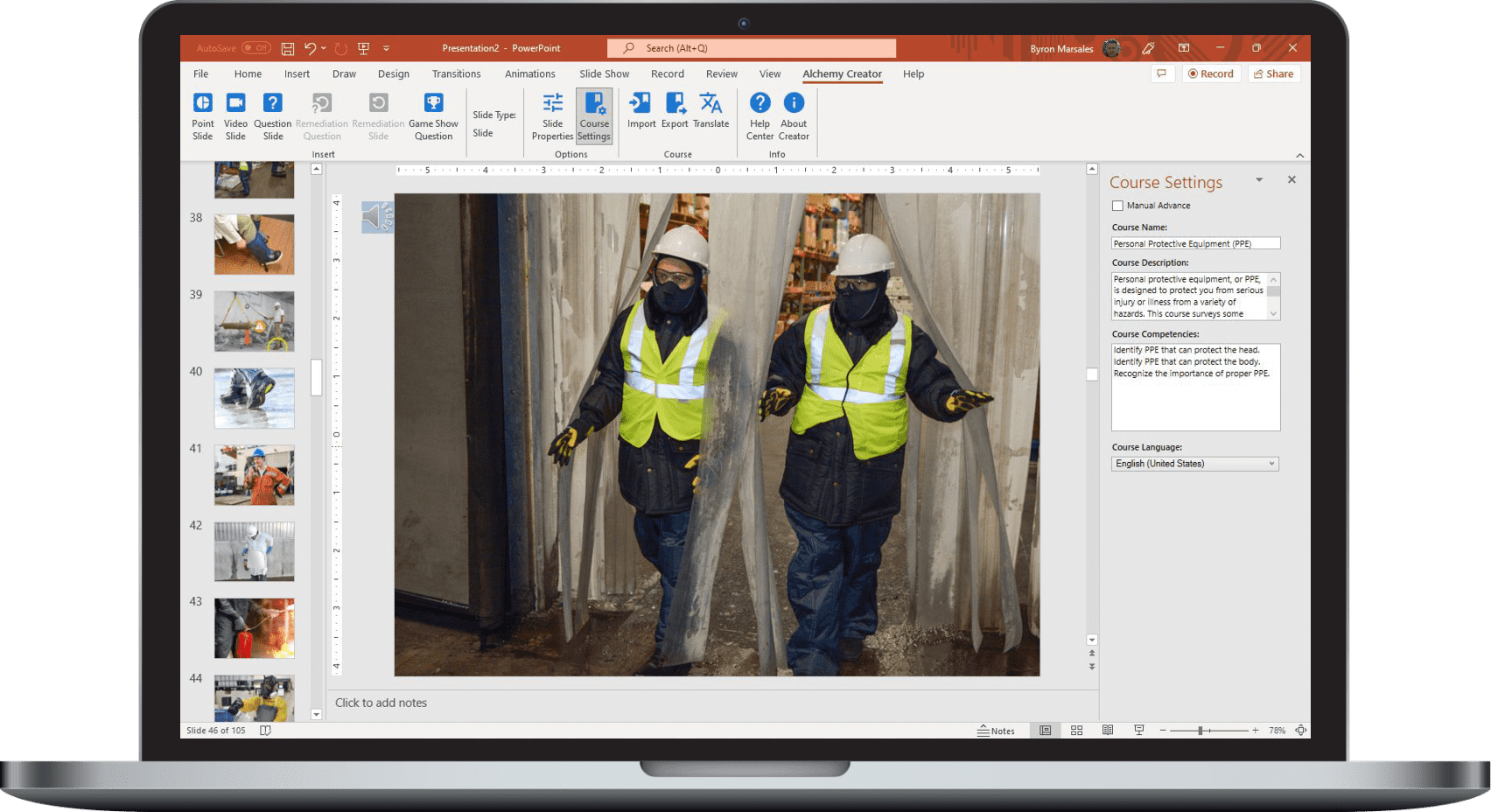
JB, a cold supply chain business, described expanding an existing Alchemy compliance program into job-specific training. It was easier to gain support when the proposal used a system the organization already knew. During content development, different habits emerged across workers and shifts; the team had to agree on best practices. Recording a procedure turned out to involve choosing a procedure.
“Building out Playbook has been a huge undertaking.”Amy Valek, JB, in an Alchemy-hosted interview
That is the cost buyers should keep in view alongside the license: people must develop content, review instructions, and assess performance. The software gives this work a structure. Someone still has to do it.
Why a testing company bought a training company
Alchemy’s roots combine educational media and learning records. One predecessor produced video CDs for college textbooks; another tracked teachers’ continuing education. A $1 million Texas Workforce Commission grant supported a frontline manufacturing training prototype in 2003. Media production and learning management eventually came together as Alchemy Systems.
The combination explains the business better than either half alone. Content makes the system useful immediately. Records make the instruction manageable. Observations extend the evidence into actual work. In 2015, the International Association for Food Protection recognized Coach with its Food Safety Innovation Award.
Riverside invested in December 2012 and supported research, sales expansion, and acquisitions including Chilton Consulting and Wisetail. Intertek then agreed to acquire Alchemy for $480 million in 2018. For a business selling assurance, skills and behavior were a logical additional place to look.
The commercial model was already recognizable: subscription revenue, with most customer contracts running for three years at the time of acquisition. Today the offering combines software, licensed content, additional capabilities, premium libraries, consulting, and custom training services. Professional learners can also buy courses through Zosi, the successor to Alchemy Academy.
A specialist in a crowded classroom
Buyers can choose broad learning platforms, course marketplaces, or their own internally assembled programs. Alchemy’s case rests on putting frontline content, group delivery, site customization, observations, and qualification records together. Its website reports 1,500 clients, 7,500 plants, and one million frontline workers. Named customers range from food businesses such as Mars and Maple Leaf Foods to CarParts.com.
Consulting and industry relationships add another layer. The SQFI partnership supplies practitioner courses through Zosi; Campden BRI collaborates on training research. A Synthesia partnership lets customers bring AI-generated videos into Creator courses. Faster video production may help with updates. Operational accuracy still depends on reviewing what the video tells someone to do.
The fit is strongest where procedures repeat, consequences matter, and managers need visibility across roles or shifts. It becomes less convincing if nobody has time to maintain the content or observe the work. A beautifully recorded obsolete instruction is still obsolete.
Borrow the question
A manager can copy the essential method without beginning with a procurement exercise. Choose one recurring task. Agree on the correct procedure. Teach it. Ask a question that reveals understanding. Watch someone perform it. Keep an accessible record of the qualification, and revisit it when the procedure changes.
Each step should earn its place. If the quiz is passed but the task is performed incorrectly, investigate the gap: the instruction, the assessment, or the conditions of the job. Alchemy supplies tools for that investigation. The more valuable habit is to remain curious after the attendance sheet is signed.
Company website ↗ · Product tour & demo request ↗ · Customer stories ↗ · Webinars ↗ · News ↗ · JB interview ↗
YouTube videos ↗ · Watch Amy Valek’s interview ↗ · LinkedIn ↗ · X ↗ · Facebook ↗