The safety binder has an impeccable sense of timing. It becomes most eloquent just after somebody gets hurt. Then every inspection, meeting and missing signature acquires the gravity it never possessed on an ordinary Tuesday morning. Safesite exists to move that conversation backward - from the incident report to the smaller actions that came before it.
Paper failed first
Peter Grant was a civil engineer and construction manager before he became a software founder. On large commercial projects, he watched safety run on forms that were excellent at proving a form had been completed and much less useful at changing what happened next. Hazards sat in folders. Information moved slowly. Severe injuries, and sometimes deaths, still occurred.
The failure became personal. Grant has said his best friend died in a workplace accident he believed proper safety protocols could have prevented. Company accounts describe Grant, technical co-founder Leigh Appel and co-founder David Fontain turning that loss into a mobile app. The dates in public profiles vary around the early years - Safesite lists 2012 as its founding year, while its own retelling places a decisive moment in 2014 - but the motive is consistent. The trio wanted the act of recording safety to affect the future, not merely archive the past.
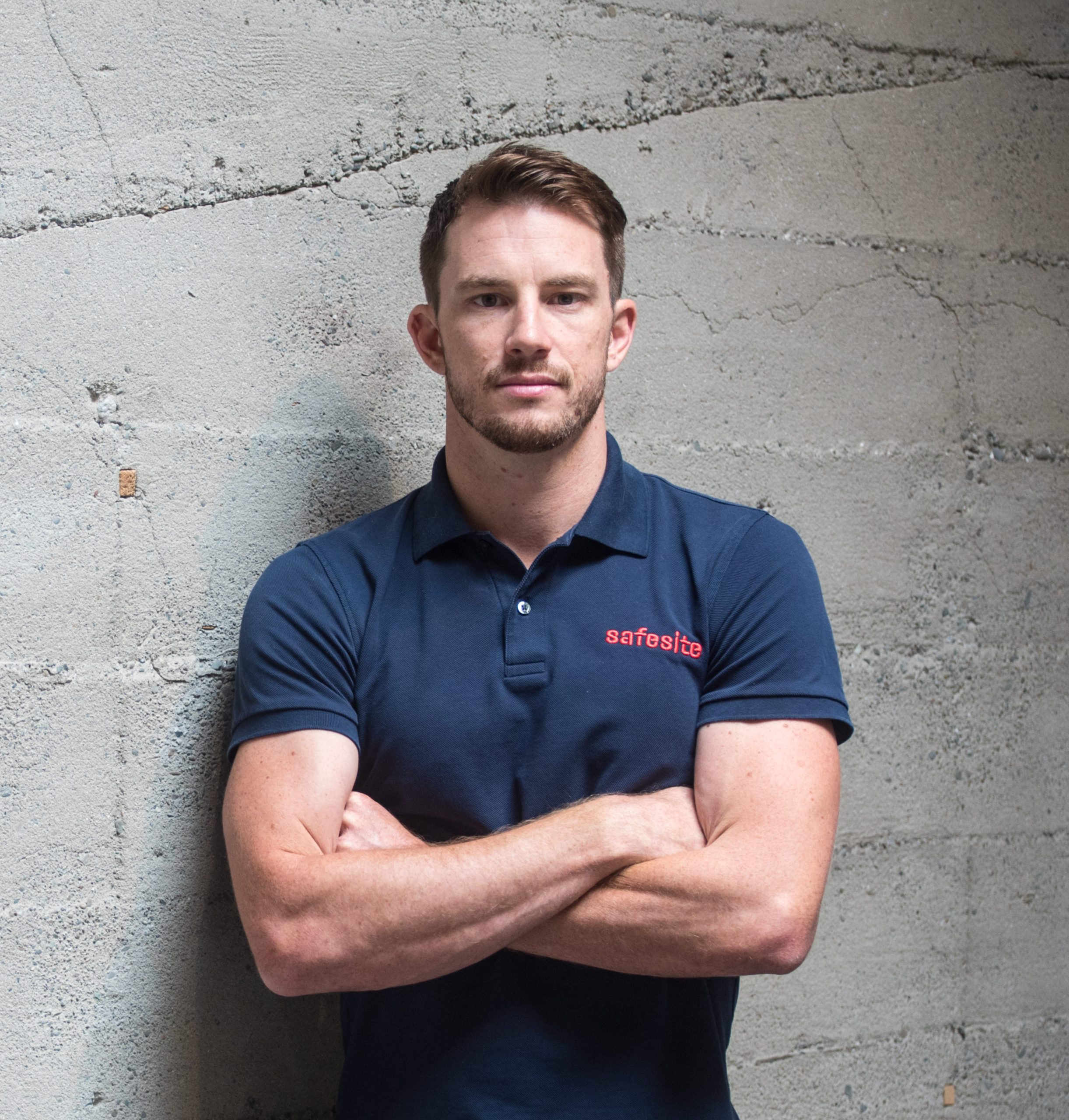
“The majority of our customers need assistance in going from zero-to-one in terms of digitization.”Peter Grant, co-founder and CEOThe mechanism
A thousand dull actions make one useful signal
On a phone, a worker can conduct an inspection, log a hazard, record an observation, hold a toolbox talk, inspect equipment or report an incident. A supervisor can assign the corrective action. On the desktop, managers see projects, teams, completion rates and trends. The app works offline and syncs later, an unglamorous feature with impeccable jobsite manners. It also supports English, Spanish, French and Portuguese.
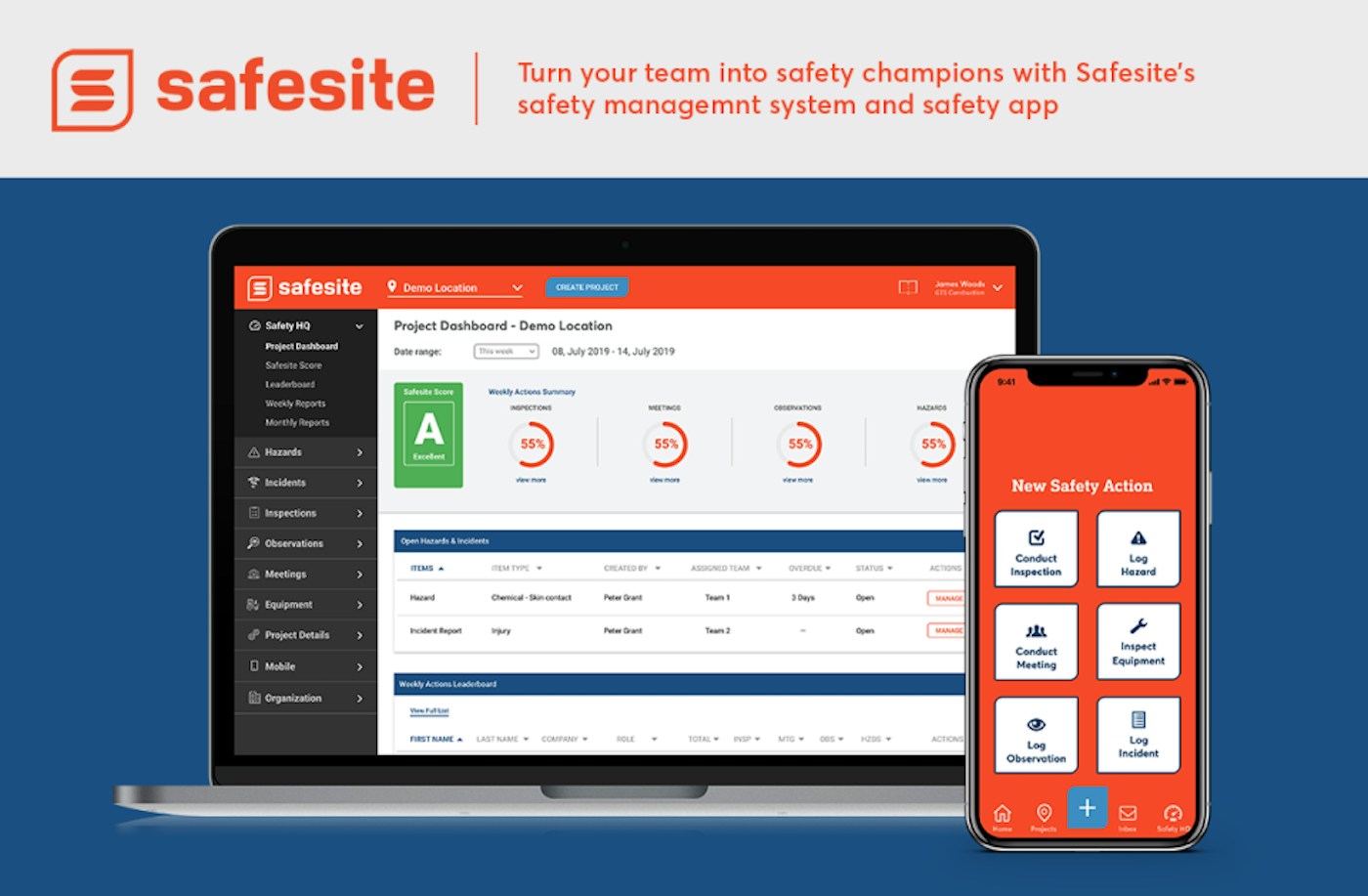
The important object is not any single report. It is the pattern. Safesite emphasizes leading indicators - inspections completed, hazards resolved, meetings attended, observations made - because incident totals are lagging indicators. By the time the red line rises, somebody has already paid the price.
Safesite compresses participation into its Safesite Score, a grade that the company likens to a credit score or safe-driver reward. Scores are dangerous when mistaken for truth; a tidy grade can hide thin reporting or reward box-ticking. Used as a prompt, though, the score gives a manager somewhere to look before the monthly incident count supplies a harsher clue.
Safesite says its combined platform and safety-success services have been shown to reduce incidents by up to 57%. This is a company-reported upper bound, not a promise to every customer.
The first two bars come from JRCRUZ, a New York utility contractor whose crews rig loads of four to fourteen tons. Safesite's case study says the company reduced its total recordable incident rate by 84%, brought its lost-time incident rate to zero and passed one million working hours without a lost-time injury. The software did not lift the loads. It helped Derek Smith and his team ask the same preventive questions across sites, then see whether the answers changed.
The twistWhen the insurer joined the toolbox talk
Safety software normally sells compliance, convenience or both. Safesite's stranger ambition was to make prevention financially legible. In 2020, its founders launched Foresight, a sister workers' compensation business. Safesite supplied engagement and risk data; Foresight supplied insurance, coaching, loss analysis and a reason for the finance department to care.
This changed the proposition. A checklist was no longer simply evidence for OSHA or the general contractor. Aggregated activity could support a risk conversation with an insurer. Foresight has said its policyholders reduced incident frequency by an average of 31% at the time of its 2022 financing announcement. That year, the group raised $39 million in a Series B led by OMERS Ventures, bringing its announced total to $59 million.
Capture the habit
Unlimited members and guests, mobile tools and a dashboard; reporting is limited to the latest 30 days.
Sell the memory
Premium adds unrestricted history, group reporting and OSHA 300 recordkeeping per paid member, per month.
Price the risk
Foresight bundles the platform with workers' comp, coaching, loss analysis, telemedicine and onboarding.
The app cannot embarrass a division. A weekly report can.
Meritage Homes offers the most copyable example. The national homebuilder has hundreds of communities, contracted trades and one superintendent per site. It used Safesite for weekly inspections, hazard and observation logging, and monthly talks. At first, leaders incentivized participation. Then they circulated a weekly report across divisions, so Raleigh could see how every other region and builder performed.
That is the useful managerial trick: software creates visibility, but visibility must have an audience. Safesite's timestamps and assignments can show who did what. Only management can decide that the information will matter.
- Start with one recurring behavior - a weekly inspection or toolbox talk - rather than digitizing every form at once.
- Publish participation across comparable teams. Private dashboards are where accountability goes for a nap.
- Track hazard closure and positive observations, not merely injuries. Prevention needs measures of its own.
- Assign every corrective action to a named team and a due date; “everyone” is an exceptionally unreliable employee.
The approach is suited to distributed, higher-risk operations where work repeats across crews and locations: construction, manufacturing, transportation and logistics. Named customers include Meritage Homes, JRCRUZ, Southland Industries, Valley Interior Systems, OK Tire and North American Forest Products. Safesite's LinkedIn page says more than 4,000 companies trust the platform.
Where the arithmetic gets fragile: the platform needs regular, honest field input. A crew that reports only good news can manufacture a handsome score and a hazardous illusion. Small teams needing years of records will also outgrow the free plan's 30-day reporting window. And companies without leadership follow-through may digitize their paperwork while preserving the same weak safety program underneath.
Compliance is crowded; the feedback loop is the wedge
Safesite sits beside SafetyCulture, HammerTech, EcoOnline, KPA, Donesafe and EHS Insight. Some rivals offer broader enterprise environmental, health and safety suites; others go deeper into construction operations or inspection templates. Safesite's position is narrower and coherent: simple mobile adoption, offline and multilingual capture, a permanent free tier, leading-indicator scoring and the connection to Foresight.
Its strongest claim is not that it abolishes accidents. No responsible tool can. It is that the organization can notice its own behavior earlier. The paper form waited quietly in the binder. Safesite makes it interrupt the week.