Nick Bartel’s career looks, at first glance, like a channel surfer got hold of the remote. Film and television at Penn State. An assistant’s desk at ABC Entertainment Group. A writing job at Doozer Productions. Then commercial real-estate finance, property development, an MBA, and finally software for trucking fleets. It is a résumé with abrupt cuts. Seen whole, however, it has a clean plot: Bartel kept moving closer to decisions where a useful story could change what happened next.
At Idelic, the Pittsburgh company he co-founded with Hayden Cardiff and Andrew Russell, the raw material was not dialogue. It was telematics, dash-camera alerts, compliance records, training files, accident histories, and the small behavioral signals scattered through a driver’s working day. Fleets had plenty of data and very little narrative. A hard brake sat in one system. A violation sat in another. A manager’s notes lived somewhere else. The trouble arrived when those fragments added up to risk and nobody could see the sum.
Bartel helped build the operating company around making that sum legible. He began as Idelic’s founding chief operating officer, moved into co-CEO leadership, and eventually became CEO. By the time Descartes Systems Group acquired Idelic in April 2026, the company’s models had learned from more than 40 billion miles of telemetry and over 400,000 accident records. The numbers are industrial. The goal Bartel repeated was domestic: “We want every driver to come home safe each and every night.”
“We want every driver to come home safe each and every night.”Nick Bartel, 2021
01 / The first actA film graduate learns to operate
Bartel did not train for fleet safety. His undergraduate subject was film and television, and his early jobs placed him inside the machinery of network entertainment. In 2008 he worked as an assistant to a studio head at ABC Entertainment Group; in 2009 he became a writer at Doozer Productions, part of the ABC Studios world. A writers’ room and a trucking operation rarely share a sentence, but both depend on sequencing. What happened? What does it mean? What must happen next?
He then changed genres. By 2012, Bartel was a senior financial analyst at Transwestern, working in commercial real estate. He added graduate study in real-estate development at the University of Maryland and later served as director of real-estate development at Landmark Properties Group. These years supplied a different vocabulary: capital, assets, risk, return, and the discipline of turning a plan into an operating reality.
The bridge was Carnegie Mellon. Bartel entered the Tepper School of Business in 2014, earned an MBA in entrepreneurship in 2016, and joined the James R. Swartz Entrepreneurial Fellows. He was also an associate with the Open Field Entrepreneurs Fund and an executive vice president of the graduate entrepreneurship club. At Tepper he met Cardiff and Russell, the classmates who would become his co-founders.
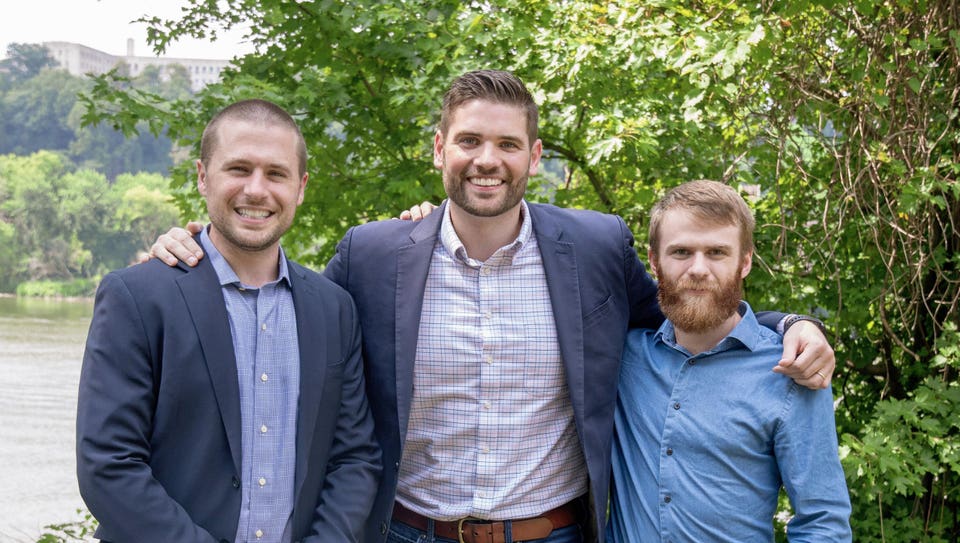
02 / The inciting incidentA tool hiding inside a trucking company
Idelic’s origin was refreshingly specific. Pitt Ohio, a regional carrier headquartered in Pittsburgh, had built an internal data-integration tool called Safety Box. Cardiff was consulting for the company while finishing his MBA and began exploring whether the software could serve other fleets. Conversations with operators revealed the same recurring frustration: important safety information was arriving from too many systems, and the people responsible for acting on it could not assemble a timely view.
Bartel, Cardiff, and Russell formed Idelic in 2016. Pitt Ohio received a small equity stake in exchange for resources and proprietary access to the internal technology. This was not the romantic garage mythology of startup lore. It was a piece of useful software, an industry partner with a real problem, and three founders willing to learn the unlovely details of compliance and driver management.
The company’s name nodded toward an idyll: a safer, more orderly version of the industry. Its product would grow into Safety Suite, a system designed to connect fleet data, surface hidden risk, and guide the follow-up. Bartel’s job as the founding operator was to help turn a promising tool into a company that could sell, serve, hire, raise money, and keep its purpose intact.
03 / The product lessonPrediction needs a Monday morning
Idelic’s product logic can be reduced to four verbs: connect, detect, explain, coach. The company built integrations with the systems fleets already used rather than asking customers to discard them. Camera feeds, telematics, federal records, and personnel systems became inputs. The Driver Watch List ranked drivers by risk, while Professional Development Plans gave safety teams a structured way to respond.
The final verb did the serious work. Prediction alone is an interesting chart. Prevention requires a manager to have a timely conversation, assign training, document the intervention, and follow up. Idelic treated the workflow after the alert as part of the product. In a fleet of thousands, good intentions do not scale by themselves.
That operating choice offers a lesson beyond trucking. Mature customers rarely want another total replacement. They want the expensive tools they already own to make more sense together. Idelic became connective tissue. More than 80 telematics, risk-management, and regulatory integrations eventually fed its platform, while models were applied across more than 150 fleets.
Bartel described Safety Suite as a way for fleets to “proactively unlock and use their data to make their drivers and our roads safer for everyone.” The word use carries the sentence. Data that cannot alter a decision is expensive scenery. Idelic’s wager was that the scattered record of a driver’s work could become a timely prompt for attention rather than evidence examined after something went wrong.
04 / The long middleCapital, customers, and a hard season
Building the company took the patient kind of capital. Idelic raised a $1 million seed round in 2017, another $2 million in 2018, an $8 million Series A in 2019, and a $20 million Series B led by Highland Capital Partners in 2021. The disclosed total was roughly $31 million. The Series B funded expansion in engineering, data science, sales, and marketing, the departments required to turn a strong premise into durable enterprise software.
Bartel’s leadership also changed during the difficult pandemic period. He had entered as founding COO. The board appointed him co-CEO and later CEO, recognizing the operator as the company’s chief executive. Idelic went on to appear in the 2021 Pittsburgh Smart 50, and Bartel later received recognition for leadership in private-company governance. These are tidy milestones pasted over an untidy job: keep customers supported, the team aligned, and financing available while freight operations absorb a global shock.
Begins in network television at ABC Entertainment Group.
Enters Carnegie Mellon’s Tepper School and the Swartz Fellows cohort.
Co-founds Idelic with Hayden Cardiff and Andrew Russell.
Idelic closes a $20 million Series B.
Descartes acquires Idelic for $28 million upfront, with a potential $12 million earn-out.
The company’s pitch was unusually concrete for enterprise AI. A preventable crash carries human stakes, repair costs, insurance consequences, legal exposure, and the possibility of losing a driver. Fewer crashes could support lower claims costs and better driver retention. A fleet did not need to admire machine learning. It needed to see safer behavior and a more defensible safety program.
Four operating ideas worth borrowing
- Start with a painful workflow that already has an owner and a budget.
- Integrate with sunk investments instead of demanding a clean slate.
- Translate a prediction into a named action, owner, and follow-up.
- Keep the human outcome visible when the data becomes enormous.
05 / The transactionWhen the road joins a larger map
On April 22, 2026, Descartes Systems Group acquired all of Idelic’s shares. The public announcement placed the upfront consideration at approximately $28 million in cash, with up to $12 million more available if the combined business reaches revenue targets during the first two years. Descartes acquired more than a software interface. It added a deep store of driver-safety data and predictive capability to its Global Logistics Network.
For Idelic, the combination offered scale. Descartes already connects shippers, carriers, and logistics providers across routing, delivery, customs, and trade. Idelic brought the human risk inside fleet operations into that broader information network. Route performance and driver behavior could now live closer together.
Bartel’s own announcement resisted the spreadsheet tone of an acquisition release. He returned to the mission, writing that the company had spent a decade trying to bring drivers home safely and that its platform was used by major North American fleets. Then he moved quickly to the team: the people who “kept showing up, kept building, and kept believing” when doing so would have been easier to abandon.
“It’s been the experience of a lifetime, and what made it one was the team.”Nick Bartel, after Idelic’s acquisition
06 / The next sceneA pause without a pitch deck
Founders often greet an exit by announcing another company before the ink has dried. Bartel offered a smaller and more credible horizon. He planned to spend time with family, take “a brief respite at a slower pace,” and then ask a question he thought deserved wider use: “How can I be helpful?” No sector thesis followed. No stealth startup appeared between the lines.
The question suits the career. Bartel’s path was not a straight march toward fleet AI. Each chapter supplied a different instrument: storytelling, financial analysis, physical development, entrepreneurial training, and the daily mechanics of company-building. Idelic required all of them. It needed a narrative clear enough to recruit people into an unfamiliar industry, a financial case precise enough to win enterprise buyers and investors, and an operating cadence sturdy enough to turn an alert into action.
There is also something pleasingly cinematic about a company whose success is measured in scenes that never occur. The crash avoided. The phone call no family receives. The claim never filed. Prevention leaves little footage behind. Its evidence is an ordinary evening, a truck parked, a driver walking through the door.
Bartel began his working life around people who made stories for screens. He later helped build software that found stories inside signals: a pattern of behavior, a rising risk score, a moment for coaching. One career entertained an audience. The other asked an operator to pay attention. Both depended on finding meaning in the cut between one event and the next.