Chris Kolodziej had a perfectly reasonable training problem and a rather unreasonable audience: salespeople who were rarely in the building. At Lakeshore Beverage, the Chicago-area distributor, they spent their days on the road. The company already had an LMS, longer videos, and face-to-face instruction. What it needed was a way to reach people between those scheduled encounters.
- Bites makes short video lessons with questions, summaries, and tracking.
- Workers receive them through familiar channels, including SMS, WhatsApp, and Teams.
- AI Studio turns existing documents into editable, branded training.
- The useful test: can someone apply the lesson on their next shift?
Fifteen platforms, one less app
Kolodziej says Lakeshore evaluated 15 platforms. The winning detail was almost comically modest. Bites let employees access training without downloading another app. In his account, other options started around $18,000; Bites was more attractive on price. That comparison belongs to one buyer’s search, rather than a current price list.
“People are drowning in apps.”
Chris Kolodziej · Lakeshore Beverage
It is a useful complaint. A manager sees a new platform as a capability. A worker may see another thing to find, open, and remember. Bites treats that journey as part of the learning problem. The lesson arrives through a channel the employee already uses, with a link into short, interactive content.
Lakeshore uses Bites for product briefings and internal processes. Kolodziej also described a possible onboarding playlist covering tasks such as building a display, hanging a neon sign, and changing a keg. These are wonderfully unabstract subjects. A keg offers little reward for knowing the company’s mission statement.
A classroom that moved to work
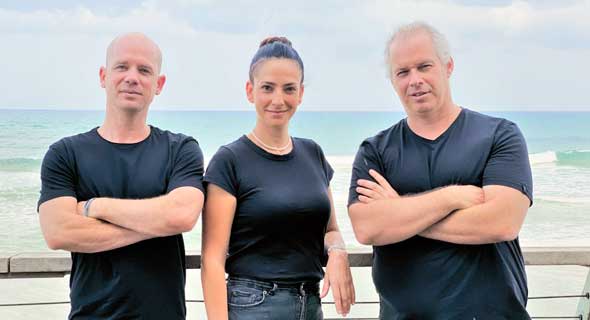
The founders came at this from different directions. Tal Nagler Almog and Hagai Horovitz had worked in education and training. Eran Heffetz brought hospitality experience. In a 2021 interview, Almog explained that the initial ambition was education; the team subsequently saw a wider use for training and professional communication, joined forces with Heffetz, and pivoted toward organizations.
The first major retail customer demanded more than the unfinished product could comfortably provide. Almog described taking that sale as the moment things accelerated. Separately, Carolina Lemke’s customer story describes a retailer willing to act as a design partner, helping shape the roadmap. Its early interest dates to 2019.
That matters because the product’s direction was tested against daily work. Carolina Lemke wanted consistent onboarding across locations. Its team converted existing materials into short videos, then expanded into product training and compliance. It also used blended learning: demonstrate a sales process in person, then reinforce and check understanding with Bites.
The PDF gets a second career
Today, Bites sells business software for frontline learning and enablement. Its expertise is the whole trip from company knowledge to employee response: creation, delivery, reinforcement, and measurement. AI Studio accepts PDFs, documents, and presentations, producing video learning with narration, summaries, and questions. Authors can change the visuals, wording, and voice before publishing.
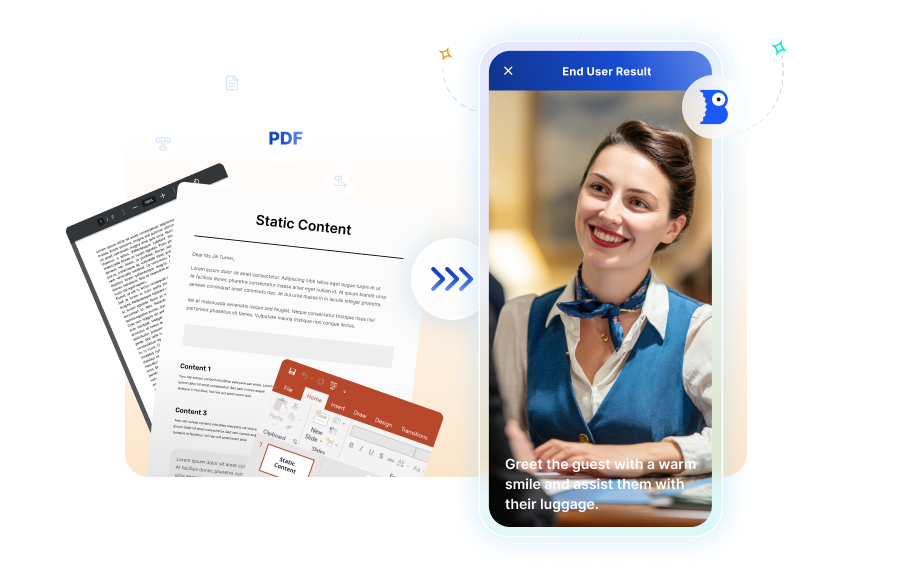
The Learning Suite handles training, personalized feeds, and analytics. The Enablement Suite adds role-based automation and knowledge reinforcement. Ask AI is presented as a way to retrieve answers from approved company content. There is also ready-made training content, plus recording and editing tools for teams creating their own videos.
- 01Start with the workDocument or demonstration
- 02Make the lessonVideo + question + summary
- 03Meet the workerSMS, WhatsApp, Teams
- 04Check and reviseAnswers + completion data
The company listed an AI Studio launch announcement in November 2025, following its Bites 2.0 update that January. Its customers span retail, hospitality, and other distributed operations. A 2021 funding report named Unilever, HP, and H&M, alongside a $5 million seed round led by Vertex Ventures Israel.
The competitive pitch is clear: make small lessons easier to create and easier to reach. Conventional LMS courses, classroom sessions, and untracked messages remain alternatives. Bites supports SCORM and can work alongside an LMS. Lakeshore’s longer videos offer a useful reminder that a company can need more than one kind of lesson.
Six countries, one familiar channel
Glico Asia Pacific’s published case puts the machinery to work. The regional team needed multilingual training without separate production cycles for every market. It used Bites inside Microsoft Teams and AI-assisted content creation and localization. The initial program comprised 42 video lessons in three languages for more than 500 employees across six countries.
Customer results published by Bites, January 2026.
Bites reports a launch in under eight weeks, 90% completion, and approximately tenfold cost efficiency compared with a conventional production model. These are reported customer outcomes. The cost claim concerns avoiding external video, interactivity, and repeated localization work; it is not a promise that every subscription repays itself ten times over.
Bites’s business model is subscription SaaS, with plans quoted around workforce size and requirements. Its public pricing page asks buyers to discuss their needs. For a purchasing team, the sensible calculation includes production and update costs, as well as software and the time employees spend away from their work.
The lesson worth stealing
There is a copyable method here. Choose one task. Use an existing, accurate instruction or film someone doing it. Make a short lesson, ask a question that tests the decision, and send it through a channel the team actually checks. Look at the answers, then watch whether the task improves.
That last step keeps the dashboard honest. Completion measures finishing; it does not establish competence. A short video can prepare someone for a practical demonstration, but it cannot supply the physical practice. Poor source material can also become a polished, poor lesson. Editing and review still belong in the workflow.
The fit is strongest when knowledge changes often, workers are dispersed, and the chosen channel is accessible during work. A long subject may need a sequence, discussion, or supervised practice. Bites’s interesting proposition is that learning can arrive in a small, ordinary message. The work of teaching begins when someone opens it.