The fridge is doing its job until it isn't. In a supermarket, that can mean spoiled food. In a laboratory, it can mean losing samples nobody can order again. A temperature written on a clipboard records one moment. The expensive part may happen between that reading and the next.
Checkit has built its business around those gaps. Its sensors collect readings, its software flags exceptions, and its digital workflows guide staff through the resulting work. The proposition is easy to grasp: give the person responsible enough warning, enough context and a record of what happened. The execution involves hardware, software and the stubborn habits of busy workplaces.
That makes Checkit an unusual subject in a technology market fond of frictionless promises. Its customers have doors to open, equipment to maintain and stock to move. A useful dashboard has to survive contact with all three.
The missing hours on the clipboard
Consider the Blood Sciences department at Leeds Teaching Hospitals NHS Trust. In Checkit's account, it processed more than 10,000 samples daily across two hospital sites. Staff previously took manual temperature readings, passing exceptions to biomedical scientists. The approach interrupted work, made trends difficult to see and left managers without a central record of the response.
The department wanted continuous collection, traceable measurements, alerts and an accessible view across locations. Its initial Checkit installation covered 35 monitored locations, then added 14 in research and development. Engineers installed the system and handled annual recalibration. This is a service business as well as a software business: a beautifully drawn chart is little comfort if the measurement behind it is unreliable.
The same concern travels beyond hospitals. Checkit's Exeter case study describes monitoring across 14 locations on three campuses, protecting approximately £2m of research assets. That figure is the value being protected, not a measured saving. The deployment included a three-year maintenance arrangement. For a research team, continuity and dependable records can matter as much as a faster routine.
A reading becomes a job
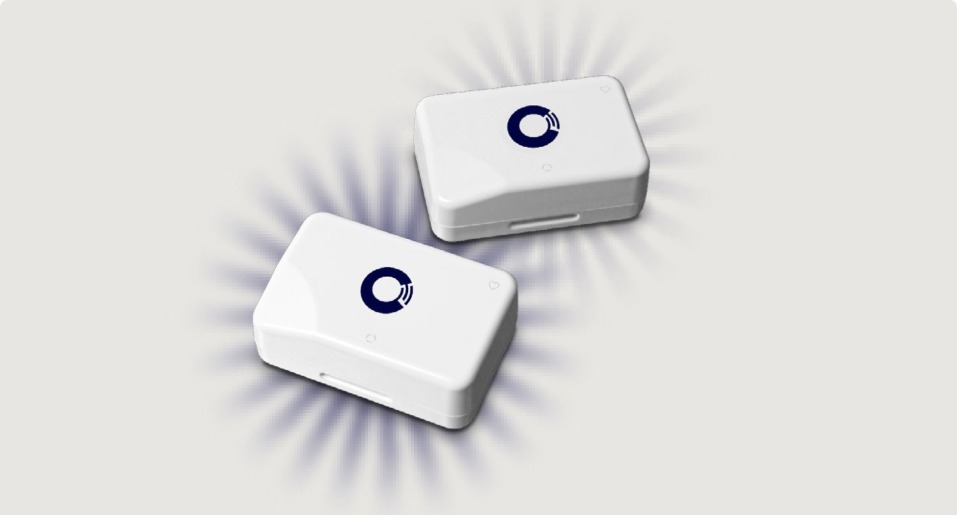
Checkit's commercial monitoring documentation gives the mechanism useful specificity. Wireless sensors measure fridge and freezer temperatures every five minutes; a hub sends data to the cloud every 15 minutes. Repeaters extend the wireless range where needed. Configured exceptions generate alerts, and the app can launch a checklist to help staff resolve the issue.
Those intervals also put the phrase “real time” into perspective. Buyers should examine the configuration and escalation timing of their particular deployment. The important question is how soon the right person can see and act on a problem.
- 01MeasureSensor readings
- 02FlagConfigured alert
- 03ActGuided checklist
- 04RecordDigital evidence
The mobile applications are available for Android and iOS to paying commercial customers. They support scheduled workflows and notifications, bringing routine work into a shared system. A manager can look across sites; a worker gets the task in hand. The combination is especially relevant where instructions and evidence otherwise live in different places.
Checkit occupies the overlap between connected sensors, frontline work management and operational analytics. SafetyCulture is an overlapping alternative, with inspection tools and temperature-monitoring offerings of its own. Sensors alone are therefore a weak basis for claiming distinction. Checkit's case rests on how its monitoring, workflow and service capabilities fit an organisation's particular assets and daily routines.
The £28m number has a very human centre
John Lewis and Waitrose provide Checkit's most eye-catching customer example. Its published case study describes more than 22,000 refrigeration assets monitored around the clock, alongside digital tools that prompt and document maintenance and food-service work.
Checkit puts the annual benefit above £28m. The breakdown deserves attention: £24m in repurposed staff time, £3.6m in avoided food waste and £0.8m in energy improvements. These are vendor-reported results. Most of the headline value represents labour capacity freed for other work; it should not be read as money removed from payroll or deposited in a bank account.
There is a practical accounting lesson here. An operations director can make good use of reclaimed hours, but must say where those hours go. More service, more completed maintenance and fewer administrative interruptions can be valuable. They are different outcomes from a lower cash expense. A persuasive business case keeps those columns separate.
Start with 57 rooms
Hallmark's example is smaller and, for someone planning a trial, easier to copy. The care-home operator ran a nine-week pilot at Bucklesham Grange in Ipswich, covering 57 rooms. Handheld digital assistants and room-specific QR codes guided checks and recorded their location and time.
According to Checkit's account, maintenance response became ten times faster, averaging 20 hours, while routine room-check completion rose from 96% to 100%. Estates manager Steve Brine estimated a 40% reduction in audit time. These are results from a defined pilot and an individual manager's estimate, not a promise for every care home.
“Checkit ensures the right team are doing the right checks in the correct time.”Steven Brine · Hallmark estates manager
The useful detail is the scale of the experiment. A team could observe the work, compare completion and response, and decide whether to expand. Checkit's account says the deployment subsequently broadened across the group and into other teams. The evidence from one property supplied a reason to change the wider process.
Can the fridge tell you what comes next?
Checkit's Asset Intelligence adds another layer. The premium capability uses proprietary models, AI and machine learning to analyse temperature data and highlight equipment that may need attention. The intended decisions are concrete: which freezer deserves maintenance, which asset appears inefficient and where replacement spending should go.
This is a sensible direction for a company already collecting operational readings. The commercial opportunity is to sell more useful analysis to customers whose sensors are already installed. For the buyer, the test is whether the additional information changes a maintenance decision early enough to help.
Prediction also changes what a trial should measure. Alert volume by itself says little. An operator can track whether warnings led to useful inspections, how much notice they provided and how often staff found nothing requiring action. A dashboard that repeatedly sends people on unnecessary errands creates another task queue.
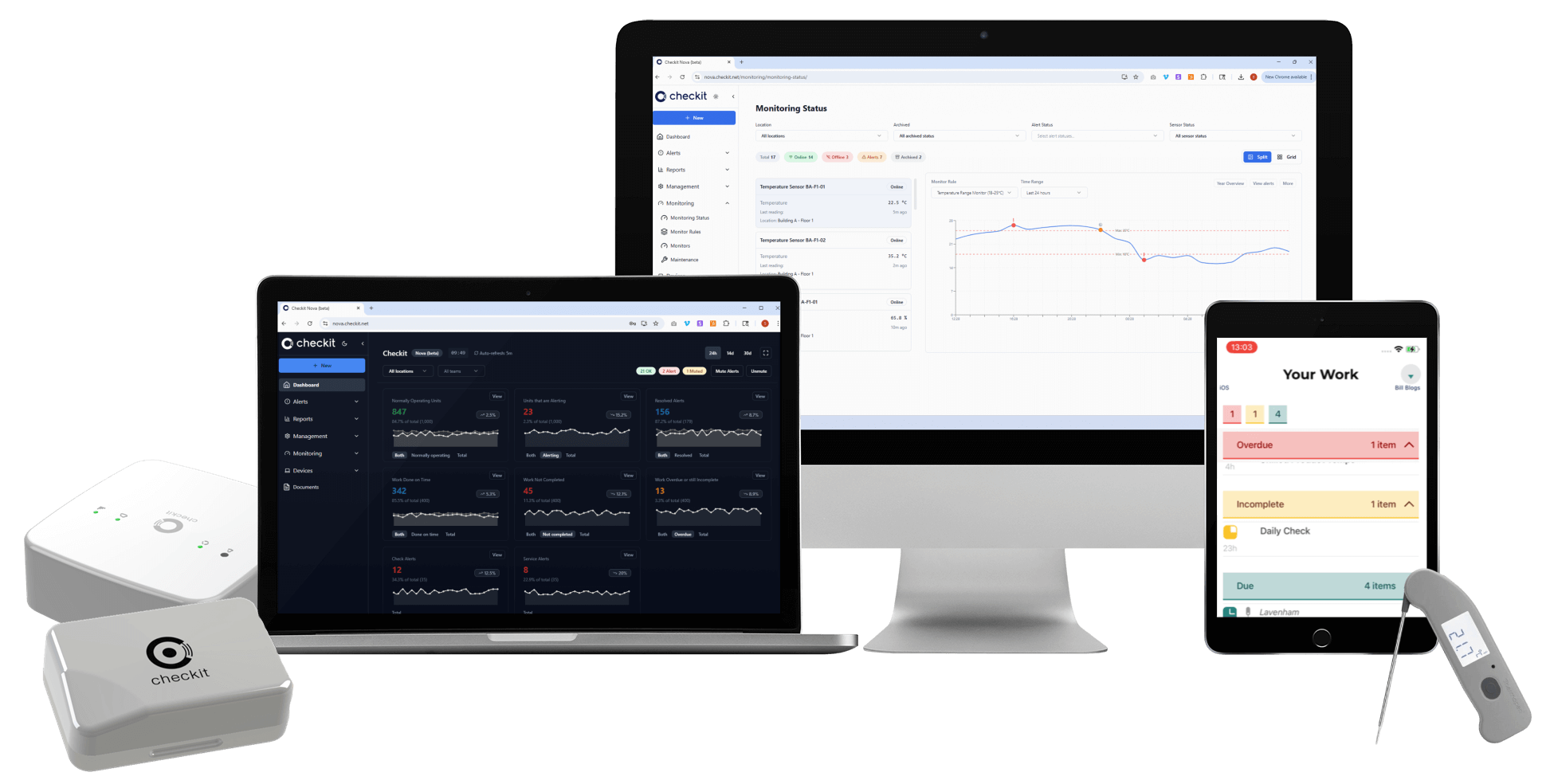
Implementation remains decisive. A reading needs a suitable sensor, a working communications path and a named responder. A warning cannot move stock or book an engineer. Teams without that response capacity will struggle to turn monitoring into avoided loss. Equally, a small operation with modest exposure may have less to gain from an enterprise deployment than a network of laboratories or stores.
The expansion bill, then the reset
Checkit's own history complicates the familiar software-startup narrative. The listed group was previously Elektron Technology. In 2019 it acquired Next Control Systems for £8.8m net of cash acquired, sold the Bulgin business and adopted the Checkit name. Its development involved corporate restructuring and acquired monitoring expertise.
Expansion required capital. A December 2021 share placing raised approximately £21m gross, or £20m after expenses, at 46p a share. Singer Capital Markets described the proceeds as funding faster commercial expansion and product development. That is a documented company financing cost, quite separate from what an individual customer pays for a deployment. Customer purchases begin with a tailored discussion. A useful quotation should distinguish hardware, installation, recurring services and the staff effort required to introduce new routines.
The path narrowed later. Checkit's FY24 results described the discontinuation of its building energy management activity. Its FY25 results confirmed that a proposed merger with workflow provider Crimson Tide had not proceeded. These were identifiable departures from earlier possibilities, even while the core monitoring and workflow business continued.
Customer expansion was not automatic either. The August 2025 interim statement reported that one large US customer cut unused services, reducing annual recurring revenue by £0.4m. Two other large US renewals carried a combined £5m contract value over three years. Together, those disclosures show the subscription bargain: useful deployments can endure, while unused services remain vulnerable.
For the year ended January 2026, Checkit reported £13.7m revenue, £14.3m annual recurring revenue and £0.3m adjusted EBITDA profit, following a £2.3m adjusted EBITDA loss a year earlier. The improvement accompanied £4m in annualised cost savings. Adjusted EBITDA excludes several costs and should not be confused with bottom-line net profit.
Management also announced plans to retire a legacy product during FY27 and unify the platform, with the intention of opening workflow capabilities to medical customers. The ambition is revealing: having customers in adjacent markets does not automatically mean every customer can use every product.
A buyer for the business?
On March 26, 2026, the board launched a formal sale process after receiving six unsolicited expressions of interest over nine months. Its stated reason was a gap between improving performance and the company's AIM valuation. The board argued that private ownership could offer advantages including removing public-company costs.
In June, Checkit appointed EC M&A as joint financial adviser to help manage discussions. A sale process is an invitation to explore a transaction, not evidence that one has happened. The announcement explicitly left open whether any offer or sale would materialise.
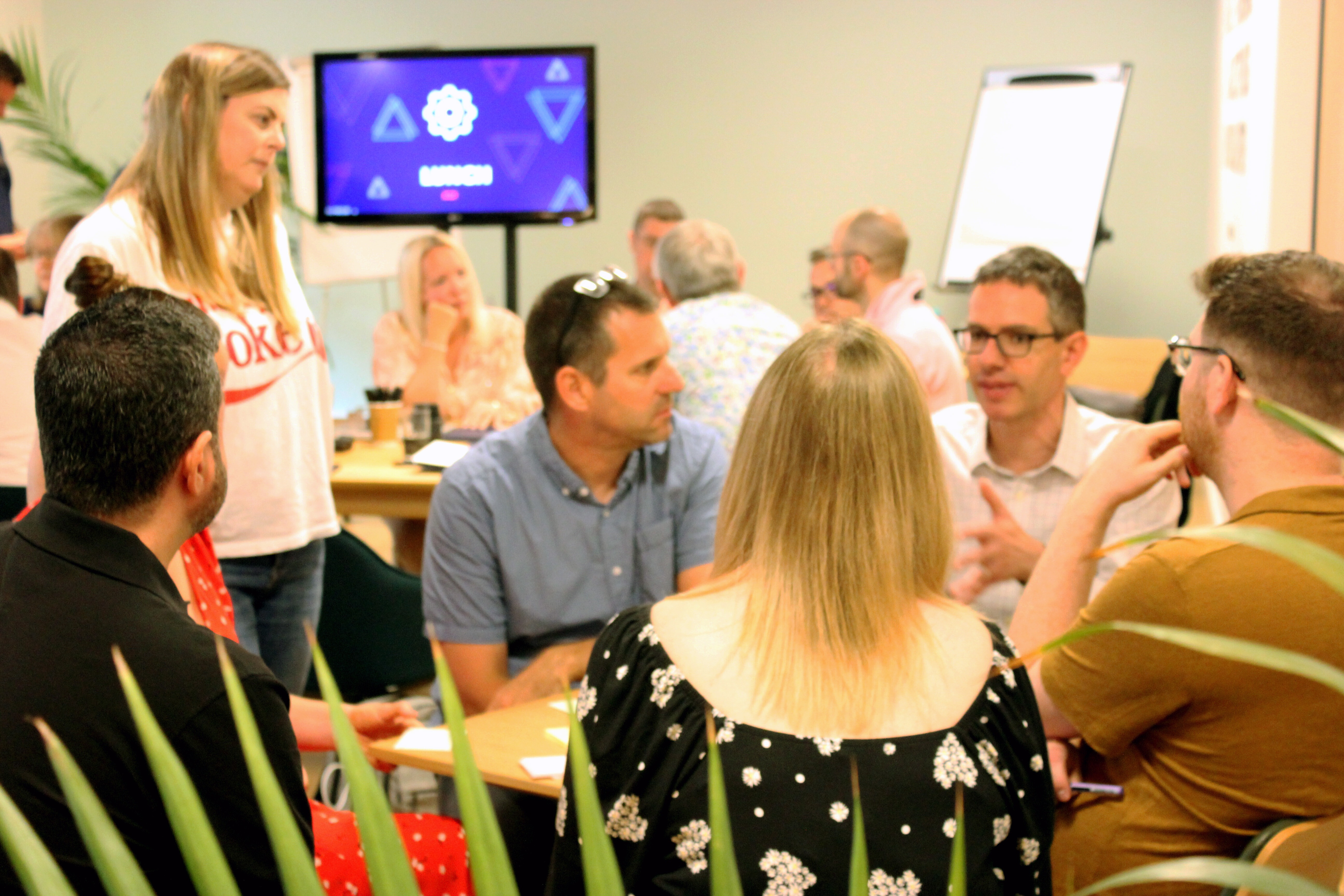
Meanwhile, the people building the product have their own routines. Checkit's careers site describes mostly remote work and employee autonomy. One unusually concrete promise concerns recruitment: every application receives human review, and interviewees get individual feedback. It is a small detail, but more informative than a wall of motivational adjectives.
For prospective customers, the purchase decision belongs back beside the equipment. Start with a bounded problem, record the existing workload and decide who will respond to exceptions. Compare recovered time with actual spending, and check whether a pilot's gains survive another site. Checkit's most persuasive examples give buyers something useful to inspect: the everyday work that changed after the sensors arrived.
Keep checking
Explore the Checkit website, Asset Intelligence, product help centre, customer stories and investor updates.
Follow Checkit on LinkedIn, X, Facebook and its YouTube channel.