Company Profile / Food Safety
PathSpot
The company that took a question nobody wanted to ask out loud - "did you actually wash your hands?" - and answered it with a wall-mounted scanner and a stream of data.
The company that took a question nobody wanted to ask out loud - "did you actually wash your hands?" - and answered it with a wall-mounted scanner and a stream of data.
Somewhere right now, a line cook finishes prepping chicken, walks to the sink, washes up, and holds both hands under a small device the size of a paper-towel dispenser. A green light. Two seconds. They go back to work. Multiply that by more than 10,000 food service locations and you have PathSpot - a New York company that turned the most ignored sign in the world ("Employees must wash hands") into something a machine can actually verify.
It scans for the things you cannot see: residual molecules left behind by raw meat, produce, and the gut biome - the same molecules that ferry norovirus, E. coli, Salmonella, Listeria and Hepatitis A from a hand to a plate. The food still tastes the same. The difference is that now somebody, or rather something, is keeping score.
Foodborne illness is not exotic. The CDC estimates roughly 48 million Americans get sick from contaminated food each year. A meaningful share of that traces back to the least glamorous step in any kitchen: a pair of hands that were rinsed too fast, or not at all. For decades the industry's answer was a laminated sign and a hopeful shrug.
The trouble with hope is that it doesn't produce a dataset. A manager could not tell you how often the team washed, how well, or whether last Tuesday's lunch rush quietly turned into a liability. Inspections happen a few times a year. Pathogens, inconveniently, do not keep to that schedule.
PathSpot was founded in 2017 by Christine Schindler and Dutch Waanders, both biomedical engineers. Schindler's path ran through public health work, including building low-cost medical resources at a hospital near Mount Kilimanjaro - the kind of experience that makes prevention feel less like paperwork and more like the whole point. Waanders, an engineer by training, taught himself to code in order to build the first device.
Their bet was almost stubbornly simple. Fluorescence spectroscopy - shining safe, visible (non-UV) light to make certain molecules glow - was already trusted inside healthcare. Why not take that imaging trick out of the lab and bolt it to a kitchen wall, where the consequences of a missed germ end up on a customer's plate? It is the sort of idea that sounds obvious only after someone has spent years making it work.
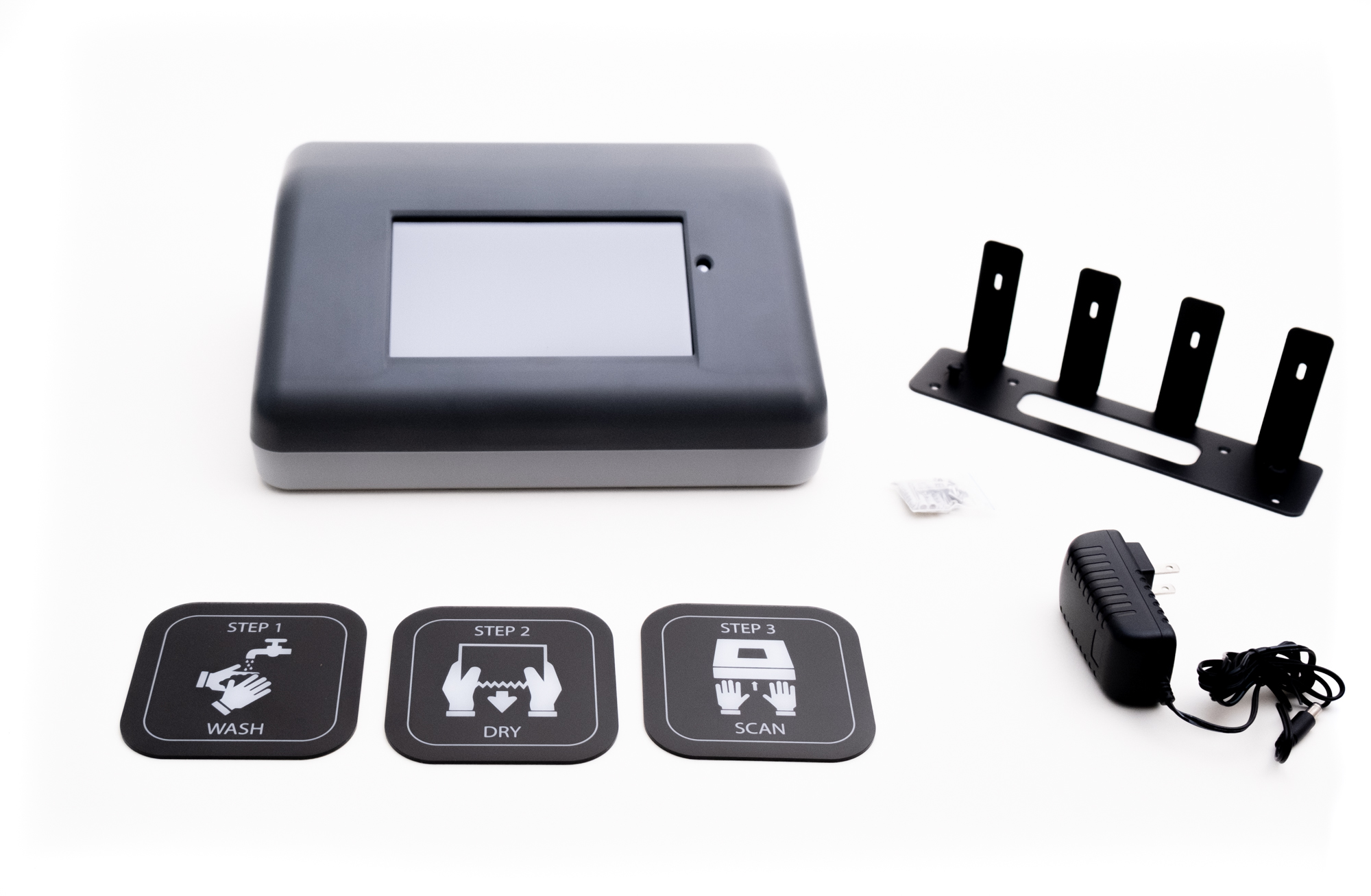
The HandScanner is the headline act. An employee washes, dries, and holds their hands and wrists under the device. Using visible-light fluorescence spectroscopy, it looks for the chemical signatures of contaminants associated with foodborne pathogens and returns a result in roughly two seconds. Pass, and they move on. Fail, and they wash again. The press has affectionately nicknamed it the handwashing "lie detector," which is unfair only in that the scanner has no motive.
But a scanner alone is a gadget. PathSpot's real move was wrapping it in software. In 2024 the company introduced SafetySuite, a connected set of back-of-house tools that pulls hygiene out of the clipboard era entirely.
The flagship. Detects invisible contaminants on hands and wrists in ~2 seconds via fluorescence spectroscopy, then logs every scan.
Cloud dashboard with real-time alerts and analytics - handwashing frequency, effectiveness, and compliance trends across locations.
Temperature and humidity loggers with cloud sync, keeping the cold chain honest without someone walking around with a thermometer.
Digital checklists and auto-timestamped food labels - the paper logs and date stickers, finally retired.
The result is less a device and more an operating system for the things that go wrong out of sight: a hand that skipped the sink, a walk-in that drifted warm, a prep item past its date. Boring failures, each one capable of a very un-boring lawsuit.
Skeptics are right to ask whether any of this changes behavior or just decorates it. PathSpot's reported numbers point at the former. At partner locations, the company says hand contaminants drop by about 75% within 30 days, climbing to roughly a 97% reduction after six months. Handwashing frequency has risen by as much as 80% inside 90 days. In a single year, completed hand scans are credited with protecting an estimated 1.7 million meals.
The customer list reads like a food court with standards: franchised Taco Bell, Arby's, Chopt Creative Salad Co., Dave's Hot Chicken, and Dairy Queen, alongside airport operator SSP America and university and hospitality venues. The funding tells a parallel story - the $6.5M Series A was led by Valor Siren Ventures, the fund anchored by Starbucks, a company that knows a thing or two about doing the same careful thing ten thousand times a day. Amazon Web Services has featured PathSpot's hygiene-data work in its own industry writing.
PathSpot's framing is plain: the spread of foodborne disease is, mostly, preventable - and prevention only works if it is measured, repeated, and impossible to fudge. The company's larger ambition is the "digital transformation of hygiene and safety," which is a tidy way of saying that the parts of a kitchen no diner ever sees should run on data instead of good intentions.
There is a quiet dignity in that goal. The scanner doesn't shame anyone; it just removes the gap between the rule and the reality. For workers, a green light is proof they did it right. For operators, it's a defense. For the rest of us, it's the difference between a good meal and a bad week.
Hardware was the wedge; data is the future. Every scan, every temperature log, every completed task adds to a picture of how a kitchen actually behaves - the kind of operational record that regulators, insurers and brands increasingly want to see. As back-of-house work goes digital, the company that owns the moment at the sink is well positioned to own a lot of the moments after it. The competition, for now, is mostly paper.
So return to that line cook. Chicken prepped, hands washed, palms under the light. Before PathSpot, that instant vanished the moment it happened - unrecorded, unverifiable, a small act of faith repeated a few hundred times a shift. Now it leaves a mark: a green light, a logged scan, a meal that's a little safer than it would have been. The sign on the wall finally has something to back it up. The work looks identical. Everything underneath it has changed.
// Watch & learn: search "PathSpot HandScanner demo" on YouTube for product walkthroughs, and "Christine Schindler PathSpot ICR 2025" for the CEO interview.