The most revealing thing about TransAct Technologies is not that it makes printers. It is where those printers live. One sits inside a slot machine, waiting to turn a cash-out balance into a ticket that must scan the first time. Another stands in a restaurant kitchen, translating a corporate food-safety rule into a label a prep cook can use before lunch. Neither job is glamorous. Both become expensive the instant the machine jams, the barcode blurs, or the date is wrong.
That narrow obsession has carried the Hamden, Connecticut company from a 1996 spin-off of Tridex's printer business to more than four million printers, terminals, and other devices sold. But the better story is what happened after TransAct realized that the printed object was only the last inch of a much larger workflow. A casino wanted live promotions, not merely tickets. A restaurant wanted temperatures, checklists, recipes, recalls, timers, labels, and audit records to agree across hundreds of locations.
So the printer maker started climbing the software stack. Today it has two oddly compatible centers of gravity. EPIC by TransAct handles ticket-in/ticket-out printing and player promotions in gaming. BOHA! combines cloud software, touchscreen terminals, sensors, mobile apps, and labels for foodservice. The unifying idea is simple: capture a transaction, enforce a rule, and leave behind a physical record.
The turnThe code was useful. The dependency was not.
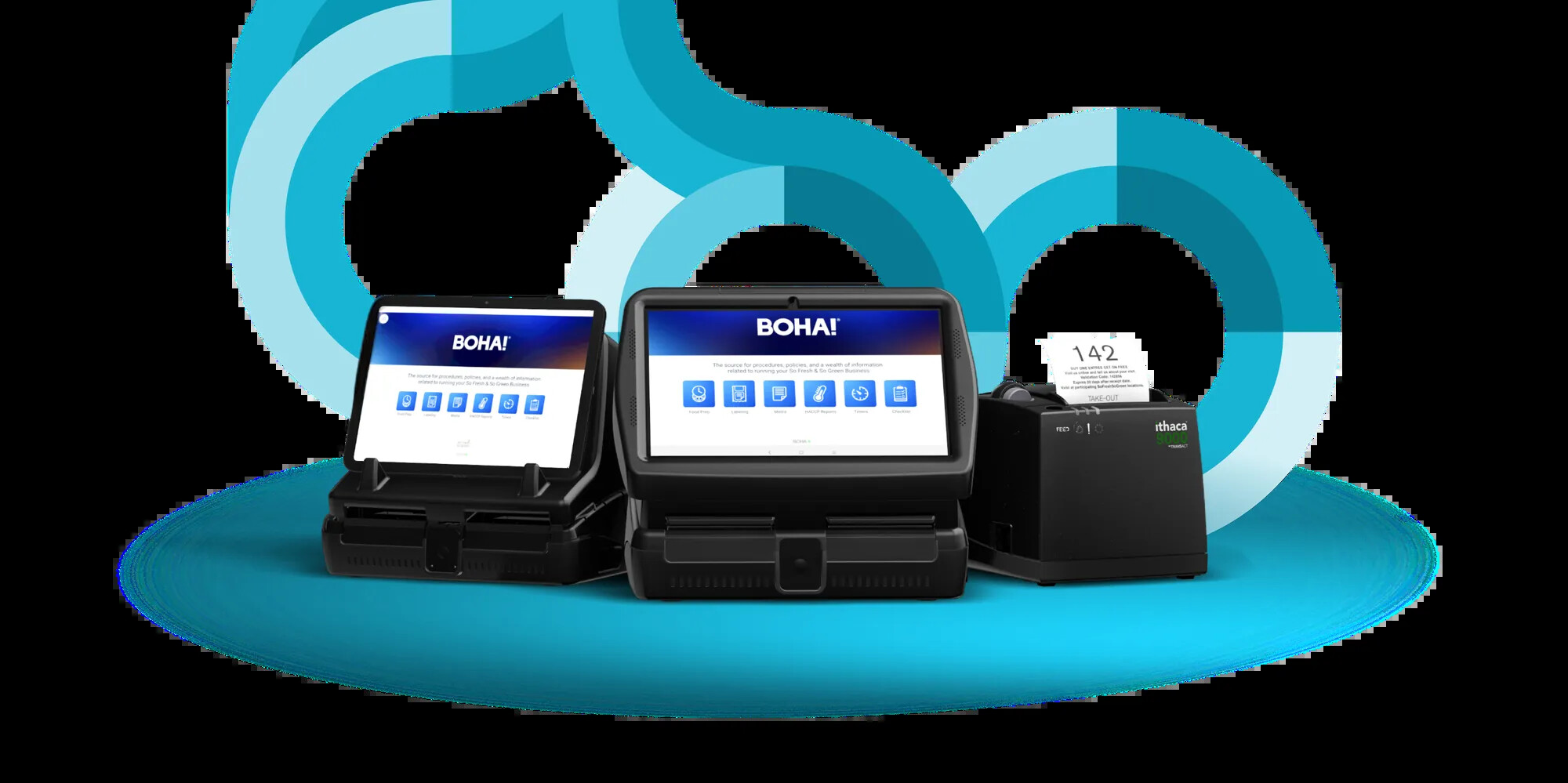
BOHA! launched in 2019 after TransAct staff spent time in commercial kitchens. The lesson was less futuristic than practical: operators did not want nine clever point solutions with nine logins and nine support numbers. They wanted one portal for the repetitive work behind the swinging door. BOHA! bundled labeling, temperature checks, sensor monitoring, checklists, food prep, training media, timers, and recalls around purpose-built hardware.
There was a catch. TransAct licensed core BOHA! software from Avery Dennison and depended on third parties for hosting and support. The company could own the terminal on the counter while lacking full control over the code that gave the terminal strategic value. That matters when customers want faster features, tighter integrations, or a platform that can survive a chain-wide deployment without waiting on someone else's roadmap.
In August 2025, TransAct paid $2.55 million for a perpetual, royalty-free license to a copy of the BOHA! source code. It also agreed to roughly $1 million in professional services for the transition. The rights are broad: TransAct can use, host, market, sublicense, distribute, copy, modify, and extend the code for its business. Avery Dennison still owns the underlying code, so this was not a conventional acquisition. It was closer to buying permanent freedom of movement.
Approximate total commitment for the perpetual BOHA! source-code license and transition services. The purchase bought control, not certainty.
The handoff became visible in June 2026, when TransAct launched the next-generation BOHA! platform on Microsoft Azure. Management framed the move around scale, resilience, quicker releases, integrations, IoT data, and future AI-assisted workflows. Strip away the cloud vocabulary and the point is cleaner: TransAct can now steer the product it is asking customers to build operations around.
What cracked firstA lost customer exposed the sharp edge of recurring revenue
The pivot did not follow a tidy up-and-to-the-right line. In the second quarter of 2024, a significant foodservice customer said it would terminate BOHA! software subscriptions and label service for its installed terminals. That customer produced about $900,000 of sales in 2024 and almost nothing in 2025. Meanwhile, TransAct discontinued the older AccuDate 9700 and later watched 2025 POS automation sales fall 34 percent amid price pressure.
What failed first, then, was not the physical act of printing. It was the assumption that an installed terminal automatically becomes a durable account. Hardware placement helps, but customers can still churn, competitors can still discount, and a specialized product can age out. TransAct's answer was not to abandon recurring revenue. It broadened the base. Higher label sales to a new sushi customer and an existing convenience-store customer helped software, labels, and other recurring foodservice revenue rise 14 percent in 2025 despite the loss.
By June 30, 2026, TransAct had 21,790 active online BOHA! units, up 33 percent in a year. Second-quarter software revenue rose 47 percent to $732,000; recurring foodservice revenue, including software, labels, and other repeat sales, rose 13 percent to $3.4 million. Those are still modest software dollars inside a company expecting $55 million to $57 million of 2026 revenue. They are also the clearest evidence that the identity change has moved beyond a slide deck.
The flywheelSell the appliance, then earn the right to remain
BOHA! Terminal 2 looks like a chunky touchscreen with one or two thermal printers beneath it. That physical design is part of the advantage. A commercial kitchen is a hostile office: heat, grease, hurried hands, rotating staff, and no patience for a general-purpose tablet that wandered into the wrong app. TransAct's enterprise management limits functions to approved software and pushes operating-system updates remotely. The LTE version solves a wonderfully specific nuisance - a concession or franchise inside a supermarket that cannot depend on the host's network.
Hardware
Put a purpose-built terminal, printer, sensor, or gateway at the point of work.
Software
Add annual applications for labels, temperatures, checklists, prep, media, and control.
Consumables
Supply labels, service, support, warranties, parts, and repairs throughout the installation.
Customers buy the applications they need, generally on annual per-application subscriptions. The terminal can begin as a labeler and expand into temperature taking, continuous sensor monitoring, task lists, prep instructions, and media. Catering and commissary additions launched in August 2026 apply the same system to allergen labels, prep timestamps, QR codes, nutrition, and location tracking for a sandwich or a 200-person order.
That makes TransAct different from a pure software vendor and from a commodity printer supplier. CrunchTime, Jolt, Avery Dennison, Ecolab, DayMark, Toast, and others compete for parts of the foodservice job. TransAct's pitch is integration at the point of work: the approved recipe, compliance rule, label design, sensor reading, and printer live in one managed system. The trade-off is commitment. An operator must be willing to standardize workflows and hardware around that system to collect the full benefit.
The profitable contradictionThe old casino engine may finance the new identity - or leave it
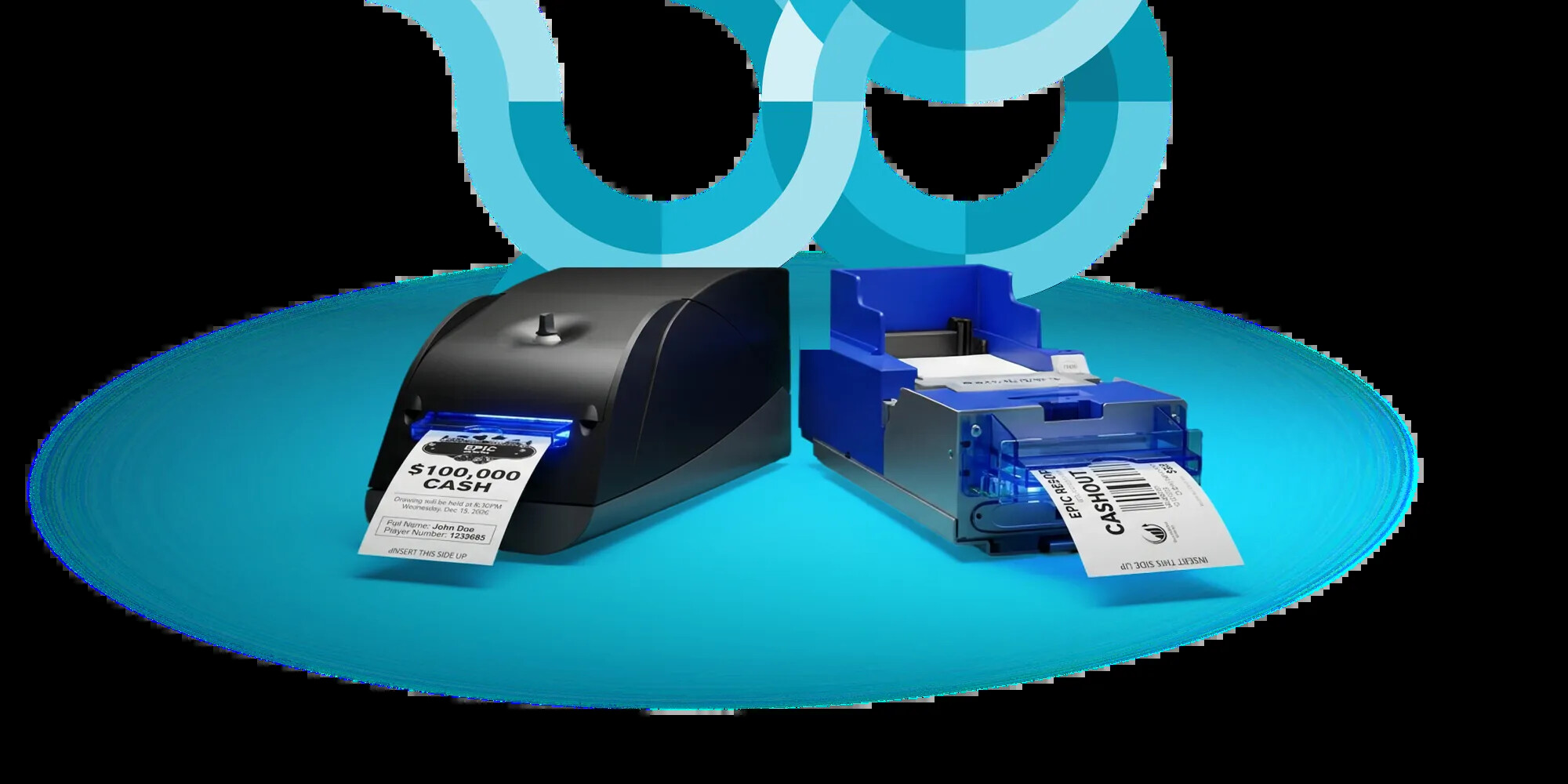
Casino and gaming remains the larger business. It generated $26.87 million, or 52.2 percent of 2025 sales, after growing 32 percent. TransAct sells EPIC printers to gaming-machine manufacturers and casinos; Light & Wonder alone represented 9 percent of company sales that year. Its printers are hot-swappable so a technician can replace the mechanism without powering down the game. EPICENTRAL adds real-time promotional coupons at the machine. Customized firmware and jurisdiction-by-jurisdiction certifications make this a harder market to enter than the product's size suggests.
The business can also lurch with customer inventory. Operators overbought during supply-chain shortages, then reduced orders while they worked through stock in 2024. Orders normalized through much of 2025. In the second quarter of 2026, casino sales were $7.3 million after a $1 million reduction for tariff-surcharge refunds; excluding that item, the segment would have grown about 9 percent. Nearly all TransAct printers and terminals are assembled by one manufacturer in Thailand, making trade policy a direct line item rather than a cable-news abstraction.
Now the board has hired BofA Securities to review strategic options for casino and gaming, while leaving room to consider broader alternatives. This is the real tension in TransAct's portfolio. The gaming unit supplies cash, scale, customer relationships, and credibility in mission-critical printing. It also keeps the market looking backward while management describes a higher-margin, software-led future in foodservice. A sale could sharpen the story and fund BOHA!. It could also remove the steadier engine before the software side is large enough to carry the company alone.
The copyable lessonAutomate the boring work people cannot skip
The useful lesson is not “add SaaS” to a hardware business. It is to begin with a repeated physical workflow whose mistakes have an obvious cost. A spoiled refrigerator load, a failed health inspection, an unreadable cash-out ticket, and an idle slot machine all make the buyer care about reliability. From there, software can standardize the rule, hardware can enforce it where the work happens, and consumables can turn usage into recurring revenue.
TransAct also demonstrates why control matters. Depending on a partner can get a product to market faster. It becomes a constraint when the partner controls release speed, hosting, integrations, and support for the layer customers value most. The company changed course by buying broad, permanent code rights and accepting the cost and risk of running the platform itself. That is not cheap. It is legible.
When this playbook does not work
- The workflow is too infrequent to justify dedicated hardware or an annual subscription.
- Operators will not standardize processes across locations, leaving the “single platform” as another isolated tool.
- Label and software attachment stay low, turning expensive terminal placements into one-time sales.
- A general-purpose tablet and cheaper printer are reliable enough for the job.
- Migration problems, outages, or thin support damage trust in a system used for food safety or payouts.
TransAct is not a clean SaaS fable. It is a 103-person public company with hardware inventory, a concentrated manufacturer, large customers, regulatory approvals, tariff refunds, and a source-code transition that can still go wrong. That mess is precisely what makes it instructive. The company is trying to improve the quality of revenue without pretending the physical world disappeared.
The next proof will not be another product launch. It will be whether more of those 21,790 online BOHA! units buy more applications, print more labels, and remain online - and whether TransAct can make that compounding base valuable enough to stand on its own if the casino printers find a new home.