Consider the supermarket bakery. Before a customer buys a loaf, someone must decide how much dough to prepare, when to bake it, who will work the counter and what happens to whatever remains. The sale occupies a moment. The decisions occupy the day. A perfectly respectable sales forecast can coexist with an empty shelf at lunchtime and an embarrassing abundance at closing.
- Logile connects demand forecasting with staffing, fresh production and store execution.
- Its distinctive ingredient is engineered labor: measuring work before allocating people.
- Vallarta’s rollout shows why implementation deserves as much attention as the algorithm.
Logile, Inc. works in that space between prediction and preparation. Its proposition is deceptively plain: if the staffing team and the fresh-food team expect different versions of tomorrow, the store has already acquired a problem. Give them a common forecast, then translate it into the particular work that needs doing.
The work hiding behind the sale
The company’s forecasting software incorporates sales, transactions, weather, promotions, holidays and local events. Demand can be modeled at item level and in 15-minute intervals. Those details matter because the day’s total is a poor description of the day’s rhythm. Enough staff across eight hours may still mean too few during the busiest thirty minutes.
A forecast alone does not say how long a task takes. Here Logile draws on industrial engineering. Its Enterprise Labor Model uses engineered standards to translate operational activity into labor requirements. Fixed work, variable work and work triggered by particular events all enter the calculation. Store clusters can share a model while preserving controlled local differences.
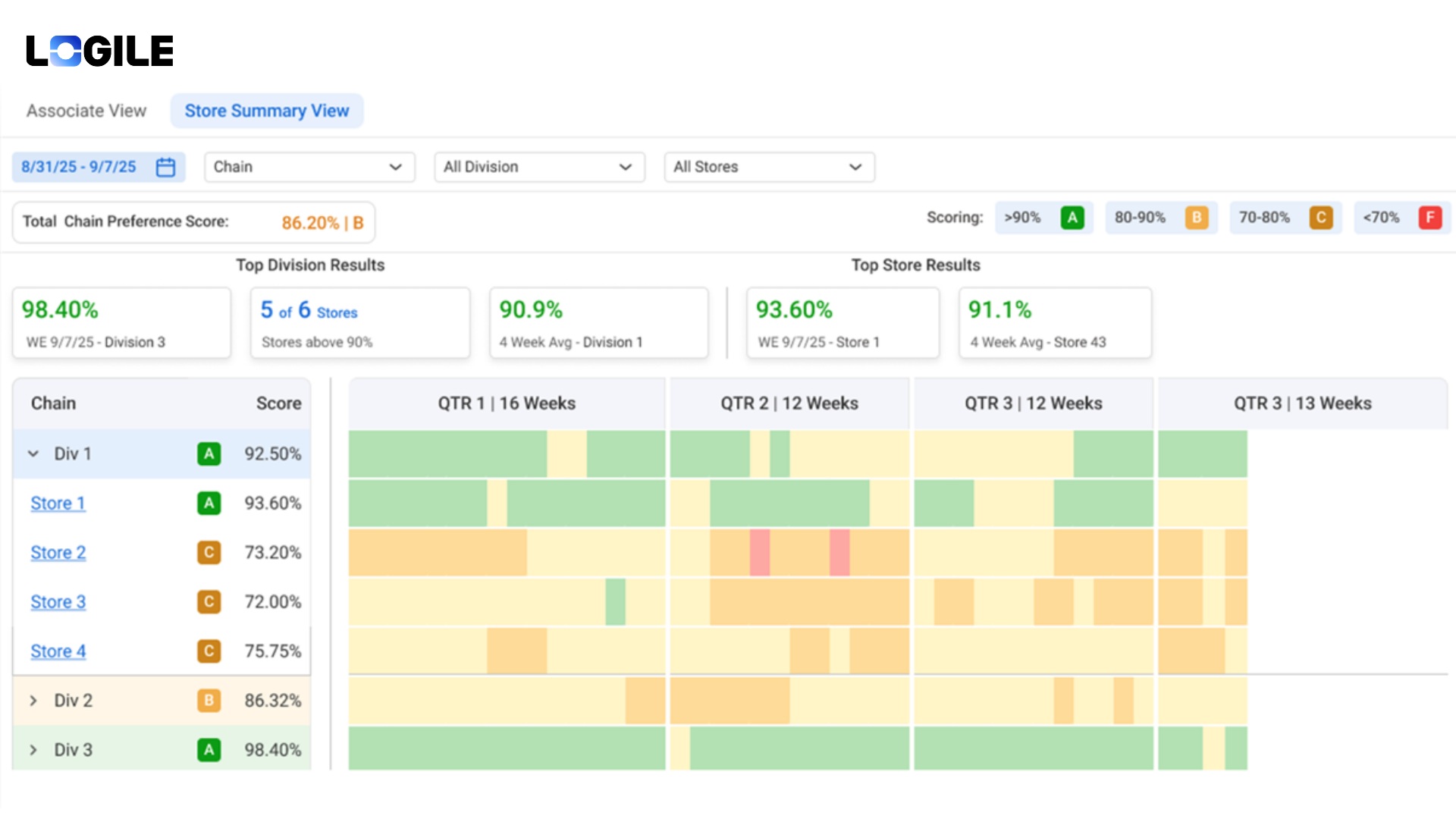
Scheduling then matches the resulting workload with qualifications, availability, preferences and labor rules. Associates can use mobile self-service for schedules and shift choices; managers can support cross-department and cross-store coverage. Time and attendance records what happened. Task management supplies another piece of the answer: whether the work actually got done.
The fresh counter becomes the test
Vallarta Supermarkets provides a useful example. Before its fresh inventory deployment, the California grocer used disconnected systems across departments including produce, bakery, taqueria and seafood. Planning was fragmented, visibility limited and overproduction costly. Fresh food is a particularly stern auditor: a mistake eventually announces itself in the waste bin.
Vallarta expanded Logile into production planning, recipes, scales, grind and yield management. It introduced the technology by department, testing and refining processes while stores continued operating. The useful change was specific: produce more of the items customers wanted and less of those they did not. Better demand information acquired consequences at the preparation table.
In its December 2025 case study, Nucleus Research reported 1,070% ROI, investment recovery in less than a year and a half, and more than $10 million in attributable profit by year three. These are results from one deployment, rather than a forecast for every buyer. The analyst also reported a 15% reduction in software costs as legacy systems were consolidated.
Vallarta deployment · Nucleus Research, December 2025
The economics invite a more sensible purchasing question than “How clever is the AI?” A retailer must account for integration, new operating routines and training alongside software. Logile sells enterprise software and implementation expertise; the return depends on how those pieces are used. Vallarta’s result is persuasive precisely because it describes operational changes, rather than leaving the algorithm to take all the applause.
Nineteen auditions, one schedule
Customers include grocery operators such as Schnucks, Northgate González Market and Heinen’s, alongside Britain’s Booths and Marks & Spencer. Logile also addresses convenience, specialty, big-box and quick-service operations. Its website reports use across more than 40,000 locations in 11 countries. That is the company’s measure of its footprint.
Booths makes the selection process unusually tangible. Its published account describes automated scheduling for around 2,500 colleagues across 27 stores, following an evaluation of 19 vendors. Labour Resource Planning Manager Chris Thompson offered a useful buying rule: speak to the technical people. There is something reassuring about procurement advice that involves fewer adjectives.
“We spoke with 19 different vendors and it was always Logile for me.”Chris Thompson · Booths
Logile occupies a crowded market. UKG and Dayforce offer retail workforce tools linked to wider HR and payroll capabilities. Logile’s case rests on its particular combination of engineered labor, demand planning and fresh operations. Buyers comparing them should follow a real workflow through the products: a promotion, a changing workload, a schedule and a production decision. Feature lists rarely reveal where the handoffs become awkward.
Patient money, longer horizons
Founded in 2005, Logile was historically bootstrapped before announcing a Series A investment from Sixth Street Growth in January 2023. Founder and CEO Purna Mishra described the partnership as a way to expand markets, sales efforts and product development. The leadership team also identifies Ellen Curnes and Rick Schlenker as co-founders.
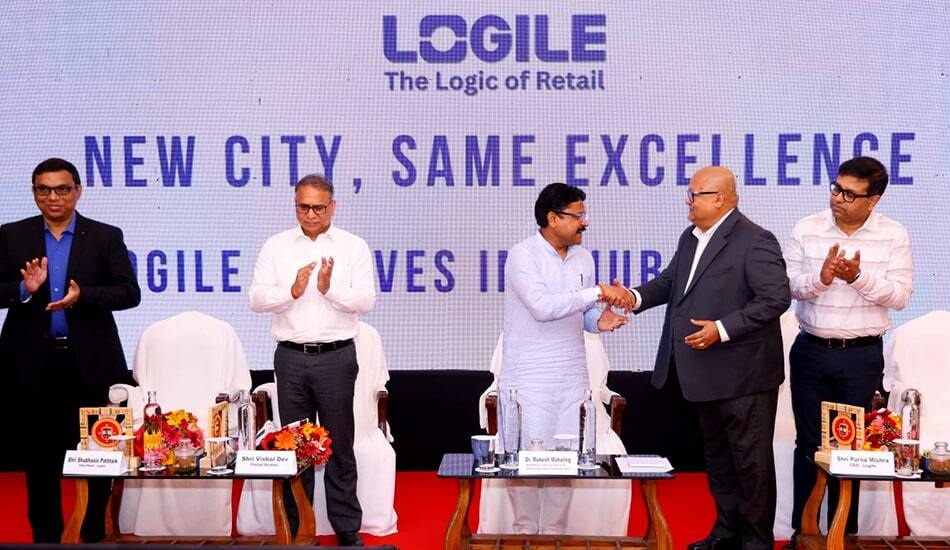
In August 2025, Logile announced its Global AI Innovation Center in Bhubaneswar, India. Its stated agenda includes agentic systems and conversational interfaces for retail operations. The careers story emphasizes engineers, retail practitioners and implementation specialists working toward store outcomes. That is a statement of intent; the daily test remains whether their tools help the people using them.
The planning horizon lengthened in 2026. July’s Enterprise Productivity Simulator lets retailers model staffing, wages, service levels and operating hours before committing resources. September’s Long-Term Staff Planning addresses capacity, skills and hiring months ahead. Together they extend the same logic: discover a mismatch while there is still time to do something about it.
Start with one department
The portable lesson is procedural. Measure the tasks. Agree on demand. Test a department. Compare the plan with the work performed, then refine it before expanding. Vallarta’s phased approach gives that advice a practical shape.
The conditions matter. A forecast cannot repair inaccurate labor standards, missing item data or a shortage of qualified people. This is an inference from the operating model, and a useful limit on its promise. Connected planning earns its keep when managers trust the inputs and teams use the plan. At the bakery counter, the final measure is wonderfully ordinary: enough bread, enough hands, and fewer things thrown away.