The modern grocery store is a machine that insists on pretending it is a room. Walk in and you see oranges stacked in pyramids, a bakery case, a checkout line. Behind the scenery sits a small weather system of demand: deliveries arrive, bread cools, an employee calls out, rain changes traffic, and a promotion suddenly works rather better than planned. The customer sees a shop. Purna Mishra sees a scheduling problem with excellent lighting.
That perspective has carried him through four decades of software. Long before he founded Logile, Mishra worked on optimization at Carnegie Group and on real-time aircraft maintenance planning at American Airlines. The objects changed when he moved into retail. The intellectual nuisance did not. A plane needing maintenance and a deli needing hands both force the same question: how do you put limited resources where the work will appear, before waiting becomes expensive?
Mishra's answer became a company. He founded Logile in 2005, after selling his first workforce-software business the previous year. For most of the next eighteen years, Logile ran without institutional capital. It began in labor planning and scheduling, then accumulated the other pieces of a store day: demand forecasting, time and attendance, inventory, fresh-food production, tasks, communications and compliance. The aim was not a crowded toolbox. It was one plan that could survive contact with the floor.
The early algorithmFirst, make the unruly thing legible
Mishra studied computer science at Motilal Nehru National Institute of Technology Allahabad from 1976 to 1980, then earned a master's degree in the subject at the University of Oregon. By 1986 he was a senior engineer at Carnegie Group, one of the early commercial artificial-intelligence companies to grow from Carnegie Mellon University's orbit. After a short period at AIT, he joined American Airlines in 1990 as a senior architect.
Aircraft maintenance is a bracing education in the difference between a tidy plan and an operational one. Machines have histories. Parts have constraints. Work has sequences. Delay has a price. Mishra developed and implemented real-time planning and scheduling systems there, then carried the logic into a less glamorous but more ubiquitous puzzle: labor.
In 1994 he founded SoftThought Systems and led the design of FDS, a workforce labor-scheduling product. He later served as president of Timera, then as a vice president at JDA Software after the 2004 sale of his first company. Logile followed in 2005. Seen as a list, the moves resemble a résumé. Seen as a line of inquiry, they are one long experiment in converting demand into work and work into time.
One problem, five chapters
- Carnegie Group and early AI
- Aircraft maintenance planning
- SoftThought and labor scheduling
- Logile begins
- Simulation and long-range staffing
“We want associates to see their schedules and work assignments as fair, as agreed upon when they were hired.”Purna Mishra on retaining frontline staff
The human variableA fair schedule is still a serious piece of software
Workforce management has a dreary name for something intimate. A schedule determines whether somebody gets the hours expected, can attend a class, can collect a child or is asked to cross town for a shift that begins too soon. Mishra talks about the subject in practical stages: hire the right people, give them the hours they expected within their preferred availability, make the work meaningful, and make assignments feel fair.
The humane language does not make the engineering simpler. A retailer must predict traffic and sales, translate them into tasks, account for skills and availability, obey scheduling rules, and adjust when the world declines to follow the forecast. Logile's approach is to let the same demand signal feed those decisions. Weather, prices, promotions, events, seasonality and special orders can affect an item-level forecast. Labor standards turn that volume into work. Scheduling decides who can do it.
The same signal, all the way to the aisle
This is where Mishra's taste for unification matters. Retailers have often bought standards from one vendor and scheduling software from another, with forecasts and inventory somewhere else again. Each handoff creates a chance for the store to inherit conflicting priorities. His proposition is almost domestic: everyone should consult the same calendar. In software terms, that means forecasting, labor, production and inventory moving from a shared model instead of exchanging apologies after the fact.
Capital, eventuallyEighteen years before the first outside check
The company's financing followed a similarly patient rhythm. Logile was historically bootstrapped, Mishra said when it closed a Series A investment from Sixth Street Growth in January 2023. By then, the business had been operating for nearly eighteen years and its products were deployed across retail locations in North America, Europe, Asia, Australia and Oceania. The undisclosed investment was intended to expand sales and marketing, grow the team, and accelerate product development.
There is an old comedy in calling money a milestone: one celebrates a transaction by immediately promising to spend it. Mishra framed the deal as a question of timing. Logile had already built its place in store planning; the partner was there to extend the vision across more markets. The distinction is important. Capital arrived as an accelerant to a formed idea, rather than as a substitute for one.
That idea kept widening. Inventory joined labor. Fresh production brought the perishable clock into view. Food-safety monitoring and store communications pulled more of the working day onto the platform. In 2026, Logile introduced an enterprise productivity simulator designed to let retailers model workforce, operational and financial choices before turning them into budgets or schedules. The store became, in effect, a system one could rehearse.
BhubaneswarThe plan returns to India
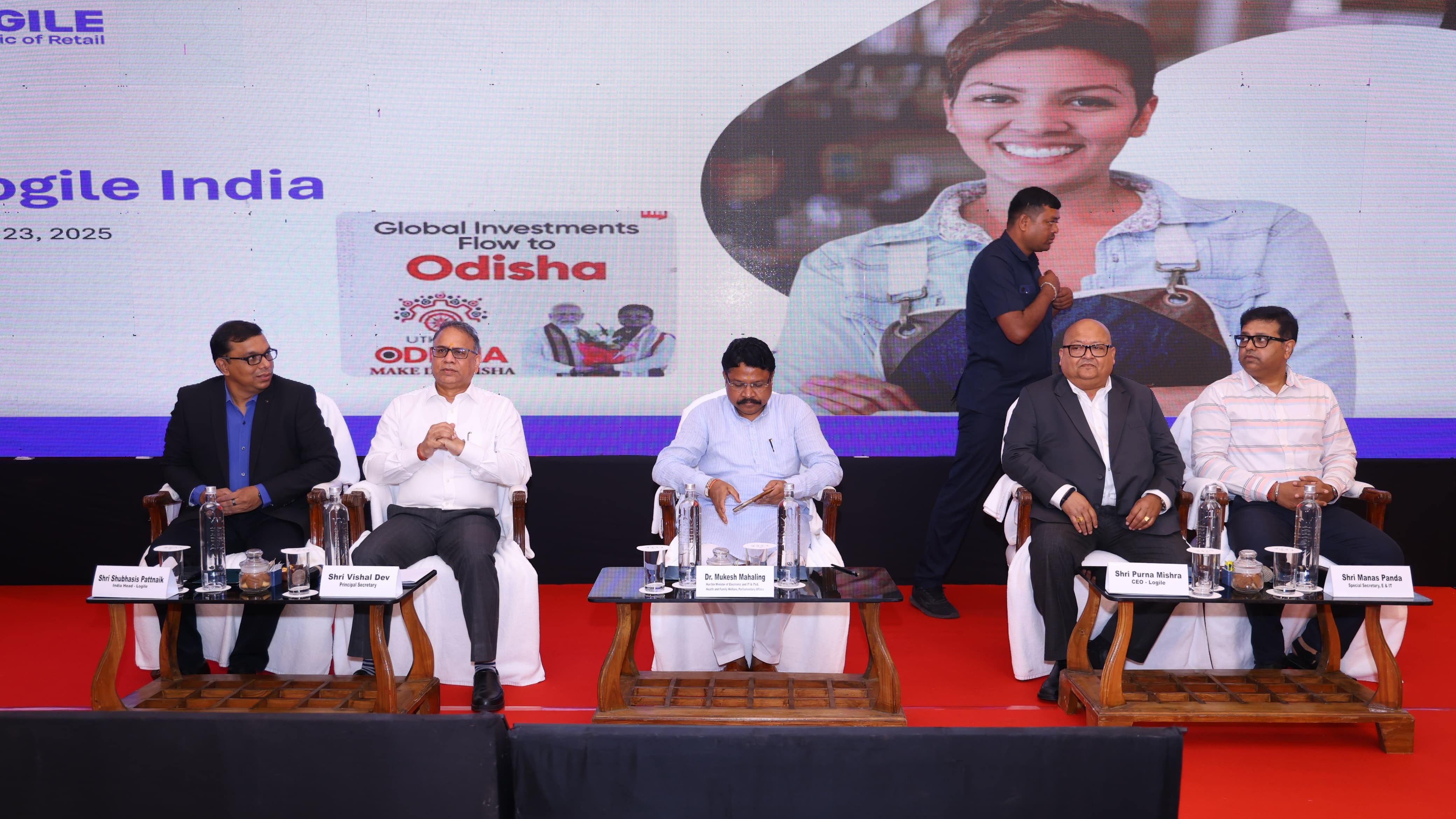
In 2025, the story acquired a return journey. Logile opened an AI innovation center in Bhubaneswar, giving its India operation a base for research and product development. Mishra described a personal connection to Odisha and made a striking declaration at the launch: buildings and software were not the essential resource. The company needed people who would stay and grow with it. “Hence, Bhubaneswar is the city,” he said.
The center's brief is concrete despite the industry's fondness for misty AI nouns. Its teams are working on systems for forecasting, labor planning, task execution, replenishment, shrink and fresh production. Mishra has described the ambition as autonomous agents that learn, adapt, collaborate and communicate with the people running stores. The grand language is tethered to ordinary difficulties: how much to bake, when to replenish, where labor will be short.
Bhubaneswar also reveals something about his operating temperament that the company timeline alone cannot. This is a founder who spent years turning one category of software into a broader platform, then chose to build a long-term technical base rather than merely announce a satellite office. At the ceremony, the subject returned to commitment. Software companies sell scalability. Mishra, on that stage, spoke about staying.
“For the first time, retailers can see workforce challenges developing months before they land in the schedule.”Purna Mishra, September 2026
The next shiftA crystal ball with a labor model inside
The latest chapter pushes the clock outward. In September 2026, Logile announced Long-Term Staff Planning, a product intended to look six, nine and twelve months ahead. Annual budgets normally sit at one end of the process and near-term schedules at the other. Between them lies a fog in which capacity gaps, missing skills and seasonal demand can remain invisible until the available solutions are overtime, rushed hiring or simply operating short.
Mishra calls the new view a crystal ball for operations and human resources, though the machinery is made of less mystical ingredients: demand forecasts, labor models, workforce data and recommendations. If a holiday peak will require a particular skill in a particular store, the software is meant to surface the problem early enough to cross-train someone, offer hours across departments, move available talent or recruit with precision.
It is the aircraft-maintenance lesson in a grocery uniform. Trouble is cheaper when it appears first as information. The same conviction connects Mishra's early architecture work, his first company, two decades of Logile and the current enthusiasm for agentic AI. He has not spent his career trying to abolish uncertainty. He has tried to give it an appointment.
A store will always surprise its plan. The weather will turn. A delivery will be late. A queue will form with impeccable timing just as a manager steps away. Mishra's wager is that planning can become continuous enough, specific enough and shared enough to absorb the joke. In the end, the software disappears into a well-run afternoon: the shelf stocked, the shift fair, the fresh food ready, the customer unaware of how many calculations produced something that looks perfectly ordinary.