The ordinary fruit sticker is a remarkably lazy object. It names the grower, carries a barcode, annoys anyone who bites before peeling - and then retires. Ryp Labs looked at that familiar scrap of adhesive and asked it to work a second shift. Its StixFresh technology turns a sticker, label, sheet, or packaging insert into a slow-release delivery system for plant-inspired compounds that can inhibit mold and delay spoilage around fresh produce.
The company is based in Bothell, Washington, but its origin sits an hour south of Kuala Lumpur. Zhafri Zainudin grew up around agriculture and watched fruit sellers, including his family, lose inventory when produce rotted before it sold. While working on a soil treatment for rubber trees, he encountered compounds with disease-repelling potential. The idea that followed was disarmingly practical: fruit already carried stickers, so why not coat those stickers with something useful?
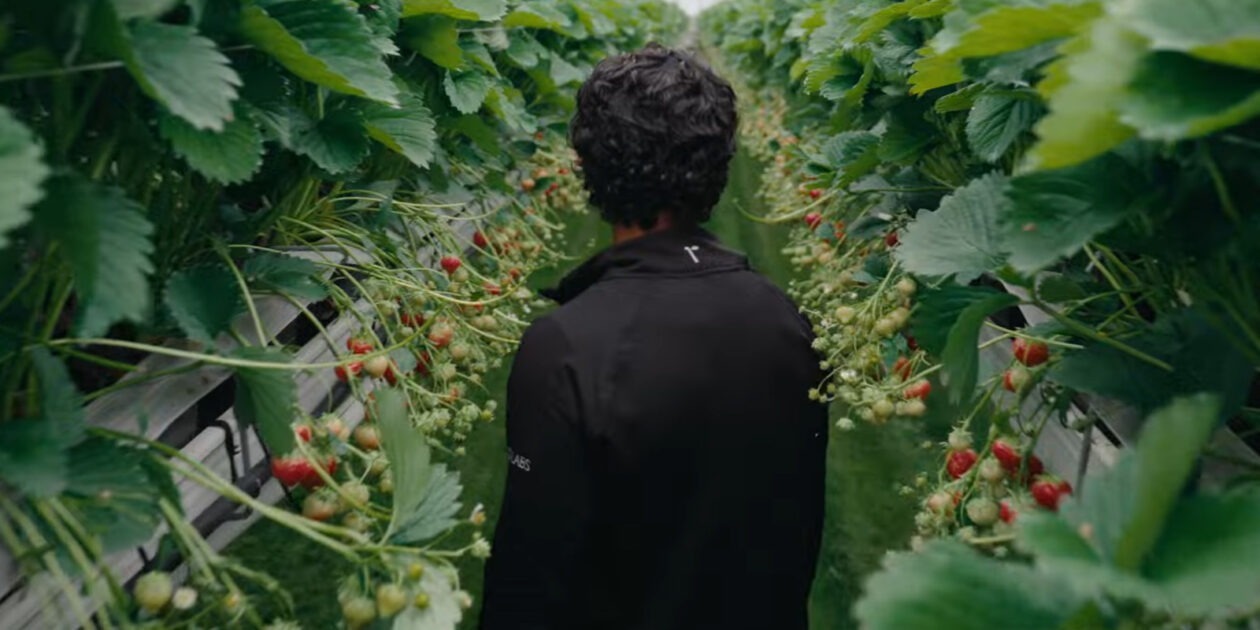
What the company actually does
It sells time, measured in saleable fruit
Ryp Labs is a B2B crop- and food-protection company. Its customers are growers, packers, exporters, distributors, agricultural cooperatives, and grocery retailers. They do not buy a sticker for its decorative charm. They buy extra time between harvest and the moment a berry grows fuzz, a mango develops disease, or a shipment becomes a write-off.
The underlying formulation mimics a trick plants have used for ages. Plants release volatile compounds as part of their own defense. Ryp identifies compounds useful against particular post-harvest diseases, traps them in a material matrix, and tunes their release over time. The active format can sit directly on suitable produce or nearby - inside a berry clamshell, on a label, in a box, or in a sachet. That last detail matters. A treatment that works at a distance can join an existing packing line without requiring a coating bath or a new machine.
The flagship is StixFresh. Shelf Defense extends the same delivery logic to label and sheet formats. StixFresh+ and Shelf Defense+ appear on the Organic Materials Review Institute's product list for specified post-harvest handling uses, with restrictions that buyers still need to follow. Ryp also offers private-brand applications, allowing a distributor or retailer to put its own identity on the surface carrying the technology.
The origin cost
A cheap-looking product with an expensive education
The sticker did not arrive cheap or quickly. In Malaysia, it took the early team two years to secure RM800,000 from an angel investor. That money funded product development and manufacturing equipment in 2014. Malaysian Technology Development Corporation added RM475,000 in 2016, the year the product began selling to small and midsize agricultural businesses in Negeri Sembilan.
Then came the commercialization bill. Moody Soliman and Steve Hulteng, operators with medical-device and biotech experience, connected with Zainudin through a conference encounter in Dubai and formed Ryp Labs in 2017. They believed the proof of concept might be a year from market. It took about five. The work moved from an intriguing mango sticker to a repeatable platform: identify the biology, stabilize the compounds, manufacture consistently, satisfy food-safety requirements, and prove performance outside a controlled lab.
Impact Washington later helped the Bothell operation formalize the unglamorous machinery of a food company: current good manufacturing practices, preventive controls, safety records, standard operating procedures, onboarding, and annual training. The program reported 10 jobs created or retained, $345,000 in new investment, and $250,000 in cost savings. It also reported that Ryp moved into larger lab-equipped space and sold the developed product to Walmart.
What failed first
The obvious markets were big, polished, and stubborn
Ryp initially aimed at distributors and packing houses in the United States and Europe. On a spreadsheet, the choice looked adult and inevitable: large produce markets, sophisticated buyers, established infrastructure. In practice, the company saw little traction. A California strawberry shipper sending fruit to New York already had a reasonably robust cold chain. It still lost fruit, but the system was tolerable enough to protect 50-year habits.
The team's assumption had been that the largest markets would produce the largest opportunity. What changed their mind was urgency. In supply chains where refrigeration is patchy, customs is unpredictable, or long-distance exports can sit in heat and humidity, spoilage is not an efficiency footnote. It can destroy a shipment. Soliman has described some exporters facing losses as high as 80 percent. In those conditions, a tool that makes more fruit saleable is not a sustainability accessory. It is margin insurance.
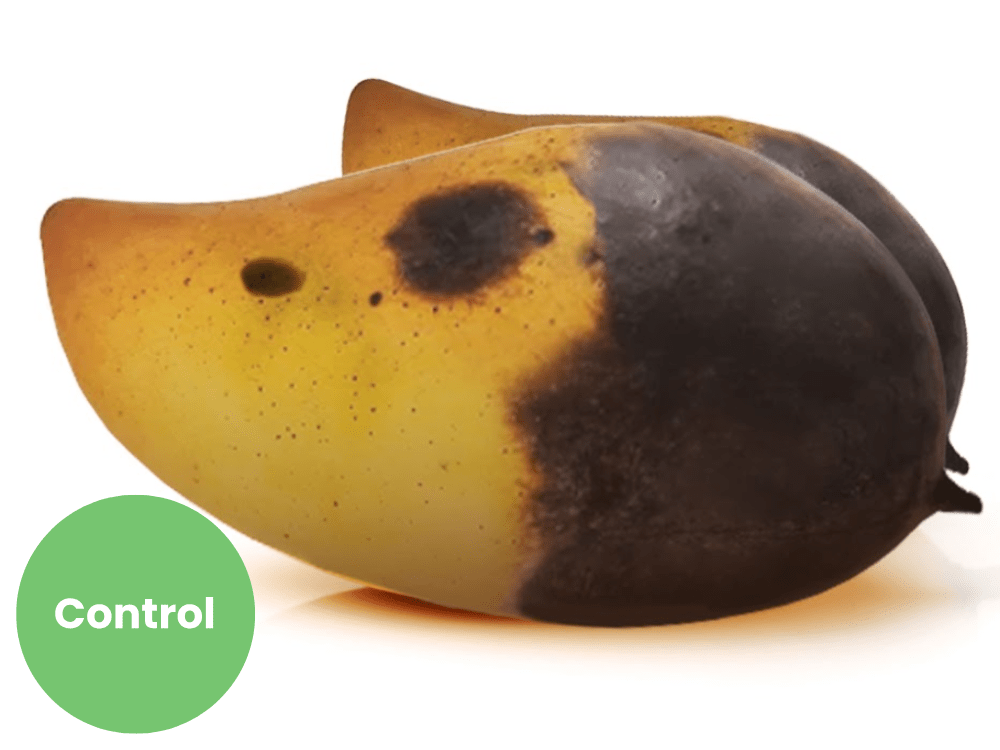
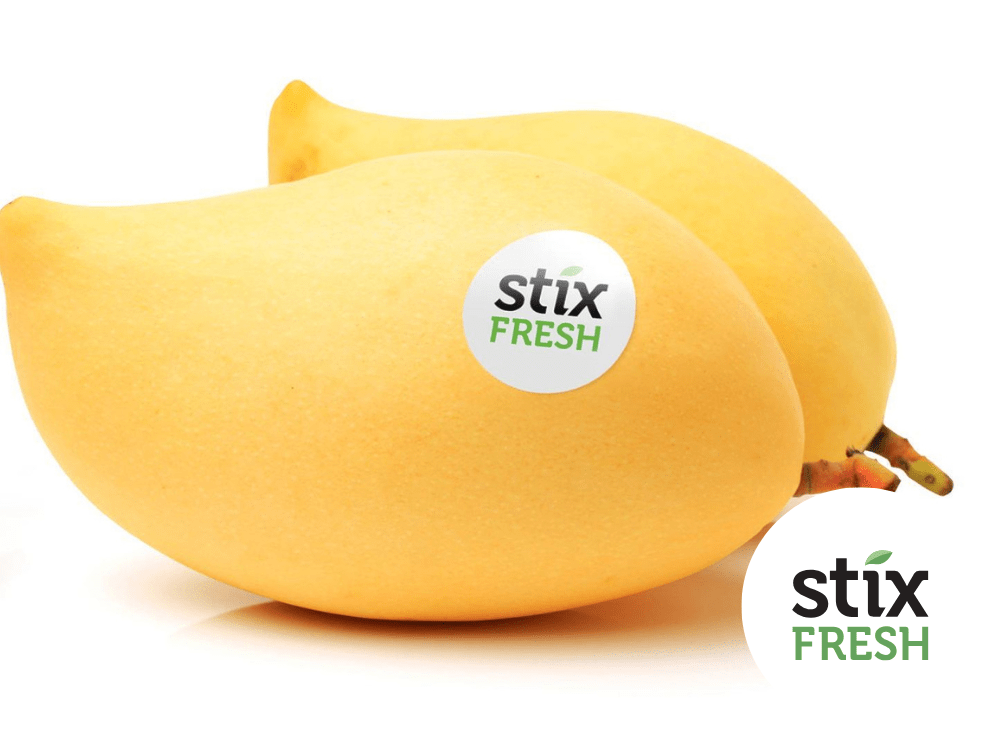
This reframed the sales pitch. Ryp could lead with climate impact, but the operating buyer cared about sell-through, shrink, route length, and gross profit. The company says one deployment increased saleability about fourfold. A 2023 interview also described a Costa Rican retailer trial that added two days to strawberries, roughly doubled grape shelf life, and added 20 days to citrus. Those are company-reported results, not a promise for every crate. They are useful because each result is attached to a particular crop and commercial setting.
Selected retail pilot outcomes / company reported
Different units are shown faithfully rather than forced onto one scientific scale. Results depend on produce, disease pressure, packaging, temperature, humidity, and placement.
How the business works
A consumable layer on top of the produce trade
Ryp sells to businesses, typically beginning with a pilot designed around the customer's fruit, route, packaging, and failure point. Its brochure lays out a six-step courtship: an introductory call, a specialist conversation, a possible site visit, a custom pilot design, product samples, and joint validation. If the economics work, sticker or label consumption can scale with package volume. Public unit pricing and company revenue are not disclosed.
That puts Ryp in the post-harvest shelf-life market beside several different tools. Apeel uses edible coatings to manage moisture and gas exchange. AgroFresh is known for ripening management. Hazel Technologies and others use active packaging inserts. Conventional alternatives include fungicides, modified-atmosphere packaging, better forecasting, and more refrigeration. Ryp's distinction is a vapor-phase, plant-inspired formulation delivered through cheap, familiar surfaces. It can work on non-climacteric fruit such as strawberries, which do not continue ripening after harvest, because the mechanism is not merely a ripening switch.
The company's geographic model is taking shape through partners. Sanyo Trading signed a distribution agreement in January 2025 and launched StixFresh in Japan, with Southeast Asia in view. Ryp won Lineage's 2024 global Food Chain Innovation Challenge, gaining $50,000, six months of executive-led incubation, cold-storage site visits, data help, and customer introductions. It also operates a development site in Portugal, where a public startup-support program is backing table-grape work.
Funding has mixed equity with grants. The $8.1 million Series A in 2023 included King Philanthropies, The Good Investors, BCP Ventures, Argosy Foundation, and Ocean Born Foundation. The National Science Foundation awarded $255,044 in 2021 and $996,291 in 2024. A U.S. patent for the anti-spoilage formulation and its manufacturing method followed in September 2024. USDA later backed research into humidity-responsive packaging. This is a science company wearing the wardrobe of a label supplier.
What another founder can copy
- Attach new behavior to an old object. The sticker was already part of the produce workflow, which lowered the integration tax.
- Rank markets by pain, not acreage. A smaller export corridor with unreliable refrigeration can buy faster than a giant efficient market.
- Translate impact into a buyer's metric. “Less food waste” became saleability, shrink reduction, distance, and profit.
- Ship a bounded pilot before perfection. A controlled customer deployment answered questions the lab could not.
- Narrow the wedge. Ryp focused on high-value, short-lived produce rather than promising to preserve the entire grocery store at once.
The honest boundary
A sticker cannot rescue every broken food system
Ryp's technology attacks biological spoilage. It does not fix poor demand forecasting, cosmetic rejection, over-ordering, price shocks, or a truck that never arrives. Even within spoilage, one formula is not universal. Different fruit, pathogens, package volumes, airflow, temperature swings, and humidity levels change the required dose and release profile. The company was working with three formulations across 19 fruits in 2023 - evidence of a platform, but also of necessary tuning.
When the model is unlikely to work
- The cold chain already controls loss so well that extra shelf life is worth less than the sticker.
- The main waste comes from forecasting, grading rules, handling damage, or pricing rather than mold and decay.
- The produce, package geometry, and storage conditions have not been validated together.
- Airflow or placement prevents the vapor-phase compounds from reaching a useful concentration.
- A buyer treats OMRI listing as blanket permission instead of following the product's stated post-harvest use restrictions.
The most credible version of Ryp Labs is therefore smaller than the slogan “end food waste” and more useful than it. Put the right formulation near the right fruit, inside a route where decay is expensive, and verify the result in the customer's own packaging. The payoff is not immortality. It is a few more saleable days - sometimes enough to cross a border, reach a shelf, or turn a threatened shipment back into revenue.
That is why the company fits across climate, enterprise, and logistics. The chemistry may reduce waste and emissions, but the purchase happens because it protects a commercial load. Ryp did not win merely by making a smarter sticker. It learned which customer already understood the price of another rotten strawberry.