A blueberry is a tiny clock with a blue coat. Pick it, and the hands begin to move. The fruit keeps breathing. It consumes oxygen, releases carbon dioxide, loses water and, sooner or later, becomes the unhappy discovery at the back of a refrigerator. George Lobisser has spent a large part of his career asking how to slow those hands without ruining what made the fruit worth eating.
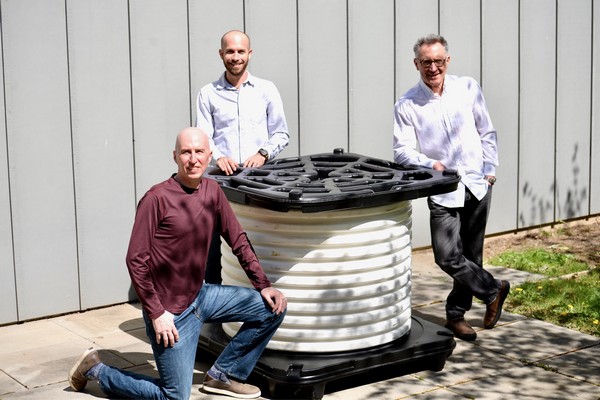
His answer sits on a pallet. A RipeLocker is a reusable chamber that lowers atmospheric pressure around produce or flowers, then continually manages the balance of oxygen and carbon dioxide inside. The aim is not immortality. It is a more useful interval between harvest and decline: weeks for roses, blueberries or cherries to travel, wait and arrive with their quality intact.
This is a founder story with remarkably little romance about disruption and a great deal of attention to forklifts. Lobisser insisted that the original chamber fit a standard pallet footprint. A clever machine that could not move through a packing house, truck or refrigerated container would be clever in all the wrong places. The limitation became the design.
An accountant walks into an orchard
Lobisser did not begin with fruit science. He earned an accounting degree at the University of Northern Colorado and a law degree from Gonzaga. His working life began in Deloitte's tax department, where he advised wealthy clients on business, accounting and taxation. He later became a partner in S/L Partners, a Seattle private equity firm that took active roles in the companies it backed.
In 2000, he bought Pace International and became its president and CEO. Pace worked on postharvest treatments for pome fruit, citrus and stone fruit. During Lobisser's 12-year tenure, it expanded from a smaller competitor into a significant international business. By the time Pace was sold to Valent BioSciences in 2012, the company says about 85 percent of revenue came from products developed during those years, including fungicides, fruit coatings, sunburn protectants and application technology.
That chapter gave him an education no university could quite arrange. Fruit quality is science tied to commerce by a refrigerated truck. A treatment must work in an orchard or packing house, comply with rules, survive distribution and make economic sense to the person paying for it. Lobisser also served on corporate and civic boards, including AgroFresh, the Washington State Investment Board, Seattle Repertory Theatre and the Produce for Better Health Foundation. He taught part time at the University of Washington's business school. The accountant, lawyer, investor and operator gradually converged on one perishable subject.
“Consumers want berries year-round. If they're traveling, they're spoiling.”George Lobisser, speaking with GeekWire in 2020
The family hardware experiment
After the Pace sale, Lobisser returned to postharvest work from the other side of the problem. RipeLocker, founded in 2016, was built with his son Kyle, a devices engineer whose résumé included Boeing, Apple and an electric-aircraft startup. The pairing made immediate sense: one knew the produce industry and its buyers; the other knew how to turn an atmospheric idea into hardware.
Their chamber uses low pressure and a carefully managed amount of oxygen to reduce a perishable's respiration. The air stays saturated with water vapor, which helps limit dehydration. Sensors watch oxygen and carbon dioxide, and the system can adjust as the cargo changes. Lobisser's favorite shorthand is admirably plain: “It's simple fruit physiology.” Simple, in this case, requires seals, software, refrigeration, crop-specific settings and enough patience to watch berries grow old very slowly.
The dynamic part matters. During one trial, refrigeration inside a Sprinter van failed and the temperature climbed to roughly 60 degrees Fahrenheit. Warmer berries respire faster. The chamber responded by allowing in more oxygen, and the shipment reached the grower in good condition. A machine built for biology has to respond to biology, not merely maintain a number chosen at departure.
The most persuasive berry in Seattle
Hardware funding can turn a founder into a professional explainer. Lobisser had a tastier shortcut. In 2020, three friends - Avalara co-founders Scott McFarlane and Jared Vogt, and early investor Gary Waterman - sampled blueberries that had spent 98 days in a RipeLocker. According to Lobisser, their next question was: “How much do you want?” They participated in a $2 million round.
It is the rare financing anecdote in which due diligence can be served in a bowl. Yet the bite worked because it compressed years of trials into something anyone could judge. The thesis was quality over time. The evidence tasted like a blueberry that had no business tasting young.
RipeLocker raised another $5 million in 2021 as it moved toward commercial use. By September 2023, the company reported $30 million raised since inception, including a fresh $10 million commitment from existing and new investors. The money was earmarked for hardware and software improvements, worldwide trials and inventory. Lobisser said revenue growth was coming from roses, blueberries, walnuts and fresh hops.
George and Kyle Lobisser co-found RipeLocker.
A $2 million angel round follows extensive prototypes and berry trials.
Commercial chambers begin deployments for blueberries, cherries and flowers.
New and returning investors add $10 million for product improvements and inventory.
A six-year cherry collaboration delivers fruit to retail a month after harvest.
Biology keeps its own calendar
The blueberry demos are vivid. The cherry work is more revealing. Cherries pit. Their stems brown. Acid falls. RipeLocker spent six years working with Gebbers Farms and Chelan Fresh on harvest practices and storage protocols. In the 2024 season, cherries picked in mid-July reached a national retailer in mid-August and passed quality control without exceptions. Other chambers held cherries until mid-September for the Chinese Moon Festival.
Lobisser credited the advance to the close work between grower Johnny Gebbers and RipeLocker's fruit scientist Brendon Anthony. That attribution tells you something about his operating style. The useful breakthrough did not come from a founder issuing a grand instruction. It came from the loop between the crop, the grower and the technical team, revised season after season.
“After six years of trials, we finally figured out the right techniques.”George Lobisser on the 2024 cherry season
A startup can release software on Tuesday and repair it on Wednesday. A cherry gives you one harvest, then politely schedules the next test for another year. RipeLocker's record is full of this slower arithmetic: roses held for weeks, fresh hops stored beyond their brief seasonal window, walnuts kept for years and berries shipped across oceans. Every crop brings a new respiratory profile and a new way to refuse the founder's assumptions.
What the chamber really sells
Lobisser often talks about quality, but the commercial product is also optionality. A grower with more postharvest time can wait out a glut, reach a farther buyer or harvest before a weather event. A shipper may move suitable cargo by ocean instead of air. A retailer gets a longer selling window. Waste that would have been written off can remain inventory.
The environmental claim follows the same logic. Extending life may let some highly perishable goods use slower freight and arrive in sellable condition. The chamber is reusable and made with recyclable materials. None of this eliminates refrigeration. It makes the cold chain less brittle by adding another controlled environment inside it.
A new system must fit the physical habits of the industry that will adopt it.
The best demonstration lets a buyer experience the central claim directly.
Dynamic controls matter because living cargo changes during the journey.
Long trials are useful when every season produces a more precise protocol.
The idea contains a pleasing inversion. Most founders are urged to move faster. Lobisser's company exists to make the product inside it move slower. Fruit still ages. Flowers still open. The victory is measured in postponement, and postponement is valuable because supply chains run on calendars that nature never agreed to.
His own career now reads like a set of nested second acts. Tax adviser became investor. Investor became postharvest executive. Executive became founder. Chemistry gave way to atmospheric control, though the problem stayed almost exactly where he found it: between the moment of harvest and the moment someone takes a bite.
Lobisser once said he started RipeLocker from a passion for quality rather than benefits that fit neatly beside a dollar sign. The irony is that quality becomes economic the instant a berry has to cross an ocean. Give it more time and the grower gains choices, the retailer gains days, and the blueberry gets to arrive without apologizing for the trip.