The blueberry on the grocery shelf is losing a quiet race. From the moment it is picked, it keeps breathing - burning its own sugars, softening, dulling, drifting toward the compost bin. For most fresh fruit, that clock is measured in days. RipeLocker's whole business is a bet that you can nearly stop the clock by taking away the one thing the fruit needs to run it: air.
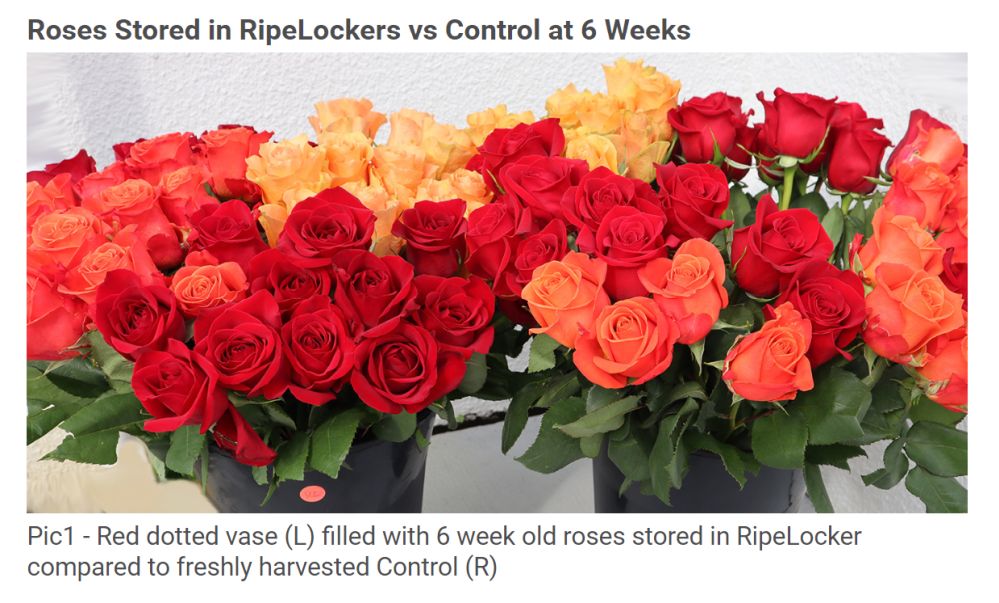
The company, based on Bainbridge Island across the water from Seattle, builds reusable vacuum chambers for storing and shipping perishables. Pull most of the air out, hold the container at roughly a tenth of a normal atmosphere, and dynamically manage the oxygen and carbon dioxide inside, and a blueberry's respiration falls by more than half. Fruit that would last days stays market-fresh for eight to twelve weeks. Fresh hops that normally have to be brewed within about a day of harvest keep their color and aroma for two months. That is the pitch, and unusually for agtech, a good deal of it has been measured by other people.
The ideaA tenth of an atmosphere, actively managed
Most long-haul produce already travels under some form of controlled or modified atmosphere - containers flushed with nitrogen to crowd out oxygen and slow ripening. RipeLocker's approach is different in a way that sounds small and turns out not to be. Instead of flushing gas in, it pulls the air out, then actively measures and adjusts the pressure and gas mix inside the chamber over the whole journey. The system is dynamic, not set-and-forget.
Evacuate
Air is pumped out until the chamber sits near a tenth of a standard atmosphere - very little oxygen left to burn.
Sense
Onboard monitoring reads conditions inside the sealed chamber throughout storage and transit.
Manage
Oxygen and CO2 are dynamically tuned to a recipe set for that specific crop - berries, hops, cherries, roses.
Reseal
If customs opens a container, the seal is re-established and the air pulled again - a controlled-atmosphere box can't recover.
Low oxygen is the active ingredient. Respiration is essentially slow combustion, and starving the fruit of oxygen turns the burner down. The chambers are pallet-sized, made from recycled materials, and reusable - so the sustainability argument is baked into the hardware rather than bolted on afterward. That resilience detail in Step 04 matters more than it looks: a produce container is regularly opened for inspection, and a system that can simply re-evacuate is far more forgiving than one that is compromised the moment the door cracks.
A game-changer in the fight against SWD infesting fresh fruit.Dr. Spencer Walse, USDA Research Chemist
The surpriseThe trial that killed every fruit fly
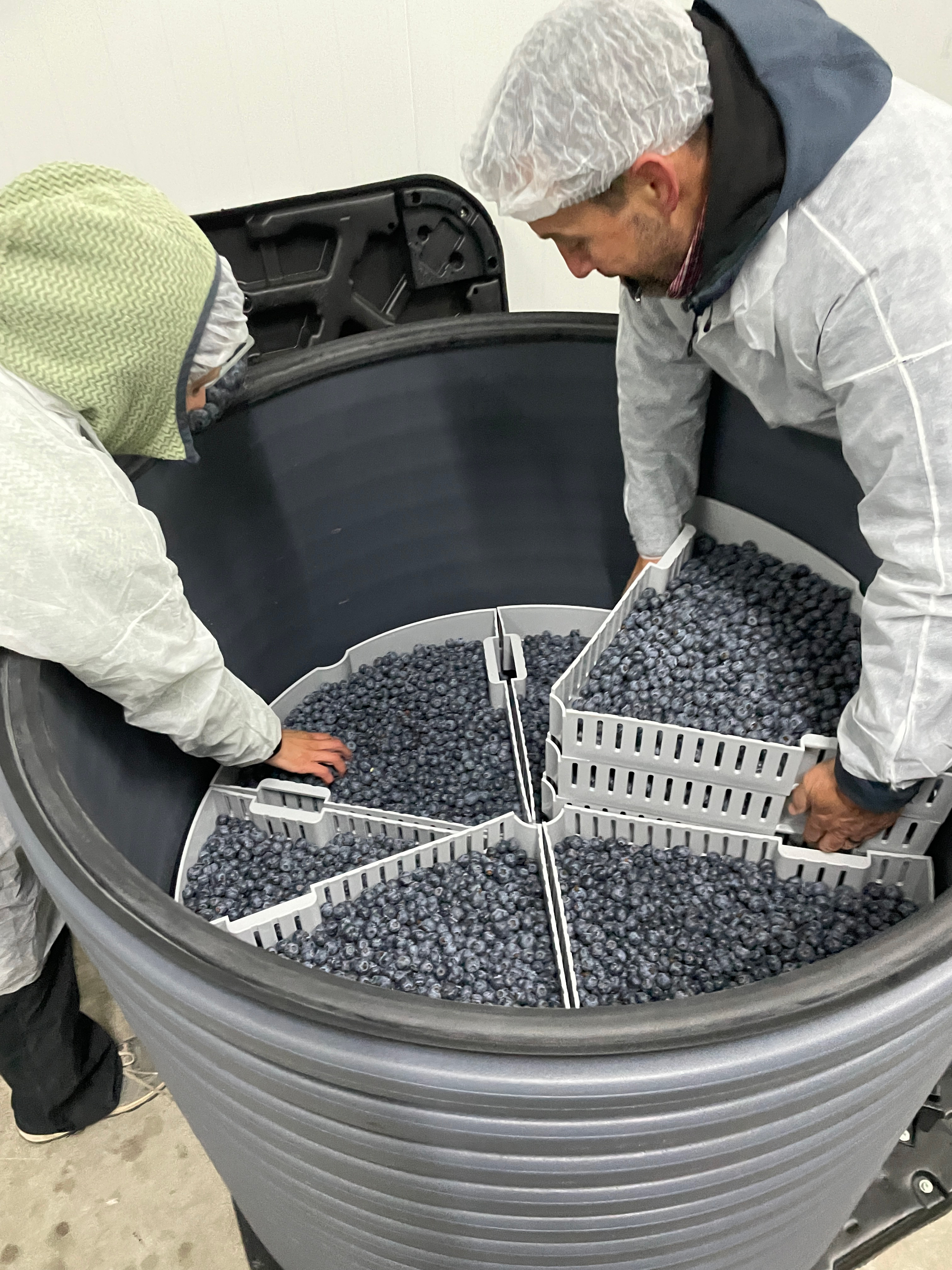
Sometimes a company finds a second product by accident. RipeLocker set out to extend shelf life; along the way, USDA Agricultural Research Service scientists put spotted-wing drosophila - a costly berry pest - into the equation. When infested blueberries sat inside a RipeLocker for six days, researchers reported 100% kill of every life stage of the insect, eggs and larvae included, without chemicals. The vacuum that slows a blueberry's metabolism also happens to be lethal to what is living inside it.
For a grower, that turns one box into two tools: a way to ship fruit farther and a way to meet quarantine requirements without a chemical treatment. It is the kind of dual-use result that is hard to manufacture on purpose and very useful to have stumbled into.
The customersBerries, hops, and a bet on ocean freight
RipeLocker sells to the people who move perishables: growers, packers, shippers and floral exporters of high-value crops. The clearest name on the list is Agrovision, the global berry producer behind the retail brand The Fruitist, which in 2024 agreed to deploy the chambers across its supply chain to keep berries fresh for roughly twelve weeks. On the other end of the volume scale, hop grower CLS Farms has used RipeLocker to deliver fresh hops to breweries such as Thomas Hooker Brewing weeks after harvest - a crop so perishable it was previously all but impossible to ship.
We can ensure prolonged freshness, access more distant markets, and introduce high-flavor varietals previously limited by shorter shelf lives.Steve Magami, Co-Founder, Agrovision
The bigger prize sits underneath those deals: freight. Air-freighting berries can cost several dollars a kilo; ocean freight is a fraction of that. The only reason so much premium fruit flies is that it would spoil on a slower boat. Stretch the shelf life far enough and a grower in Latin America can reach India, South Korea or Taiwan by sea, at a fraction of the cost and carbon. That is the market RipeLocker is really aiming at - not just fresher fruit, but a different mode of transport for it.
The scale-upFrom a drum to a whole container
The current product works, but it fights the economics of a shipping container. Because goods have to be transferred into individual drum-sized chambers and loaded one by one, a standard container packed with them carries only about half the tonnage of a normal load - which roughly doubles the freight cost per kilo and eats into the savings the technology is meant to unlock.
So RipeLocker is building the obvious next thing: a container itself. Under president Brendon Anthony, who joined in late 2024, the company has tested a 20-foot vacuum-chamber prototype - internally the RipeReefer - with blueberries and kiwifruit, and is engineering a 40-foot commercial version designed to hold roughly 18 tons, only about a tenth less than a standard reefer. The remaining hard problems are the honest kind: moving from steel to aluminum, and folding refrigeration inside the vacuum system rather than hanging it outside. The company has floated licensing the design to ocean carriers and reefer manufacturers rather than building a fleet itself, with trials targeted for late 2026 or early 2027.
The founderA chemist who bet on almost no chemistry
RipeLocker was founded in 2016 by George Lobisser, who is an unusual person to be selling a vacuum. For twelve years he ran Pace International, a company that became a global leader in the chemical side of postharvest - the coatings and treatments applied to fruit after it is picked. Having spent a career in that world, he started a company whose central claim is that you can do better with a little pressure and almost no air at all. His co-founder is Kyle Lobisser, and the roughly 17-person team leans technical, pairing fruit physiology with engineering.

The cap table is as unusual as the founder. Rather than raising from institutional venture funds, RipeLocker has been financed largely by angel and strategic investors - academics, agriculture executives, and the growers, packers and shippers who would actually use the product. A 2021 round of about $5 million was raised entirely from that circle. When the people writing the checks are also the people running the trials, the feedback loop is tight.
This capital enables us to leverage this data, begin manufacturing the commercial product and scale the company to meet increasing demand from global and national produce and flower growers.George Lobisser, Founder & CEO, RipeLocker
The honest caveatsWhere the bet could still fail
None of this is finished. The container-scale product that makes the freight math work is still in engineering and trials, not on ships. The economics of the drum format cut the other way today. And the results, while independently touched by the USDA, still come largely from the company and its partners. What RipeLocker has is a coherent thesis with real proof points on individual crops; what it does not yet have is a proven, deployed, container-scale business. The interesting question is not whether the physics works - it clearly does at pallet scale - but whether it can be packaged into something a carrier will run at volume.
Still, the core insight is durable and cheap to state: respiration is the enemy, and you can starve it. If RipeLocker gets the container right, the strangest object in the global cold chain might soon be a refrigerated box with almost no air inside it.