cambridge
(30)
EverQuote found growth by getting smaller.
The insurance matchmaker walked away from health coverage, sharpened its focus on cars and homes, and more than doubled revenue in two years. Its recovery reveals who really pays for a free quote.

Highland Capital and the art of the second yes
Malwarebytes turned Highland down before accepting $30 million. That small reversal explains a venture firm whose portfolio runs from rented dresses to warehouse robots.

TusPark UK bets on the space between discoveries
A £200 million Cambridge partnership put laboratories, investors and a route into China within reach of the same founders. The interesting part is what happens when those founders outgrow the building.

Creative Chaos is coming for the busywork.
The software firm that grew out of Karachi is rebuilding its business around the work between the apps. Its wager: the next useful AI project starts with a payroll headache, a missed handoff, or a very expensive spreadsheet.

Blitzy wants AI to read the whole codebase
The hard part of enterprise software is knowing what a change will break. Blitzy is betting that thousands of AI agents, working from the same map, can make that problem smaller.
A faster chip. A familiar way in.
Cambridge GaN Devices puts the difficult parts of gallium nitride inside the chip. Its bet: engineers will adopt better power electronics faster when they can keep tools they already trust.
Cambridge Cleantech knows who you need to meet
A smart air brick, a Japanese builder and methane trapped in water: Cambridge Cleantech connects climate inventions with people who can buy, test or fund them. Its business is making the next introduction count.
Cambridge’s female founders have more than dinner planned
A WhatsApp group grew into a network of founders, investors and practical business programmes. Cambridge Female Founders Network is betting that better introductions - and better preparation - belong on the same menu.
Cambridge Design Partnership gets past “almost works”
A prototype can impress a room and still be impossible to manufacture. Cambridge Design Partnership has built a business in that awkward gap, fixing everything from diagnostic instruments to the feel of a kitchen knife.
Gearset wants to end the Salesforce release-night shift
The Cambridge software company built its business on the awkward work of moving Salesforce changes into production. Now it wants an AI teammate to build those changes, too - with the same checks on the way out.
Redgate sells relief from the database release nobody wants to touch
The Cambridge software company built a business around the awkward work of changing databases safely. Its next test is turning a collection of trusted tools into a broader platform, with private equity backing and AI knocking at the door.
HubSpot
How two MIT classmates turned a hunch about buyer behavior into a $2.6-billion software platform that 288,000 businesses now run their growth on.
Apollo Atomics
Apollo Atomics is a Cambridge, Massachusetts nuclear startup building the most power-dense pressurized water reactor. By redesigning the steam generator - the bulkiest part of a conventional plant - into a proprietary Compact Steam Generator, the company shrinks a proven reactor design by roughly an order of magnitude, turning a decade-long construction project into a factory-built machine that fits on a truck and deploys in under 24 months. Founded by MIT nuclear PhD Assil Halimi and operator Drew Walker, Apollo is in Y Combinator's Spring 2026 batch and is testing its design in collaboration with MIT.
Harvard Student Agencies
Harvard Student Agencies (HSA) is the largest student-run company in the world. Founded at Harvard in 1957 as a 501(c)(3) nonprofit, it employs more than 900 Harvard undergraduates each year across roughly a dozen businesses - from The Harvard Shop and Trademark Tours to Let's Go travel guides, HSA Tutoring, GroupGear custom apparel, and Campus Insights user research. Students run every division as managers, gaining hands-on business experience while earning wages that help offset the cost of a Harvard education.
Flagship Pioneering
Flagship Pioneering is a Cambridge, Massachusetts life-sciences enterprise that invents, builds, and funds companies rather than merely investing in them. Founded in 1999 by Noubar Afeyan, the firm runs a systematic 'venture creation' engine - generating scientific hypotheses in-house, prototyping them in its own labs, and spinning validated concepts into independent operating companies in human health and sustainability. Its portfolio has produced more than 100 ventures, including Moderna, and it directs roughly $14 billion in capital.

Axiomatic AI
Axiomatic AI is a Cambridge, Massachusetts deep-tech company building AI that engineers can actually trust. It pairs frontier language models with formal mathematical and physics-based verification so that the reasoning behind a design decision can be checked, proven, and traced. Its first commercial focus is photonics and semiconductor engineering - fields where simulations are sophisticated but fragmented and a fabrication error is expensive. Founded in 2024 by a group of MIT and ICFO physicists and led by former White House quantum-policy lead Jake Taylor, the company raised an $18M seed in March 2026 to build what it calls the intelligence infrastructure for verified science and engineering.

basys.ai
basys.ai is a Cambridge, Massachusetts healthcare technology company that builds enterprise-grade, domain-specific AI for health plans and payers. Founded in 2022 by Harvard health data science alumni Amber Nigam and Jie Sun, the company automates prior authorization, utilization management, and payment integrity, turning a process that can take days into decisions rendered in minutes - with plain-language rationales and hyperlinks to the exact policy criteria and clinical notes behind each decision. The platform is designed to encode a payer's own coverage policies so it can compare them against a patient's longitudinal record without requiring integration marathons or sensitive data handoffs.

CL Global Academy
CL Global Academy is an independent international education company that runs academically rigorous, project-based short courses in the heart of Cambridge, UK. Founded in 2009 by Allen Hao and Katrina, it hosts residential programmes inside historic Cambridge colleges - taught by University of Cambridge-affiliated lecturers - covering fields from AI and data science to innovation and entrepreneurship. The Academy welcomes over 1,500 students a year and counts more than 24,000 alumni across 16 years, having grown into a multi-million-dollar business without institutional venture funding.
Datalign Advisory
Datalign Advisory is a Cambridge, Massachusetts fintech that uses an AI-enhanced platform to match everyday Americans with vetted, fiduciary Registered Investment Advisor (RIA) firms. Consumers answer a short questionnaire and get one personalized advisor match at no cost; advisory firms pay Datalign a referral fee for qualified introductions. Founded in 2022 out of the Link Ventures / Cogo Labs orbit, the company referred roughly $40 billion in assets to RIA firms in 2024 and raised $9M in total seed funding at a $75M post-money valuation.
Leo AI
Leo AI is a Cambridge, Massachusetts company building what it calls the world's first AI purpose-built for mechanical engineering. Its engineering design co-pilot, powered by a proprietary Large Mechanical Model (LMM) trained on millions of real-world products and engineering standards, turns text, sketches and specifications into production-ready 3D CAD models. Leo integrates with CAD and PDM systems to answer technical questions, source parts, run mechanical calculations and generate design concepts, and says it helps teams cut engineering time by up to 70%.
Pascal
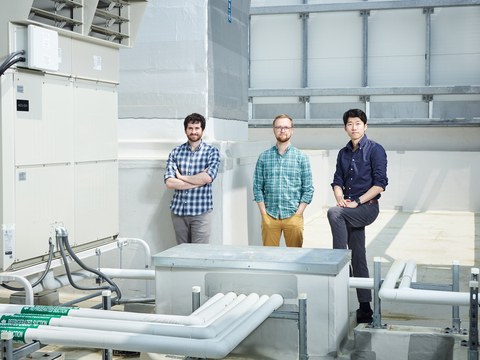
Pascal is a Cambridge, Massachusetts climate-tech company commercializing solid refrigerants to replace the greenhouse-gas coolants that make air conditioners, heat pumps, and refrigerators bad for the climate. Spun out of Harvard in 2023, Pascal builds cooling systems around barocaloric materials - wax-like layered solids that absorb and release heat when squeezed and released - working at pressures low enough to run on today's mass-market HVAC hardware. The company raised an $8M seed round in 2024 and aims to eliminate refrigerant emissions while cutting cost and boosting efficiency.
Soofa
Soofa builds solar-powered, network-connected digital signs that turn ordinary street corners into two-way community bulletin boards. Spun out of the MIT Media Lab in 2014, the women-founded company started with a phone-charging park bench and grew into a network of zero-carbon kiosks that broadcast hyperlocal news, transit updates, and events while giving advertisers and cities measurable pedestrian data - smart, social, and sustainable street furniture for the modern city.
HyperLight Corporation
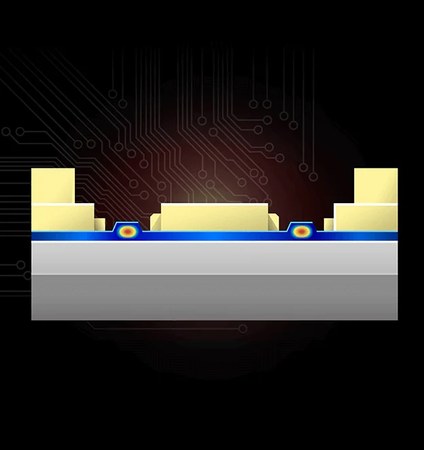
HyperLight is a Cambridge, Massachusetts company that designs and manufactures photonic integrated circuits on thin-film lithium niobate (TFLN), a material prized for ultrafast, low-voltage electro-optic modulation. A 2018 spin-out from Marko Loncar's lab at Harvard, the company built what it describes as the industry's first high-volume, qualified 6-inch TFLN manufacturing line - now expanding to 8-inch - and packages it as a modular TFLN Chiplet platform. Its modulator chips target the bandwidth and power-efficiency demands of AI data centers, telecom optical networks and high-performance computing, enabling 1.6 Tbps-class links at CMOS-level drive voltages.
Zag Bio
Zag Bio is a Cambridge, Massachusetts biotechnology startup pioneering thymus-targeted medicines for autoimmune disease. Founded and incubated by Polaris Partners and launched in October 2025 with an $80M Series A, the company designs bifunctional antibodies that ferry self-antigens directly into the thymus - the organ that trains immune cells - to re-teach the body to tolerate its own tissue rather than attack it. Its lead program, ZAG-101, aims to prevent or delay Type 1 diabetes by inducing durable, antigen-specific central tolerance instead of broad immunosuppression.
Acceleron Fusion, Inc.
Acceleron Fusion is a Cambridge, Massachusetts deep-tech company reviving muon-catalyzed fusion, a phenomenon first observed in the 1950s, as a path to abundant clean energy. Instead of confining a 100-million-degree plasma, Acceleron fires a beam of muons - subatomic particles roughly 200 times heavier than electrons - at highly compressed deuterium-tritium fuel, triggering fusion at temperatures closer to 500-1,000 C. Founded in 2023 by NK Labs veterans Ara Knaian and Seth Newburg and backed by a $24M Series A from Lowercarbon Capital and Collaborative Fund, the company is building two core technologies: a high-efficiency muon source and a high-density fusion cell, with the goal of a fusion power plant that beats natural gas on cost.
DARVIS
DARVIS is a health-tech company that uses AI-powered computer vision to give hospitals real-time visibility into their supply rooms. Its flagship product, Digital Shelves, uses smart PTZ cameras to continuously monitor inventory fill-levels and scan barcodes automatically, replacing manual counting with live consumption data, predictive demand planning, and automated reordering. Born in the gaming industry in 2015, the company pivoted to healthcare supply chain and now serves systems such as MD Anderson Cancer Center while operating from Cambridge, Massachusetts, with a hub in Hamburg, Germany, and a presence in Houston, Texas.

Jobcase, Inc.
Jobcase is a Cambridge-based social platform built for the workers most job sites overlook - hourly, frontline and blue-collar Americans. With more than 110 million registered members and roughly 20 million monthly actives, it pairs a community forum and resume tools with machine-learning job matching, earning rankings among the largest U.S. online career destinations. Founded by Fred Goff and Tony Deigh out of the wreckage of an AI hedge fund, Jobcase makes money from employer advertising and recruiting partnerships while keeping the core product free for job seekers.
Metrika
Metrika is a Cambridge, Massachusetts SaaS company that built the first operational intelligence and risk management platform for blockchains and digital assets. It collects, analyzes, and visualizes the health of decentralized networks in real time - tracking hundreds of risk indicators across protocols, smart contracts, and market conditions - so that protocol teams, financial institutions, and regulators can monitor performance, detect issues early, and meet compliance obligations.
Watershed Bio
Watershed Bio (legally Watershed Informatics) is a Cambridge, Massachusetts startup building a unified, cloud-based platform for biological data analysis. Its product, Omics Bench, lets biologists and bioinformaticians securely store, harmonize, and analyze multi-omic data - genomics, single-cell and spatial transcriptomics, epigenomics, proteomics, metabolomics, microbial sequencing and protein folding - using customizable and AI-assisted workflows backed by elastic supercomputing. The pitch: go from sample to therapeutic insight in a single day instead of weeks, closing the gap between high-code and no-code bioinformatics for drug-discovery teams.

Axoft
Axoft is a Cambridge, Massachusetts neurotechnology company building implantable brain-computer interfaces (iBCIs) out of Fleuron, a proprietary material it claims is up to 10,000x softer than the polyimide used in conventional brain implants. By making electronics roughly as soft as brain tissue, Axoft aims to keep thousands of sensors in stable contact with single neurons for years instead of months - reducing scarring and signal loss - to diagnose and eventually treat disorders of consciousness, paralysis, and other neurological conditions. A Harvard spinout founded in 2021, it raised an oversubscribed $55M Series A in April 2026 and has run first-in-human studies in 11+ patients worldwide.