An air brick is an unlikely ticket into an investor’s diary. It sits near the bottom of a building, doing a job most occupants never notice. AirEx made that humble opening smarter, using controlled ventilation to tackle heat loss beneath timber floors. Then came another engineering problem: getting the business in front of someone prepared to finance it.
AirEx pitched at Cambridge Cleantech’s Venture Day in October 2020. In a later account, co-founder Agnes Czako credited a contact made there with helping secure investment. The encounter, she said, was “with an investor who I would not have met otherwise”. There is Cambridge Cleantech’s proposition in ten words.
The Cambridge organisation works in the space between an invention and its next commercial opportunity. It brings technology companies together with investors, corporate buyers, researchers and public bodies. Its tools include membership, technology searches, pitching events, international programmes and commissioned advice. For a founder who knows the science but needs a route into a large business, that middle ground can matter enormously.
The buyer comes with a shopping list
Consider Shimizu, the Japanese construction and engineering group. Cambridge Cleantech’s account describes searches across energy storage, plastic recycling, insect-tech and hydrogen, among other fields. The resulting introductions led to opportunities for pilots, proofs of concept and partnerships. It is a delightfully untidy shopping list, reflecting how many technologies can touch a construction business.
The process is more deliberate than putting everyone in a room. According to its member handbook, Cambridge Cleantech works with a corporate client to write a needs statement. That brief goes to members and partner networks across Europe. Proposals are shortlisted, the corporate prioritises candidates, and one-to-one meetings follow. The buyer’s problem supplies the organising principle.
- 01Define the
buyer’s need - 02Search the
network - 03Choose a
shortlist - 04Meet the
decision-makers
A meeting creates an opening. A pilot requires a separate agreement.
That structure gives both sides something to work with. A startup can respond to an actual requirement. A corporate team receives a manageable group of possibilities. The network’s value lies partly in knowing where to look and partly in making the request specific enough that an inventor can answer it.
Two other published assignments make the work tangible. Bouygues Energies & Services sought technologies for buildings and infrastructure, including retrofit, digital twins, energy management, hydrogen and battery storage. This was a broad commercial search crossing several technical disciplines, with Cambridge Cleantech retained to find relevant solutions.
Utmost Wealth Solutions, meanwhile, wanted to reduce emissions from its buildings on the Isle of Man. Its brief covered green energy generation, water and waste. Selected innovators were offered the prospect of a test site and proof-of-concept work, alongside a potential purchase. For a young company, access to somewhere real to test a product can make the invitation worth answering.
A room is useful. A relevant room is better.
Cleantech Venture Day is the network’s investor-facing counterpart. Companies pitch to people who work with climate businesses, while the finance service also draws on providers who can help sharpen presentations. The commercial logic is straightforward: founders need a financing audience that can understand what they are building and why its next stage deserves backing.
That audience has continued to assemble. On 22 June 2026, Venture Day London took place at KPMG’s Canary Wharf office during London Climate Action Week. Nigel Topping delivered a keynote; three pitching sessions included companies from Belgium, Germany, France and the UK. Participants ranged from pre-seed businesses to companies seeking later early-stage rounds.
The distinction between exposure and an outcome matters. AirEx offers a specific founder account of a useful investor connection. Other encounters may produce technical advice, a commercial lead or another conversation. A programme can arrange access and help a presentation land. The investment decision still belongs to the investor, and the company still has to do the work that follows.
The buyer’s problem supplies the organising principle.THE SCOUTING METHOD
Methane, meetings and a place to test
Bluemethane supplies a different view of that journey. The company develops technology to recover methane from water, turning an emissions problem into a possible energy resource. Its co-founder and CEO, Louise Parlons Bentata, pitched at Venture Day in January 2023. Cambridge Cleantech’s case study says she left with contacts that improved the company’s network and investment approach.
The same account describes support from several separate organisations. Carbon13 had helped initiate and invest in the business through its venture builder. Cranfield University later awarded a £50,000 research grant and a further £40,000 regional innovation grant. Those amounts belong to Bluemethane’s funding story. Cambridge Cleantech’s documented contribution here was the pitching opportunity and the connections around it.
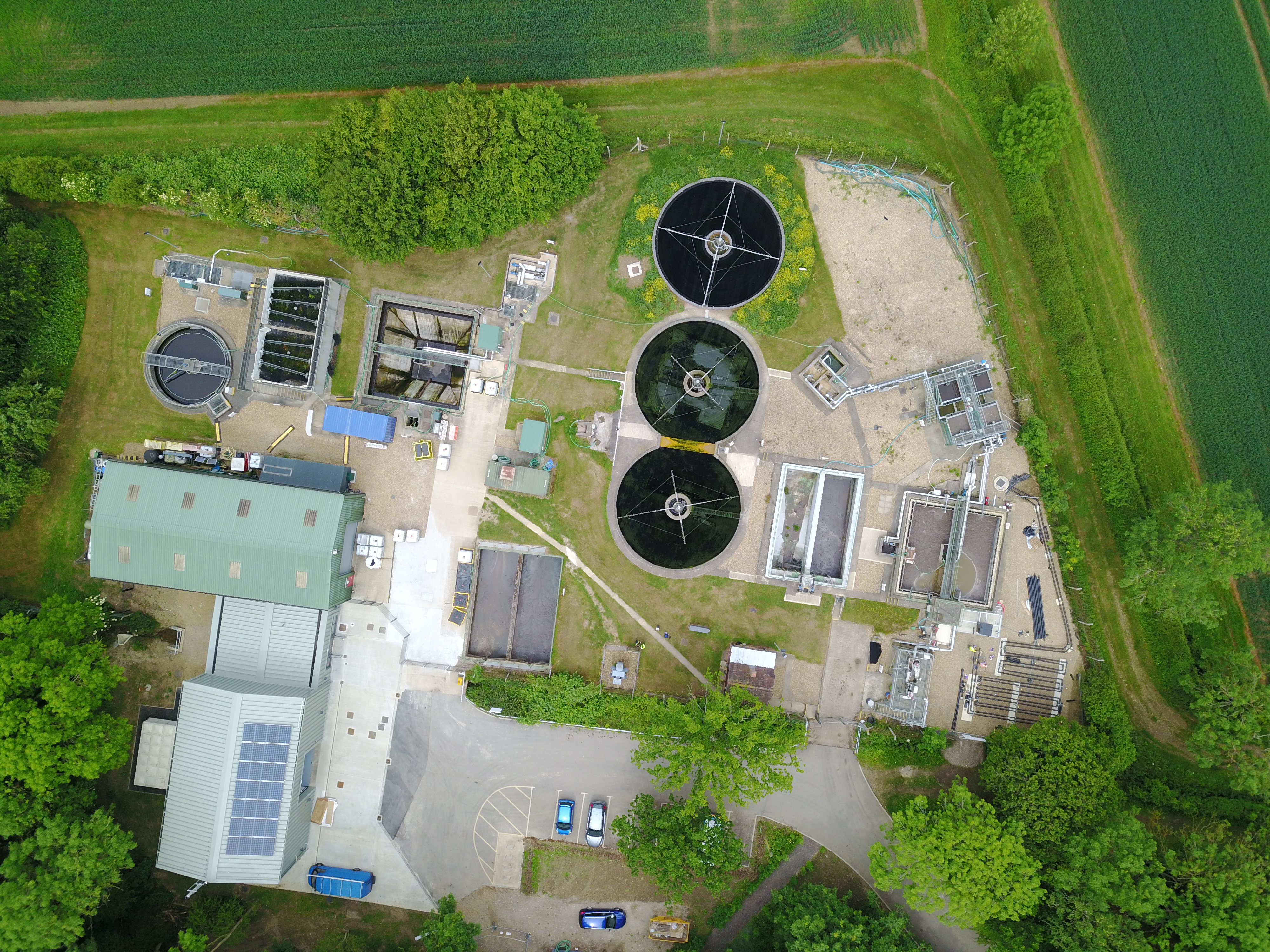
The lesson for a founder is to separate the jobs. A venture builder, an investor event and a research institution can each be useful at different moments. A contact list becomes more valuable when the company knows whether it needs capital, independent technical expertise or a place to experiment. Bluemethane’s route involved all three kinds of support.
What the introduction costs
Cambridge Cleantech’s commercial offer begins with annual membership. Its published prices start at £150 for innovators, rising to £2,400 for Associate Founder membership and £6,000 for Founder membership. Strategic Innovation Partner arrangements are bespoke. These are advertised membership rates, rather than a universal price for a scouting assignment, an accelerator or a finished transaction.
The model combines subscriptions with sponsorship opportunities and commissioned services. Its legal structure is a company limited by guarantee without share capital. For a prospective member, the practical question is which introductions, events or searches match the company’s immediate commercial needs. Buying a broader package only makes sense if the business can put those opportunities to use.
There is also a low-commitment way to inspect the community: the monthly newsletter is free, and the website lists a free Climate Tech Club gathering for 29 September 2026. A founder can start by listening to the conversations, then decide whether the network contains people relevant to the next milestone.
Cambridge is the starting point
Martin Garratt and Hugh Parnell launched Cambridge Cleantech in 2011, serving as CEO and chairman. An administrative wrinkle adds some history: the underlying company was incorporated in 2002, later operating as Envirotech before taking the Cambridge Cleantech name in 2011. The age of the legal wrapper and the age of the network tell different parts of the story.
Today’s public leadership profiles identify Sam Goodall as CEO and Sylvie Russell as COO. Goodall’s experience includes economic development, energy efficiency programmes and policy work; Russell’s includes international business and the delivery of UK-India startup programmes. Those backgrounds suit an organisation whose work depends on navigating institutions as well as knowing entrepreneurs.

Its public-facing culture is visible in recurring meetings and collaborations across companies, government and universities. The team describes a network of more than 300 member organisations. That reported scale gives it a pool to draw from, though any individual member’s useful network will depend on the specific problem being pursued.
International work also predates the latest accelerator. A British government account records Garratt helping deliver a technology-incubator workshop in Chandigarh in 2016. More recently, the Desafía London programme, backed by Spanish agencies ICEX and Red.es, has brought climate technology startups through London, Cambridge and Oxford. Its two-week format combines business contacts, workshops and learning with Cambridge sustainability academics.
Engineering advice joins the guest list
The 2025 SuperCluster ClimAccelerator added a more intensive layer. Cambridge Cleantech partnered with Cambridge Consultants and EIT Climate-KIC on a 16-week hybrid programme for industrial decarbonisation businesses. The published cohort lists 11 startups, with technologies spanning hydrogen, insulation, imaging, plastics and energy storage.
The design included four days of in-person training, regular expert sessions, one-to-one mentoring, technology roadmapping and readiness evaluations. That combination acknowledges the distance between an interesting introduction and an investable industrial company. Technical and commercial questions need attention together: what will work, what it takes to build it, and what would persuade somebody to adopt it.
The broader Climate Tech SuperCluster began through collaboration between Cambridge Cleantech, Oxfordshire Greentech and Liminal. Its geographical inspiration was a region connected within roughly four hours by train from London. The partners’ account frames the problem as fragmentation among existing places and institutions. The ambition is to make those existing capabilities easier to find and use across borders.
In the wider support market, founders can also consider university programmes or a venture builder such as Carbon13. The choice depends on the job. Someone forming a company may need a different kind of help from an established technical team seeking a corporate pilot. Cambridge Cleantech’s membership and scouting services are particularly legible for that second situation; its partnerships let it participate in more intensive support as well.
Come with a question someone can answer
The method is copyable: write a precise problem, search beyond the immediate address book, select relevant counterparts and arrange a focused conversation. A corporate team can specify its operating constraints and what a successful trial would demonstrate. A founder can arrive knowing which decision the meeting is meant to advance. These are practical deductions from the scouting process, rather than guarantees attached to membership.
The same logic explains the limits. A vague brief makes a useful shortlist harder to produce. A company that needs immediate cash cannot treat an event invitation as financing. And a pilot needs people willing to commit time, facilities and follow-up. Network access is most useful when the participants can act on what they discover.
On 12 November 2026, Cambridge Cleantech plans to bring its fifteen-year network together at Cambridge’s West Hub, with Venture Day and an Ecosystem Builders’ Forum in the regional showcase. The invitation extends the organisation’s familiar proposition: bring a climate problem, meet people who might help move it forward. The most interesting result may happen after everyone has gone home.
Find your next conversation
Visit Cambridge Cleantech ↗ · Browse events ↗ · Read the company blog ↗ · November showcase ↗
LinkedIn ↗ · Twitter / X ↗ · Facebook ↗ · Climate Tech SuperCluster ↗