The new application is ready. The database is the part everyone looks at carefully. Changing a screen is one thing; changing the structure beneath customer records, payments or orders requires a different kind of confidence. Redgate Software has built its business in that uncomfortable interval between “the code works” and “we can put this into production.”
The Cambridge company supplies tools that compare database structures, track changes, automate releases, prepare test environments and investigate performance. Its customers are the developers, database administrators and IT leaders who inherit the consequences when those jobs go wrong. The product names can sound like items in a hardware shop: SQL Compare, SQL Prompt, SQL Toolbelt. There is something refreshingly literal about the promise.
That practical territory has become a substantial business. In July 2024, Redgate announced $100 million in annual recurring revenue. It currently reports more than 200,000 professional users and says its tools are used within 92% of the Fortune 100. Those are company-reported reach figures, not evidence that every customer buys the entire range. Still, they explain why a database toolmaker deserves attention beyond the database department.
Annual recurring revenue announced by Redgate.
A subscription metric, not reported annual sales.
The founders’ expensive blind spot
Neil Davidson and Simon Galbraith started Redgate in 1999. In a candid 2013 retrospective, Galbraith described early products that suffered because the founders paid too little attention to customers. Bug tracking lost an opportunity; load testing disappointed; a profiler nearly withered. “We were chumps,” he wrote.
His turning point was a failed company brainstorm in February 2003, complete with paper airplanes. No great new idea emerged. The useful discovery was that users deserved more attention than the founders’ inventiveness. SQL Compare, which Davidson had written in his spare time, supplied a promising foundation.
That account matters because Redgate’s expertise is unusually close to daily irritation: the difference between two database versions, the release nobody can reconstruct, the query whose slowdown needs explaining. These are narrow questions with consequences large enough to justify a purchasing decision.
A tool for each awkward handoff
SQL Compare examines SQL Server database schemas, the structures defining tables and other objects, and helps produce synchronization scripts. A developer can see what differs between environments without checking everything by hand. The value is concrete: make an otherwise fiddly comparison visible and reviewable before applying a change.
SQL Prompt works closer to the keyboard, with completion, formatting and analysis for SQL developers. It addresses repeated editing tasks rather than the entire release process. Bundling tools through SQL Toolbelt Essentials gives teams another buying route. A customer can begin with a specific inconvenience instead of committing immediately to a company-wide transformation.
Flyway takes on the journey into production. It versions database migration scripts and runs changes in a controlled sequence. Its free Community edition gives individuals a starting point; enterprise capabilities add governance and collaboration. The portfolio’s reach expanded when Redgate acquired Flyway in 2019, strengthening its position beyond its SQL Server roots.
- 01 / WriteSQL Prompt
- 02 / ReviewSQL Compare + Flyway
- 03 / ReleaseFlyway
- 04 / ObserveRedgate Monitor
After deployment, Redgate Monitor helps teams inspect performance, receive alerts and investigate problems across SQL Server, PostgreSQL, Oracle and MySQL environments. That is a different purchase from a migration tool: the release may have succeeded while a workload still needs attention. Monitoring gives operations staff somewhere to begin the investigation.
Testing creates another handoff. Developers need useful data, but production records can contain sensitive information. SQL Provision combines SQL Clone and Data Masker to create virtualized database copies with sensitive data masked. The practical attraction is independent development environments without repeatedly making full physical copies. Masking still depends on the rules a team configures and validates; a product purchase does not settle every question about appropriate data access.
Ninety minutes, then six
The most instructive Redgate sales story includes work the software did not perform on its own. Masterminds Group, a consultancy and managed services provider, reported that its serial, state-based database deployments could take roughly 90 minutes. As customers and changes accumulated, releases were batched to make the effort worthwhile.
The team introduced Flyway Enterprise, but also rebuilt its pipeline, switched from Windows to Linux runners and moved from Azure DevOps to GitHub. Parallel execution replaced much of the waiting. Engineers received a workshop and documentation before adoption. The resulting workflow reportedly deployed across more than 60 databases in as little as six minutes.
The transferable lesson is to map the release process before automating it. Identify serial work, clarify ownership and make changes traceable. The case does not establish that installing Flyway alone produces the same result.
Nor does the stopwatch tell the whole cost story. Masterminds described reduced compute use and operating overhead. The work also required pipeline redesign and staff preparation. For a buyer, the sensible comparison includes licensing, infrastructure, training and the engineering time consumed by the existing process.
Paying for control, not just execution
Redgate sells commercial software through direct purchasing, resellers and cloud marketplace arrangements. Its free Flyway Community edition creates an accessible entry point, while paid capabilities address more demanding organizational requirements. There is no single meaningful price for “Redgate”: a developer tool and an estate-wide monitoring deployment solve different problems and use different licensing units.
Flyway’s licensing documentation makes developer participation relevant to paid automated delivery workflows. Monitor’s licensing guidance distinguishes servers and cloud database arrangements. A buying team therefore needs to count the people and infrastructure involved, alongside the capabilities it actually intends to use. A cheap-looking starting configuration can be a poor budget model for a much larger deployment.
Competition depends on the job. Liquibase also sells database change governance. Microsoft SSDT and DACPAC workflows provide another route for SQL Server teams, as Masterminds’ earlier setup illustrates. Internally maintained scripts remain a practical alternative where the scope is small and the team can maintain them. Redgate’s argument is the breadth of related tools and accumulated database expertise, not the absence of alternatives.
That breadth needs scrutiny. Support for a database in one product does not imply identical features across every product. A team with a small, stable system may have little reason to buy an extensive governance package. A larger organization gains more potential value when it needs repeatable releases across environments, clearer responsibilities and evidence of what happened.
“We were chumps”
Simon Galbraith, on the founders’ early failure to listen to customers · 2013
The people behind the sensible product names
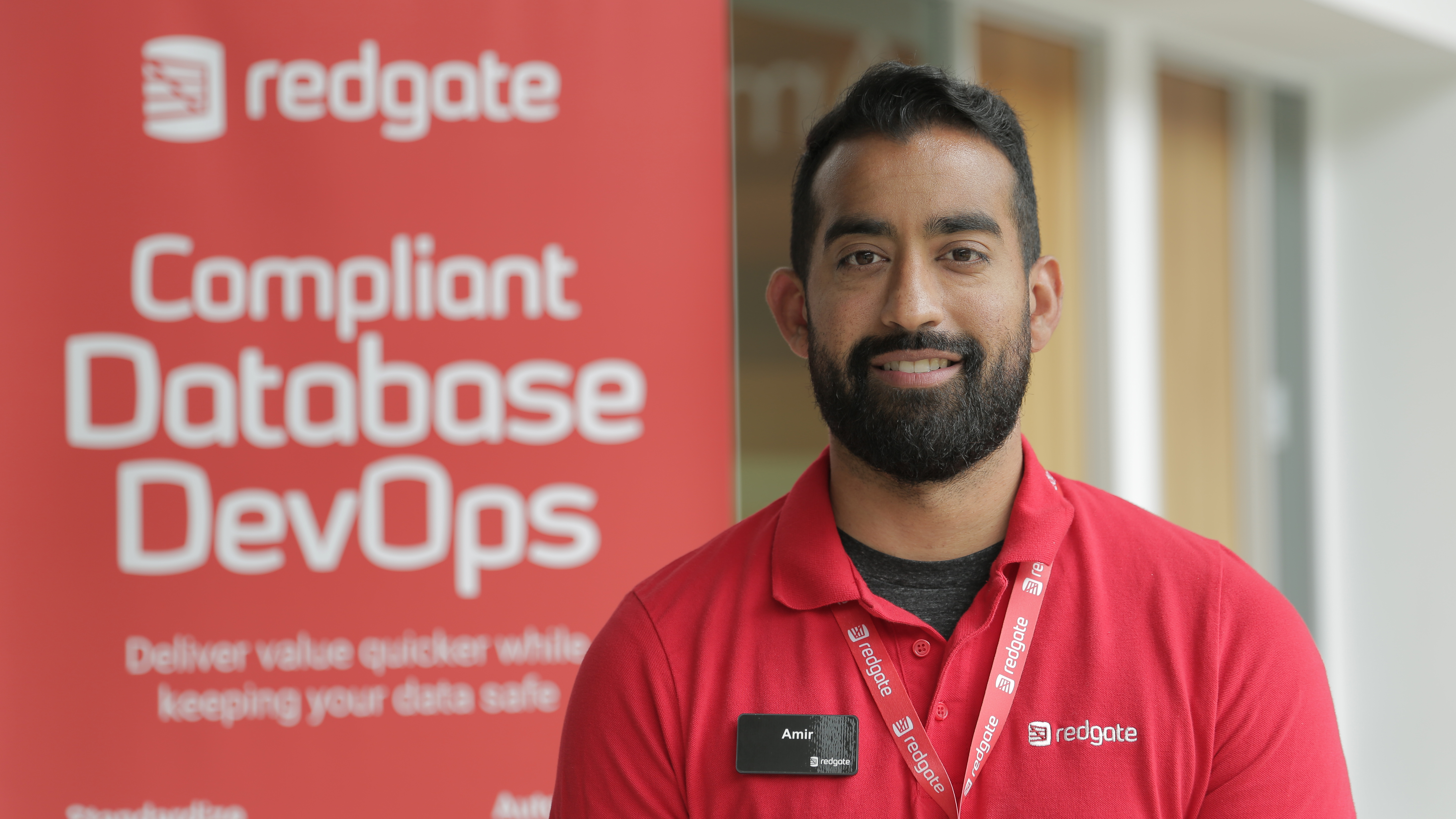
Redgate’s published values include an instruction unlikely to survive every corporate editing committee: “Don’t be an asshole.” Alongside it sit commitments to respectful behavior, collaboration, improvement and customer outcomes. These are the employer’s stated expectations, rather than an independent verdict on everyone’s experience of working there.
The benefits list supplies more tangible detail: six-week paid sabbaticals every five years for qualifying employees, support for professional development and a wellbeing allowance. Those provisions make the cultural pitch easier to examine than an adjective about being innovative. Eligibility matters, as it does with any employment benefit.
The company also invests in the profession around its products. Simple Talk publishes technical material; SQLServerCentral supplies another gathering place for database practitioners. Redgate’s Ambassador program invites customers to contribute feedback, case studies and product insight. For a business whose founders once admitted to listening badly, maintaining those channels is particularly apt. Their commercial value is a reasonable inference: useful teaching and repeated contact can help a specialist vendor stay familiar to future buyers.
A wider company, with a new shareholder

Recent expansion makes the portfolio harder to summarize as a SQL Server toolbox. In September 2025, Redgate acquired Vertabelo Data Modeler and launched it under the Redgate Data Modeler name the following month. The browser-based product adds collaborative database design. Vertabelo itself remained a separate business focused on education, a distinction easily lost in an acquisition headline.
In January 2026, Redgate announced a strategic investment from Bregal Sagemount, initially subject to approvals and closing conditions. The announcement described Sagemount becoming the majority shareholder. An April announcement set out the investment and board participation, with CEO Jakub Lamik describing a move toward a database operations platform encompassing workflows, automation and security.
Product delivery offers an early indication of direction. Redgate launched Monitor SaaS in March 2026, putting hosting and maintenance of the monitoring platform into a managed service. Flyway Enterprise now also promotes controls for AI-generated database changes, including integration with coding assistants. The underlying question remains familiar: how does a proposed change become a production change someone can account for?
Redgate’s opportunity is to connect more of that work without making the tools harder to use. Its history offers a useful test for the expansion: can the person responsible for the database finish a difficult job with less uncertainty? For all the new language around platforms and AI, that remains a purchase worth explaining in plain English.
Open the toolbox
Explore Redgate’s website, the company blog, recent announcements and Simple Talk.
Follow LinkedIn, X, Facebook or explore GitHub.
▶ Watch: Flyway Desktop with PostgreSQL Redgate demonstration · 2023