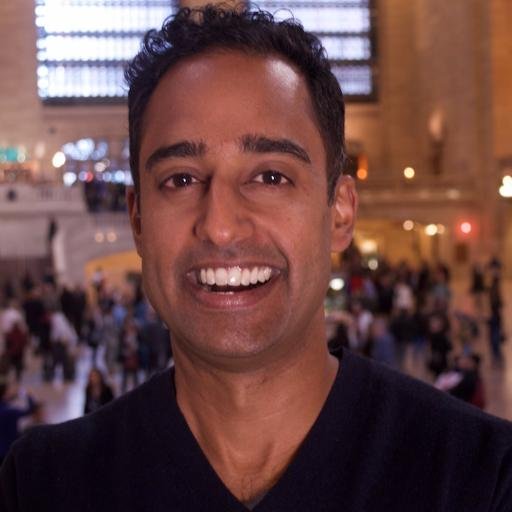
Somewhere around 2015, Ajay Kulkarni and his co-founder Mike Freedman were building an IoT platform called iobeam when they ran into a problem that had no satisfying answer: the existing databases were either too slow, too expensive, or required engineers to unlearn everything they knew. So they went down a different road - one that led to PostgreSQL, time-series data, and eventually one of the most downloaded open-source databases on earth.
The Bet on Postgres
When Kulkarni and Princeton professor Mike Freedman launched TimescaleDB in April 2017, the conventional wisdom was clear: if you want to store time-series data at scale, you need a specialized database. InfluxDB, Prometheus, and others had staked out that territory. The established players said SQL was too slow, relational models were the wrong abstraction, and anyone serious about time-series would have to leave the comfortable shores of PostgreSQL.
Kulkarni disagreed. Not with a manifesto - with code. TimescaleDB launched as an open-source PostgreSQL extension that added automatic partitioning, continuous aggregates, and high-ingest performance while keeping every SQL query, every JOIN, every tool in the PostgreSQL ecosystem intact. The pitch to developers was almost too simple: it's just Postgres. The pitch turned out to be exactly right.
Within two years, the company hit 7x community growth and 20x revenue growth. Enterprise customers didn't need to be convinced the technology worked - they were already running it in production for IoT monitoring, financial time-series, infrastructure metrics, and real-time analytics. The open-source community did the convincing for them.
"Convert setbacks and failures into rocket fuel."- Ajay Kulkarni, Co-Founder & CEO, Tiger Data
Three Degrees From MIT, One Direction
Kulkarni's academic journey at MIT tells you something about how he thinks. A bachelor's in Computer Science, a Master of Engineering from the MIT AI Lab with a focus on Artificial Intelligence, and an MBA from MIT Sloan - that combination of deep systems thinking, machine learning foundations, and entrepreneurial training is visible in how TimescaleDB was built and how Tiger Data operates today.
The AI Lab degree is worth pausing on. Kulkarni was studying AI before the first iPhone existed, before deep learning had taken over the field, before "machine learning engineer" was a job title on LinkedIn. That two-decade head start didn't make him a prophet - it made him someone who wasn't surprised when AI rewired every assumption in the software industry. He watched it coming for a long time.
His career after MIT moved through financial data, mobile technology, a stint at Microsoft, and time at Citigroup before landing on something he would actually build: Sensobi, a mobile CRM platform he co-founded around 2009. Sensobi was acquired by GroupMe in 2011 - which was then acquired by Skype, which was then acquired by Microsoft. Three acquisitions for the price of one. As exits go, it had a peculiar elegance.
MIT Triple Crown
BS Computer Science, MEng from MIT AI Lab (Artificial Intelligence focus), MBA from MIT Sloan - a rare trifecta of systems, intelligence, and entrepreneurship.
Sensobi → GroupMe → Microsoft
Co-founded Sensobi in 2009. Acquired by GroupMe, which was acquired by Skype, which was acquired by Microsoft. One startup, three acquisition announcements.
Year of the Tiger
The $110M Series C announcement was named "Year of the Tiger" - a double entendre: 2022 was the Chinese Year of the Tiger, and the lead investor was Tiger Global.
GroupMe, Billions of Messages, and What Comes Next
After the Sensobi acquisition, Kulkarni joined GroupMe as a Product Manager and ended up leading the mobile engineering team during a period of explosive growth. GroupMe scaled to millions of daily users sending billions of messages each month. Handling data at that velocity - timestamped messages, real-time delivery, massive throughput - gave Kulkarni a working education in exactly the problem TimescaleDB would eventually solve.
He left GroupMe around 2014, and a year later co-founded iobeam, an IoT data analysis platform. The IoT space in 2015 had a database problem: every sensor, every device, every machine was generating streams of timestamped readings, and the infrastructure for storing and querying that data reliably at scale didn't really exist. iobeam's architecture for handling that problem became the technical foundation of TimescaleDB.
"There's some things that we're debating that are totally reversible. If it's a reversible thing, then you don't have to debate it - just try it. And if it doesn't work, just revert it."- Ajay Kulkarni
TimescaleDB: Open Source as Business Model
The business model question for open-source companies never has an easy answer. Kulkarni's approach was developer-first to the core: make the open-source product genuinely excellent, build the community before the revenue, and trust that the enterprises who run it in production will eventually pay for managed cloud services, enterprise features, and support.
It worked. TimescaleDB became the foundation of a developer ecosystem that now spans 50,000+ active users and a customer list that reads like a Fortune 500 sampling - Akamai, Cisco WebEx, Comcast, DigitalOcean, GE, IBM, Microsoft, Pfizer, Samsung, Schneider Electric, Uber, Walmart. These aren't companies that chose a niche database out of desperation. They chose it because their engineers, the ones who have options, chose it first.
Enterprise Customer Roster
Akamai - Cisco WebEx - Comcast - DigitalOcean - GE - IBM - Microsoft - Pfizer - Samsung - Schneider Electric - Uber - Walmart
The Unicorn Round and the Tiger Year
In February 2022, Timescale announced a $110M Series C led by Tiger Global Management - the round that pushed the company into unicorn territory at a valuation above $1 billion. Total funding reached $184 million, with participation from Benchmark, NEA, Redpoint Ventures, Icon Ventures, and Two Sigma Ventures.
The timing was deliberate and the naming was cheeky. February 2022 was the start of the Chinese Year of the Tiger. The lead investor was Tiger Global. The company called it "Year of the Tiger." Kulkarni, who describes himself as a perpetual optimist and tends toward directness over corporate-speak, leaned into the symbolism with full enthusiasm.
The funding coincided with a moment when time-series data had become unavoidable infrastructure. Every system that monitors anything - servers, sensors, financial markets, IoT devices, application performance - generates time-stamped data at high volume. TimescaleDB was positioned not as a specialty tool for specialists, but as the default way any PostgreSQL developer handles time at scale.
Agents as the New Developers
By 2025, Kulkarni had pivoted his public thinking - and his company's roadmap - around a thesis that was moving faster than most people expected. AI agents were not just a feature to add to databases. They were becoming the primary users of databases. The software development loop that had been human-paced for decades was compressing into something that ran at machine speed.
At AWS re:Invent 2025, Kulkarni made the case directly: "How AI Agents Are Rewriting Software Development." It wasn't a hedged prediction or a cautious exploration. He had watched Claude Code write code, commit to GitHub, and deploy - all in one session. His reaction, by his own account, was that he couldn't sleep that night. He kept thinking: "I could build anything."
That personal reaction to AI tooling - visceral, sleepless, excited rather than threatened - tracks with how Kulkarni has navigated every major technology shift in his career. He studied AI at MIT before it was mainstream. He built mobile products before smartphones were the default. He bet on PostgreSQL for time-series when specialized databases seemed like the obvious answer. The pattern is someone who runs toward the thing that's changing before the change is legible to everyone else.
Agents Rewriting Software Development - re:Invent 2025
Tiger Data: The Next Chapter
In 2025, Timescale rebranded as Tiger Data. The company launched Tiger Cloud and Tiger Postgres, positioning the platform as not just a time-series extension but a cloud-native PostgreSQL layer designed for AI-native applications, agentic workloads, and the vector search and hybrid retrieval demands that come with them.
The strategic collaboration with AWS announced in October 2025 formalized what many enterprise customers had already understood: Tiger Data's stack - PostgreSQL, time-series, vector search, continuous aggregates, and hybrid row-columnar storage - was the data layer that AI systems running on cloud infrastructure needed. The database that started as "just Postgres" had grown into something that could make that claim without irony.
In April 2026, Tiger Data launched TimescaleDB Enterprise, extending the platform to on-premises and edge deployment. The same month brought a strategic partnership with Inductive Automation, integrating with the Ignition platform for industrial historian modernization - putting TimescaleDB at the heart of factory floors, energy grids, and the industrial IoT infrastructure that generates more timestamped data than almost anything else on earth.
"AI is the new UI."- Ajay Kulkarni (citing Naval Ravikant, and making it his own)
What Drives the Perpetual Optimist
Kulkarni is not the type to deliver keynote abstractions without having shipped the thing he's talking about. His writing on Medium and the Tiger Data blog tends toward specifics - how open-source business models actually work, what building a developer community requires, why PostgreSQL keeps winning arguments that should have gone to specialized databases. The tone is direct. The examples are concrete. The optimism is not performed.
His decision-making philosophy has a useful simplicity: if a decision is reversible, stop debating it and just try it. If it doesn't work, revert. Reserve the careful deliberation for the irreversible choices - the ones where you can't simply roll back a commit and try a different approach. That framework has a certain elegance for someone who has spent a career in databases, where rollback is a first-class concept.
The career arc from MIT AI Lab graduate to GroupMe product manager to database unicorn CEO is not a straight line. It runs through financial data, mobile CRM, IoT platforms, and three different acquisition structures before arriving at the thing Kulkarni will probably be remembered for: making PostgreSQL the database that handles time-series, AI workloads, and everything else that scales - not by replacing it, but by building on top of it in a way nobody expected to work this well.