The database was getting bigger. So was the bill. At bigbasket, the Indian online grocery business, increasing the size of its AWS database instances had become a response to trouble. But more capacity had not cured the instability. In Percona’s account of the engagement, outages and oversized infrastructure were traveling together. The remedy had acquired a price tag without acquiring a diagnosis.
- Percona gives away database software and sells the expertise to operate it.
- Customers can keep upstream databases and supported cloud services.
- Its work spans tuning, backups, migrations, monitoring and daily operations.
- Free software still needs people, infrastructure and an exit plan.
Percona’s team tuned queries, adjusted configuration, rationalized storage and matched instances to the workload. A MySQL 8.4 upgrade also avoided extended support fees. The reported result was an approximately 33% reduction in monthly AWS spending. That is a customer result, rather than a discount available to anyone who downloads a package. The interesting detail is where the work happened: inside an AWS RDS environment.
Percona did not need the customer to abandon Amazon before it could be useful. It needed the customer to stop treating a bigger machine as an answer to every question. That distinction explains a great deal about this company, and about the rather peculiar economics of free software.
Two engineers leave the comfortable chair
Peter Zaitsev and Vadim Tkachenko had worked together at MySQL AB. Zaitsev ran a group devoted to difficult performance problems; Tkachenko brought the engineering expertise. In 2006 they left to start Percona. This was a departure from an established software business into a company whose initial assets were people and a reputation.
Tom Basil, who had managed Zaitsev at MySQL, recalled being unconvinced by the invitation to join them. He had a comfortable job. A two-person startup was an expensive place to indulge a friendship. After Sun bought MySQL in 2008, however, he found the larger corporate setting less appealing and became Percona’s first chief operating officer. What changed his mind was the working environment, rather than a sudden discovery that databases mattered.
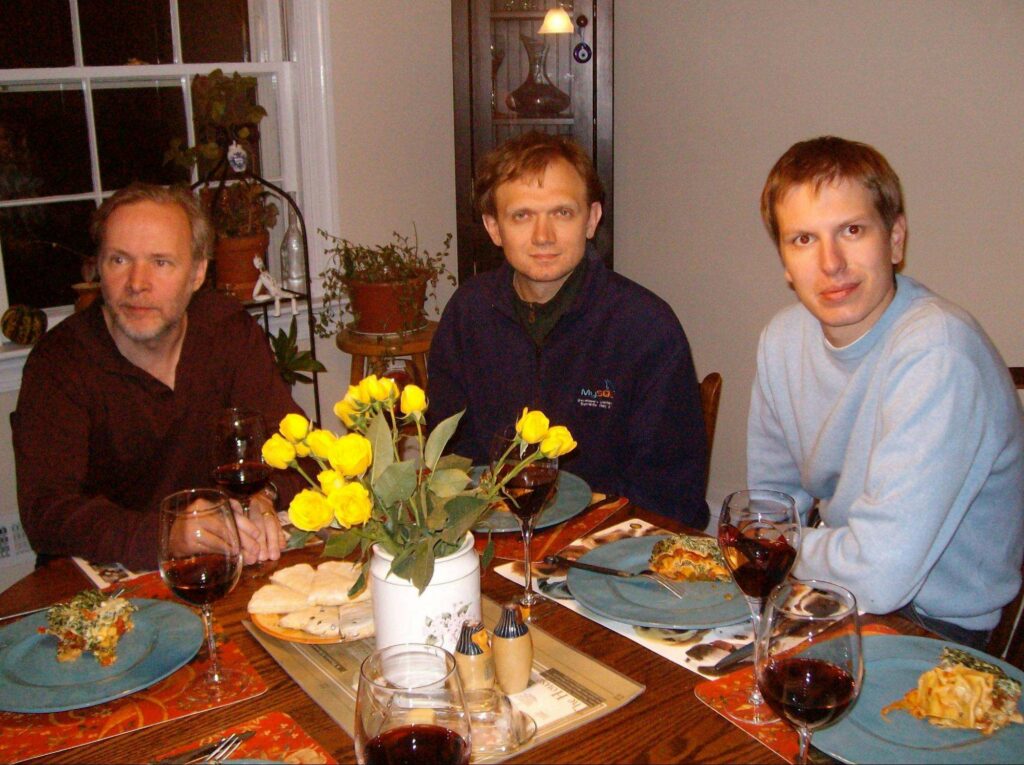
Zaitsev’s own second-anniversary account described a company already profitable and concerned with rewarding engineers fairly and contributing to the community. Percona’s history puts the arrival of its MySQL software and XtraDB storage engine in 2008. Services came first; software extended what the specialists could do.
There is an instructive business choice here. If the product is your judgment, every solved problem can become both a satisfied customer and a better tool. If the tool is freely available, other people can use the improvement too. The company must then find another problem worth paying it to solve. It is a demanding arrangement, but an intelligible one.
The download is only the beginning
Today the range extends across MySQL, PostgreSQL, MongoDB, MariaDB, Valkey and Redis. Percona Server for MySQL adds capabilities to a familiar database; XtraDB Cluster addresses high availability. Its PostgreSQL distribution brings together database software and supporting components. Percona Server for MongoDB supplies a compatible server with additional capabilities. The current MongoDB product page calls that software source-available: the license distinction belongs in any serious buying decision.
The supporting tools tell you what customers worry about. XtraBackup takes physical backups of supported MySQL-based servers. Percona Backup for MongoDB covers another part of the recovery problem. Kubernetes Operators automate deployment and lifecycle tasks. These are tools for running a database through ordinary change and occasional catastrophe, rather than merely getting it installed.
Percona Monitoring and Management, or PMM, gathers database metrics and query analytics across MySQL, PostgreSQL and MongoDB. Its query analysis ranks work by load, helping an operator move from “the database is slow” to the particular work making it slow. The gain is specificity. An average can tell you that something is wrong; an expensive query gives you somewhere to start.
The commercial choices reflect different degrees of responsibility. Expert Support supplies technical help. Consulting tackles a defined problem such as a migration, security assessment or architecture review. ExpertOps adds proactive monitoring, maintenance and hands-on daily operations. A company with a strong database team may want another pair of expert eyes. A smaller team may want someone to perform the work.
“Services are not an afterthought or a support function for us. They are the core of the business.”Blair Rampling, Percona, February 2026
Sometimes the obstacle is the landlord
Paper St. Media had a different difficulty. Its existing host’s limitations blocked the MySQL upgrade it needed. Percona rebuilt cluster architecture and the backup strategy, then combined a hosting migration with a move from MySQL 5.7 to the 8.x series. PMM added ongoing visibility. The company’s case study reports that the modernization happened without disrupting operations.
This is a useful correction to the idea that database freedom is settled by the license. A business can have access to the code and still be constrained by its host, its architecture or the people available to maintain it. Leaving requires a route, a destination and someone capable of carrying the furniture.
PriceShape, a Danish pricing-intelligence company, offers a more demanding example. It moved approximately 6.6 TB of logical data from MongoDB Atlas to Percona Server for MongoDB on Amazon EKS after encountering disk and oplog constraints. Percona’s synchronization tooling copied the data and followed ongoing changes before cutover.
Then the workload exposed two edge-case bugs in that tooling. Percona engineering delivered a custom build within days; the fixes later entered the general release. The reported cutover stayed inside the required downtime window. This is where the distinction between a download and a relationship becomes quite tangible: a tool can fail, and the commercial value lies partly in who can repair it.
A price for expertise, a bill for responsibility
Percona’s software is freely available; the services are paid. Its cost-optimization page describes pricing scoped to environments and defined work. Buyers therefore need to compare the whole operating arrangement: service scope, infrastructure, staff time, migration effort and the consequences of an outage. A zero software license fee is one line in that calculation.
Oracle MySQL Enterprise, MongoDB’s commercial offerings, PostgreSQL specialists and managed cloud databases provide alternative combinations of software and responsibility. Percona occupies an overlapping position. A cloud database may be an alternative to running infrastructure yourself and simultaneously an environment in which Percona helps you. Choosing the engine, choosing the host and choosing the expert need not be one purchase.

That does not make self-management the sensible destination for every team. If a managed platform already meets the workload, operating it yourself introduces responsibilities somebody must accept. Backup compatibility is similarly specific: XtraBackup 8.4 supports the matching 8.4 server family, not MySQL 8.0 or 9.x. “Free” cannot substitute for checking the version or practicing a restoration.
The practical lesson is modest enough to copy. Establish what the workload is doing before buying capacity. Determine which constraint belongs to the database and which belongs to the provider. Agree who owns monitoring, maintenance and recovery. Then compare arrangements that deliver the same required outcome. Otherwise, the cheaper option may simply have omitted a job.
What happens when users want a bigger mountain?
In January 2026, Zaitsev described an awkward discovery about Percona Everest, its Kubernetes database management platform. Community members wanted a broader ecosystem of databases than Percona supported. The desired platform was a poor fit for the existing business model. The response was to move toward OpenEverest, retaining the Apache 2.0 license and pursuing multi-vendor participation and open governance.
A later announcement described Solanica, a wholly owned subsidiary supporting the project’s development. The useful detail is the admission that user ambition and company scope had diverged. Percona changed the structure rather than pretending the two were identical.
Its 2026 partnerships extend the same operational argument elsewhere. HexaCluster contributes specialized migration tooling alongside Percona’s assessment and production support. Chainguard supplies hardened database container builds with Percona support behind them. The company is finding adjacent places where access to software leaves work undone.
For the reader, that is the reason to remember Percona. It makes the expertise surrounding a database available as a separate choice. The code can be free, the host can be somebody else’s, and the person helping you can still know exactly where to look.