back-office-automation
(35)
Hyperscience knows why the truck arrived before the invoice
The freight was delivered. The paperwork was still travelling. Hyperscience turns that familiar office absurdity into a practical test of enterprise AI.

Constrafor puts a price on the wait to get paid
The construction fintech pairs contracts and insurance checks with cash for approved invoices. Its wager: a better back office can keep a building site moving.
The Meal Was Sold. Where Did the Money Go?
Loop AI began with the least glamorous question in food delivery: why does a busy night produce such a confusing bank deposit? Its answer has grown from reconciliation software into a shared operating system for restaurant finance, marketing and operations.
The Company That Hired the Missing Middle
BackOps found a lucrative place to put AI: the awkward stretch between spotting a supply-chain problem and actually fixing it. Its agents do not merely point at the fire - they gather the paperwork, cross the portals, ask for approval, and close the loop.
Sonovate Found Its Fortune in the 90-Day Gap Between Work and Payment
Recruiters pay people this Friday and may not collect from clients until next quarter. Sonovate turned that awkward interval into a specialist lender, a software platform and, most recently, a testing ground for digital workers.

Inside Real Estate Bought the Pieces. Now It Wants to Run the Whole Brokerage
The Utah software company stitched kvCORE, BoomTown and Brokermint into one operating system for real estate. Its next bet is that brokerages want AI to do the busywork without surrendering their data, brand or existing stack.

Datatruck Wants to Be the Operating System Trucking Runs On
A Chicago-founded startup is betting that trucking's back office - the spreadsheets, the phone tag, the paperwork - is a software problem AI can finally solve. About 500 carriers are already running on it.

Ambria (YC W24)
Ambria is a San Francisco startup building AI agents for the industrial world - production-ready agents that automate back-office operations across manufacturing and distribution. Founded by UIUC classmates Praneeth Guduguntla and Arman Rafati, the company went through Y Combinator's Winter 2024 batch, where it first launched as Glimmer, an AI search engine for massive PDFs, before turning its document-reasoning expertise toward the paperwork-heavy back offices of industrial companies.
Avallon AI
Avallon AI is a New York-based Y Combinator (Spring 2025) startup building AI agents that automate insurance claims operations from intake to resolution. Its agents answer phones, chase down employers and providers, read medical reports, and enter data directly into claims systems - work that traditionally consumes weeks of adjuster time. Avallon sells to insurance carriers, MGAs, and third-party administrators (TPAs), and raised a $4.6M seed round led by Frontline Ventures in November 2025.
BitBoard
BitBoard is a San Francisco startup (Y Combinator Spring 2025) that lets AI agents like Claude, ChatGPT and Cursor build hosted dashboards and recurring reports. Connected through the MCP protocol, it turns throwaway AI chat sessions into persistent, reproducible workbooks that teams can share and re-run. The company launched in 2025 as AI back-office workers for healthcare clinics before refocusing its product on agent-built analytics.
Definite
Definite is a Y Combinator (S26) startup building the data layer for finance agents. It plugs read-only into a company's ERP, ledger, payroll, and payments systems and compiles everything into one clean, always-current model of the books. Finance teams can then build back-office agents in plain English on top of that model - without engineers or data pipelines. The system reads and reconciles, but never writes back and never moves money.

Hemut
Hemut is an AI-native operating system for trucking companies. It replaces the fragmented, legacy back-office software that carriers and brokers rely on with a single platform that automates dispatch, load booking, quoting, tracking, accounting, and inbound/outbound phone calls using AI agents. Founded in 2024 and part of Y Combinator's Spring 2025 batch, Hemut targets mid-sized fleets in the roughly $875B American trucking market.

Pango
Pango is an agentic operating system for e-commerce back-office operations. Founded in Stockholm in 2025 by Steve Rahimi and Lukasz Reszczynski, it connects a merchant's store, warehouse and carriers, then runs deliveries, tracking, returns, refunds and claims on autopilot. The company says it automates roughly 99% of returns and shipping operations and cuts operating costs by about 20%, and is part of Y Combinator's Summer 2026 batch.

Rulebase
Rulebase is a Y Combinator (F24) fintech building AI 'coworkers' that automate back-office operations for banks and fintechs. Its software reviews 100% of customer interactions across phone, email, and chat in real time to catch compliance breaches, policy violations, and fraud - including account takeovers and voice-clone scams - then routes disputes, QA reports, and follow-ups into tools teams already use like Zendesk, Jira, and Slack. Founded in 2024 by Gideon Ebose and Chidi Williams, the company raised a $2.1M pre-seed led by Bowery Capital.

Toothy AI
Toothy AI builds HIPAA-compliant AI agents that run the insurance side of a dental practice - verifying patient coverage, filing and correcting claims, chasing denials, and posting payments. Using voice AI to make payer phone calls and portal automation to check eligibility, Toothy aims to take the roughly 160 hours a month that clinics spend on insurance busywork off staff plates. A Y Combinator Winter 2025 company founded in 2024 by Johnny Chen and Matthew Kerrigan, it sells a subscription service to dental clinics looking to collect more, faster, with smaller back-office teams.

Wealor
Wealor is a San Francisco startup building an AI-native platform for wealth managers. It creates a single source of truth across wealth management, tax, and legal, then runs specialized AI agents that automate back-office work directly inside firms' existing legacy systems using APIs and browser automation. Backed by Y Combinator (Spring 2026 / P26), it targets an industry that oversees roughly $90 trillion on infrastructure built decades ago, where advisors report spending most of their day on administrative work rather than with clients.
Opsigo
Opsigo is a Jakarta-based travel technology company that helps travel agencies and corporations run business travel end to end. Founded in 2014, its cloud platform bundles an online booking engine, a corporate travel-and-expense management system (Opsicorp), and a mid-to-back office finance engine (Opsifin). Opsigo aggregates content from more than 200 airlines and 300,000+ hotels, connects 40+ Indonesian travel agencies, and processes over IDR 1 trillion in transactions per month, positioning itself as the digital backbone for a market where conventional agencies still dominate.
Cape.ai
Cape.ai (formerly Cape Privacy) is a New York-based enterprise AI company building an agentic automation platform purpose-built for financial services. Founded in 2018 by Che Wijesinghe and Gavin Uhma, Cape lets banks, asset managers and insurers automate document-heavy back-office work - enhanced due diligence, SOC-report and third-party risk analysis, KYC/AML onboarding and regulatory reporting - using AI agents that are fully cited, auditable and deployable on-premise or in a private cloud so sensitive data never leaves the customer's environment.

Equal Parts
Equal Parts is an Austin-based insurance company that acquires established independent insurance agencies and equips them with shared infrastructure and AI-driven automation. Founded in March 2025 by Mike Witte, Graham Yennie and Mike Meller, it positions itself as a growth network - preserving each agency's identity and local relationships while standardizing back-office workflows so agents can focus on clients. The company raised a $23M Series A led by Inspired Capital in February 2026 and aims to become a top-5 insurance distributor by acquiring 25 agencies in 2026 and reaching $1B in premiums.
Anvil
Anvil is a San Francisco software company that turns paper-heavy back-office processes into programmable digital workflows. Its API-first platform bundles PDF generation and filling, no-code webforms, embedded e-signatures (Etch), and workflow automation so developers and product teams can collect data, generate compliant documents, and get them signed without stitching together multiple tools. Founded in 2018 by Mang-Git Ng and Ben Ogle, Anvil serves customers across insurance, financial services, HR, real estate, healthcare, and education, and has raised $10M in Series A funding.

Auditoria.AI
Auditoria.AI is a Santa Clara-based enterprise software company that builds agentic AI agents for corporate finance teams, automating accounts payable and accounts receivable workflows across major ERP systems. Its SmartBots act as digital teammates that digitize invoices, chase collections, answer vendor and customer inquiries, and surface real-time cash intelligence - all governed by company policies and auditable at every step. Founded in 2019 by serial entrepreneur Rohit Gupta, the company processes more than $9B in invoicing and $2.4B in collections annually and raised a $38M Series B in early 2025.
Boon
Boon builds AI agents that automate the paperwork-heavy back office of physical industries. Founded in 2023 by ex-Samsara product leader Deepti Yenireddy, the San Mateo company first launched a workflow platform for commercial fleets - handling order entry, load sourcing, compliance and fuel optimization - and has since pushed into construction, where its agents run preconstruction workflows from blueprint to bid, including takeoffs, clash detection and bid leveling. Boon raised $20.5M across seed and a $15.5M Series A led by Redpoint Ventures and Marathon in December 2024.
Kognitos
Kognitos is a Mountain View-based enterprise AI company that lets business users automate back-office operations by writing instructions in plain English. Its patented neurosymbolic platform, Koncierge, pairs the language understanding of large language models with a deterministic symbolic execution engine, aiming to run automations that are auditable and free of hallucinations. Founded in 2020 by former Nutanix CTO Binny Gill, the company pitches itself as a modern alternative to legacy RPA tools like UiPath and has raised roughly $85M across seed, Series A, and a $25M Series B.

Liberate
Liberate is a San Francisco-based startup building insurance-native AI agents that automate the industry's most operational, phone-heavy work - quoting policies, filing claims, servicing endorsements - across voice, email, SMS, and digital channels. Its voice assistant, Nicole, handles inbound and outbound calls, while reasoning AI agents plug directly into carriers' core systems to complete end-to-end tasks rather than just answer questions. In October 2025 the company raised a $50M Series B led by Battery Ventures at a $300M valuation, after scaling from 10,000 monthly automations to 1.3 million automated resolutions and processing more than $100B in premium volume.

Saris AI
Saris AI builds agentic AI workflow agents that automate the repetitive, high-volume back-office work at banks and credit unions - lending, underwriting, compliance, and operations - without replacing the core systems institutions already run. Founded in 2024 by the ex-Oohlala Mobile team, the Montreal- and San Francisco-based company trains agents on each institution's own workflows to execute multi-step tasks under human supervision. In May 2026 it raised a $28.8M Series A led by 8VC to scale deployments and deepen integrations with partners like Fiserv, MeridianLink, and Encompass.

Soraban
Soraban is an AI-native tax workflow platform for accounting firms, automating the unbillable admin work of tax season - client intake, document collection, workpaper preparation, data entry into tax software, and final delivery. Founded in 2021 by engineer and former accounting-firm owner Enoch Ko and part of Y Combinator's Winter 2021 batch, the company is used by hundreds of CPA firms across the U.S. and Canada and closed a Series A led by Altos Ventures in August 2025.

Sydecar
Sydecar is a deal execution platform that automates the back office for venture investors. It lets fund managers, syndicate leads, and emerging VCs spin up Special Purpose Vehicles (SPVs) and funds with banking, compliance, contracts, tax, and reporting handled in one place - turning what used to take weeks of legal and administrative work into a next-business-day process. Founded in 2021 and based in San Francisco, the company has supported thousands of investment vehicles and administers more than $1 billion in assets.
Caddi
Caddi is a Seattle-based AI company that turns screen recordings into working automations. Its 'record-to-code' platform watches a professional demonstrate a repetitive back-office task - client intake, document filing, billing, data entry - and generates deterministic, API-driven code that runs the workflow across 80+ tools. Aimed at law firms, financial advisors, accountants and consultants, Caddi pitches itself as a way to do more work at the same headcount without asking teams to learn yet another complicated tool.
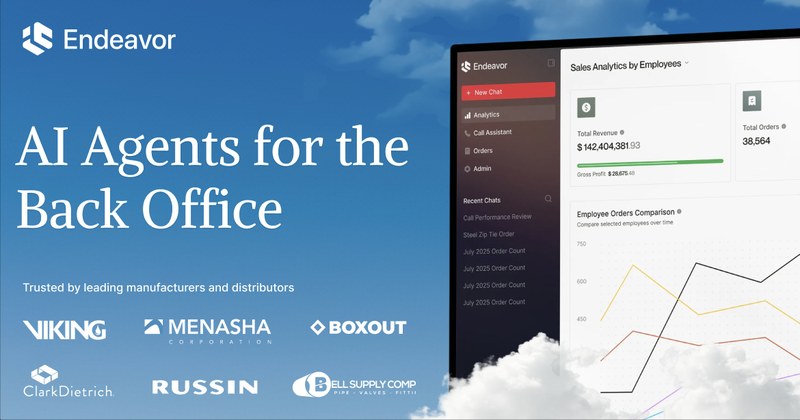
Endeavor
Endeavor is a San Francisco AI company building agentic software for the back office of American manufacturers and distributors. Its AI agents read the messy inputs these businesses actually run on - emails, PDFs, spreadsheets, phone calls - and turn them into automated order entry, quoting, accounts payable, and supply chain work inside existing ERP systems. Founded in 2023 by Wharton graduate Sahitya (Sami) Senapathy and backed by a $7M seed led by Craft Ventures, Endeavor counts industrial names like ClarkDietrich, Menasha, Viking, and Bridgestone Americas among its customers.
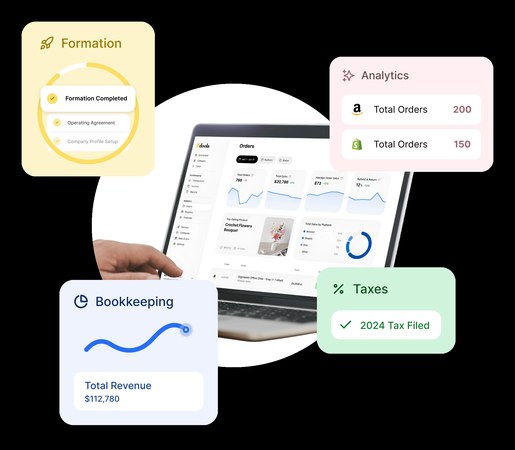
doola
doola is a New York-based fintech that helps entrepreneurs anywhere in the world start and run a U.S. business. Its 'Business-in-a-Box' platform bundles LLC and C-Corp formation, EIN registration, U.S. business banking access, bookkeeping, tax filing, compliance and e-commerce analytics into one back office, plus an AI Co-Founder. Founded in 2020 and backed by Y Combinator, doola has served 15,000+ founders across 175+ countries and is pushing agentic company formation directly into tools like ChatGPT, Claude, Replit, Lovable and Vercel.