back-office-automation
(3)
The Boring Industry Quietly Becoming a Trillion-Dollar Category
Intelligent document processing is the unglamorous layer under every regulated industry - the plumbing that turns the mortgage packets, claims files and bank statements no computer could read into data a compliance team will stake a lawsuit on. Reading the page was never the hard part; proving it was read correctly is. As sovereign wealth funds and top-tier VCs write nine-figure checks into 'document processing,' three tribes are fighting over the same ground, and the real prize is not the document. It is permission for software to make the decision a human used to sign.
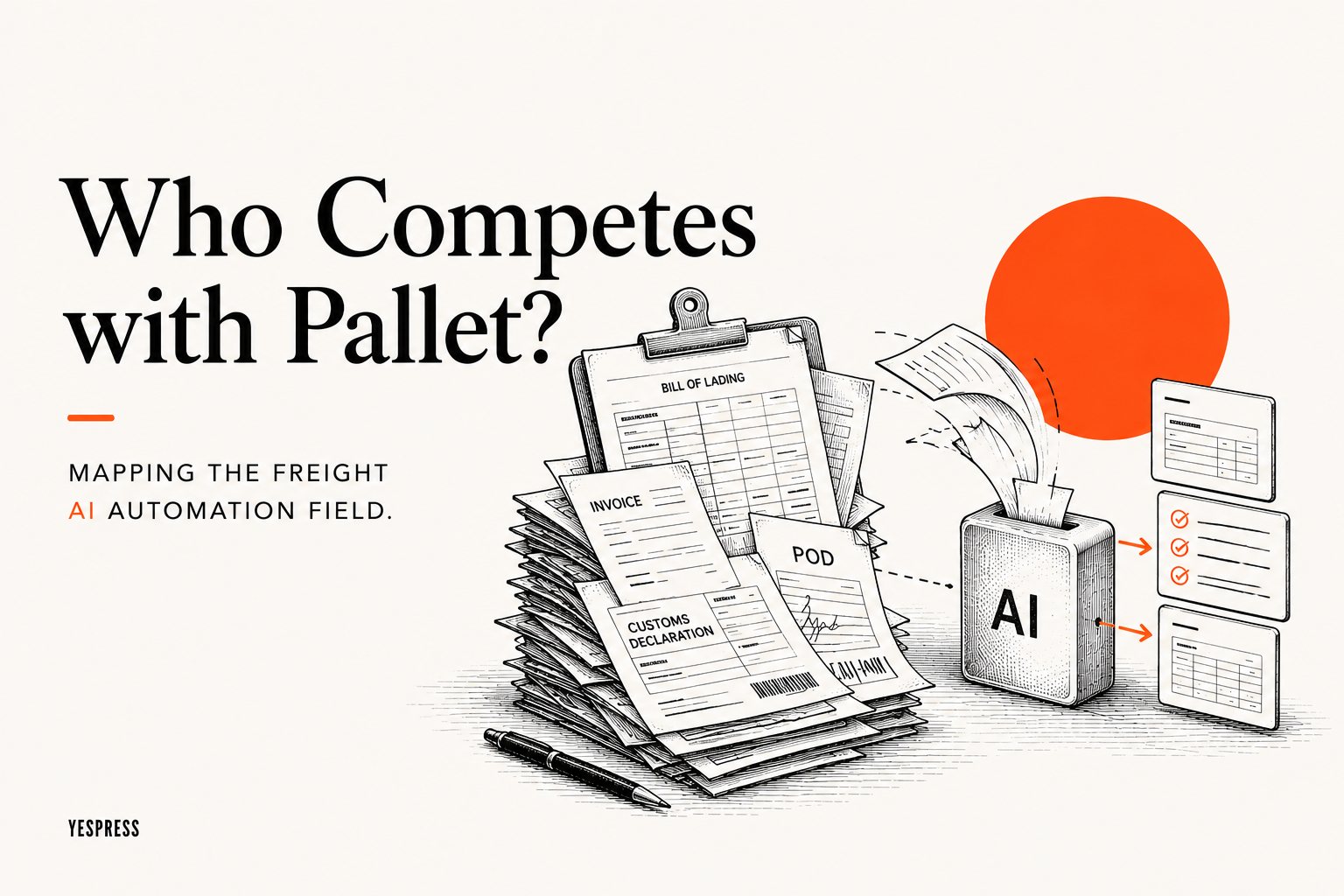
The Freight Back Office Is Up for Grabs — And Everyone Wants Pallet's Lunch
A competitive map of the freight-AI automation field, positioning Pallet against the venture-backed newcomers HappyRobot and Vooma, the entrenched TMS software vendors, and the offshore BPO shops that have long run the logistics back office. Pallet, a San Francisco startup that raised $27M Series B (bringing total funding to $50M), sells CoPallet, an 'AI workforce' that completes end-to-end logistics workflows inside TMS, WMS and ERP systems 10x faster and at roughly half the cost of human staffing. The story surveys how each rival attacks the same back-office spend and where Pallet's end-to-end, system-of-record approach differs.
The Brokers Who Taught a Machine to Move Freight
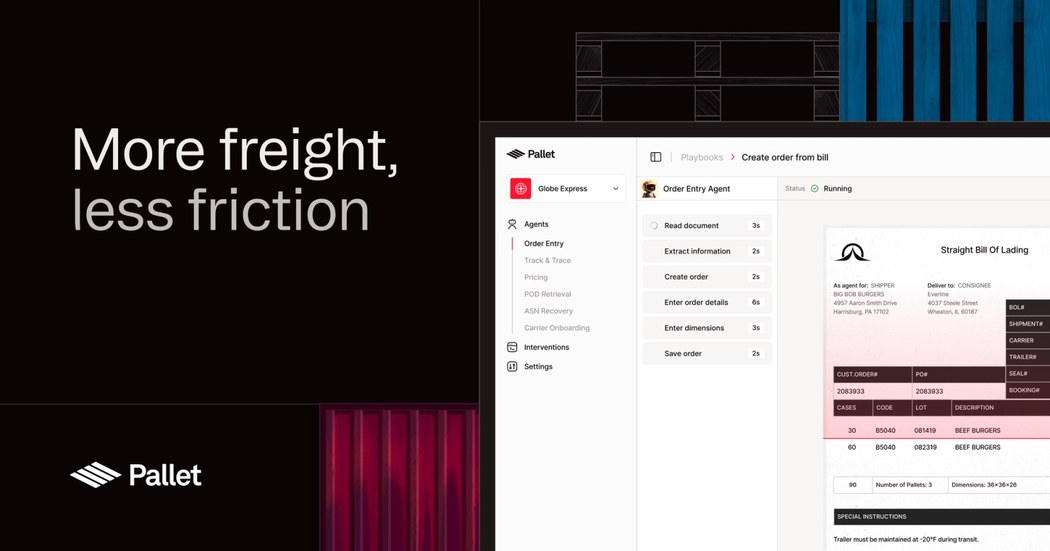
Pallet builds an AI logistics workforce that automates the manual back-office work at the heart of freight brokerages. Its AI agents handle load entry, appointment scheduling, driver document processing, proof-of-delivery, and invoice auditing directly inside existing systems like McLeod and DAT, keeping humans in the loop for oversight and edge cases. The company says brokerages process loads up to 10x faster, cut processing errors by 30%, and save 50% on back-office labor. Founded in 2022 by former Retool engineers Sushanth Raman and Andrew Spencer, Pallet has raised $50 million to date, including a $27M Series B led by General Catalyst.