b2b-payments
(62)
XTransfer’s big business in small exporters’ money
Selling across borders is hard enough. XTransfer has built a payments business around the next headache: convincing the financial system to let small traders get paid.
IFX Payments wants the complicated customers
The former currency broker is building its business around the payments that need extra attention. Its bet: finance teams will pay for fewer headaches, as well as a competitive exchange rate.
Verto’s bet: the money has to arrive
A poker-table conversation became a payments business built around Africa’s awkward currency routes. Verto’s real product is what happens after the exchange rate looks good.
WEX Europe sells a better way to stop for fuel
Behind the Esso Card is a business built on buying fuel, extending credit and making fleet paperwork behave. Its real test is whether the right filling station is on the driver’s route.
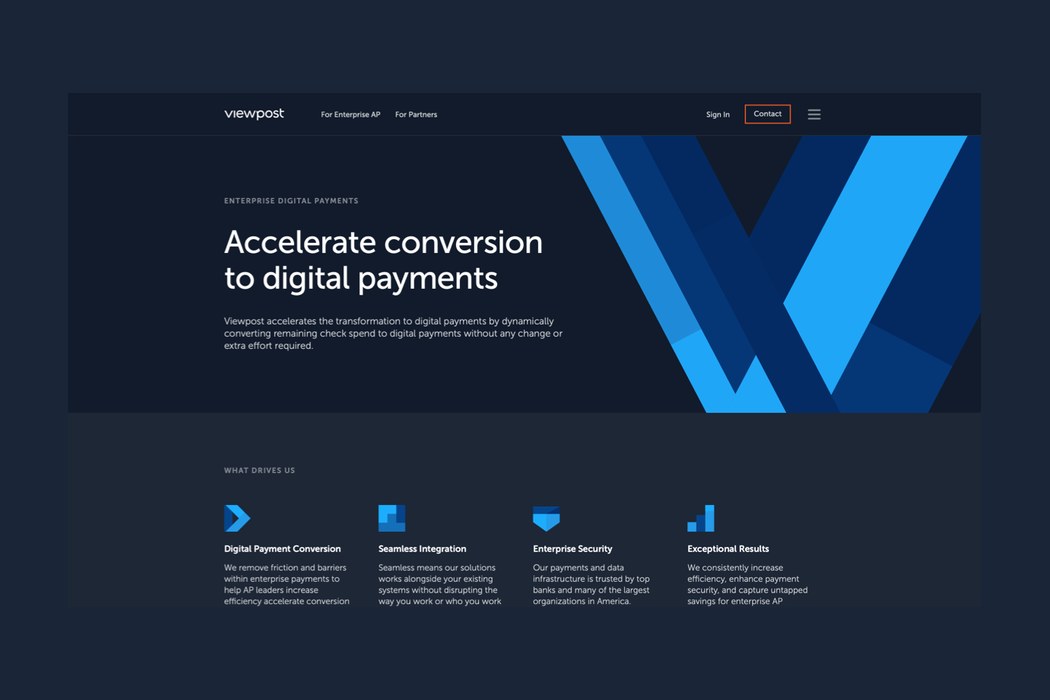
Viewpost Found a Business in the Checks Everyone Else Gave Up On
Most payment companies want to replace the plumbing. Viewpost built its second act around the opposite promise: send the same check file, keep the same partners, and let it hunt for digital payments in the stubborn remainder.
BILL Put the Back Office on Autopilot - Then Turned It Into a $371 Billion Money Highway
Small businesses came for fewer checks and cleaner approvals. BILL stayed to build the payment rails - a network moving more than 1 percent of U.S. GDP while quietly turning accounting chores into transaction revenue.
Priority Commerce Bought a Bankrupt Payments Darling - Then Turned It Into a Cash-Flow Machine
The Georgia fintech started with card processing, paid roughly $37 million for Plastiq after its Chapter 11 filing, and stitched merchant services, payables and treasury into one engine. The bet is simple: the company that sees the whole cash cycle gets more ways to earn.
GrailPay Built the Trust Layer Only After Its First Payment Idea Failed
GrailPay spent years building a cheaper consumer checkout that merchants did not urgently want. The failed pitch left behind something more valuable: payment infrastructure, failure data and a map of the risk hiding inside bank transfers.
Stax Bet Merchants Would Pay a Subscription to Stop Paying Markups. Then It Rebuilt the Payment Stack.
A processor laughed off Suneera Madhani's flat-fee idea. She and her brother built it anyway, reached a $1 billion valuation, and then discovered the bigger business was not one clever price - it was owning more of the machinery behind every swipe.
The $257 Billion Plumbing Job: How Versapay Turned Accounts Receivable Into Software
Versapay spent two decades learning that the hard part of B2B payments is not moving money. It is explaining what the money was for - and getting that answer back into the books without a scavenger hunt.
Corpay's $13 Billion Bet: Make Foreign Exchange Boring for Everyone Else
The Toronto payments operator stitched together decades-old FX firms, a global banking network and a very human service model. Mastercard's $300 million investment says the unglamorous plumbing may be the valuable part.
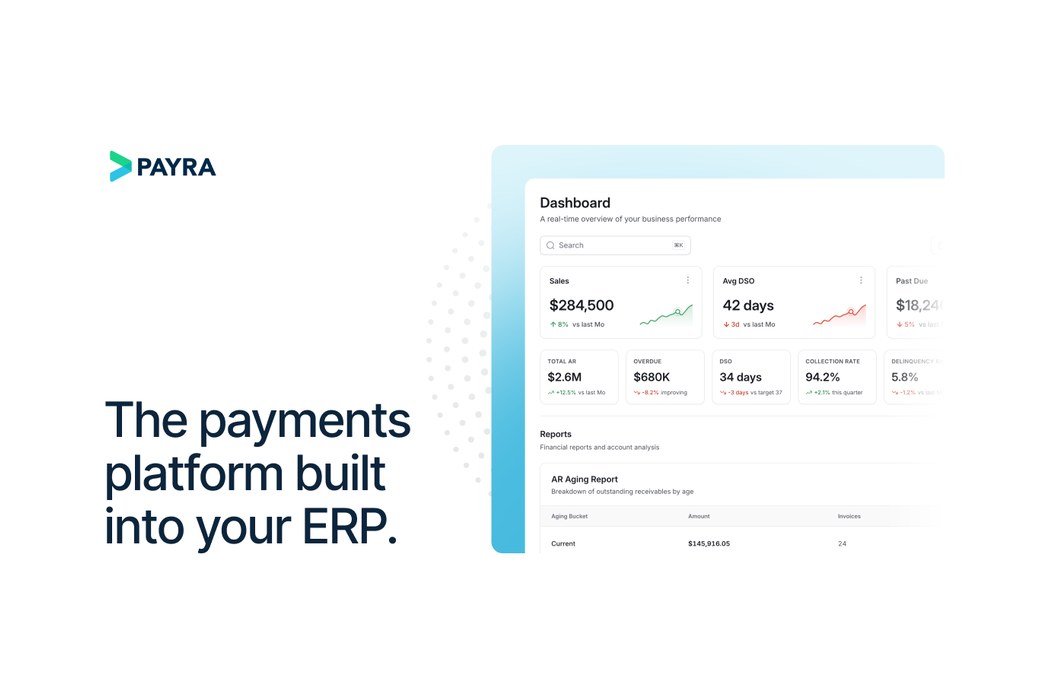
The startup teaching 30-year-old concrete ERPs to take a credit card
Payra bootstrapped its way into a $200 billion corner of the economy that still runs on paper checks and spreadsheets - then took $15 million to speed it up.
The 35-Year Fintech Bet That Made the Bar Tab Boring - and Built a Data Business
Fintech spent roughly 15 years winning state-by-state acceptance for electronic alcohol payments. Now the same plumbing connects 326,000 businesses - and offers a useful playbook for founders who mistake a boring workflow for a small market.

The Back Office That Decided Spreadsheets Were the Enemy
Alek Koenig left Affirm to build the financial plumbing for the soda, skincare and snack brands blowing up your Instagram feed. The pitch is boring on purpose: stop reconciling five systems by hand.
The Payment Company That Fits in a Merchant's Apron Pocket
Once called Cashlez, cashUP rebuilt itself around a simple idea: the smallest shop and the biggest retail chain should accept money the same way. Here is how an IDX-listed payments firm is betting its next chapter on hardware, licenses, and a hard turn toward B2B.
Fortis Wants the Payment to Disappear - and the Workflow to Finally Make Sense
Fortis spent years buying the unglamorous pieces of payment infrastructure that businesses notice only when they break. Now it is turning those pieces into one embedded layer for ERP software, receivables, checkout and reconciliation.
TreviPay Wants the Invoice to Feel Like a One-Click Checkout
The 48-year-old payments company sits behind the checkout, deciding who gets terms, sending the invoice and taking the collection risk - so merchants can treat trade credit as a growth channel instead of a back-office burden.
Bottomline
Transforming the Way Businesses Pay and Get Paid

3S Money
3S Money is a London-founded, regulated cross-border payments platform that gives international businesses a single digital account to send, receive and exchange money across 190+ countries and 65+ currencies. It pairs local IBANs and SWIFT/SEPA connectivity with a dedicated human Relationship Manager for each client, positioning itself as a bank alternative for companies with complex or hard-to-serve international payment needs.
Cardda
Cardda is a Chilean fintech (YC W22) building all-in-one spend management for Latin American businesses. It combines virtual and physical corporate cards, automated local and international transfers, reimbursements, and accounts payable in one dashboard, plus a payments API for mass payouts. It plugs into Chile's SII tax service and ERPs like SAP, Oracle, Defontana and Nubox, giving finance teams real-time control over company spending.
Coba
Coba is a cross-border financial infrastructure company built for businesses moving money between the United States and Mexico. It started in 2023 as a dual-currency consumer account for Latin American remote workers earning in dollars, and has since pivoted to B2B: multi-currency accounts, CLABE-enabled Mexican peso accounts for US companies, sub-24-hour carrier settlements, and embedded FX rails routed through banking partners, SPEI, ACH, SWIFT, wires, and stablecoins. Its sharpest focus is the US-Mexico freight and logistics corridor, where brokers and carriers have long been underserved by slow, opaque cross-border banking.

Milio
Milio (YC W23) is a Colombian fintech building real-time, account-to-account payment infrastructure for Latin America. Through a single API, banks, fintechs, and enterprises can move money between accounts in seconds - handling collections, disbursements, cross-border transfers, and treasury automation while cutting transaction costs by up to 80%.

NextPay
NextPay is a Philippine fintech that gives small and medium businesses the money-movement tools banks make hard to reach: batch payouts to any local bank or e-wallet, payroll, digital invoicing, QR Ph collections, and an API for embedded finance - with no corporate bank account, setup fee, or maintaining balance required. Founded by Don Pansacola and Aldrich Tan and backed by Y Combinator (W21), it has processed billions of pesos for thousands of growing Filipino businesses.

Peakflo
Peakflo is a Singapore-founded, Y Combinator-backed (W22) finance automation platform that puts B2B accounts receivable and accounts payable on autopilot. It connects to accounting systems and ERPs to automate invoice collections, bill payments, expense reimbursements and reconciliation, helping finance teams get paid faster, cut vendor payment time and reclaim thousands of hours a month. Positioned as the AI-native alternative to legacy AP/AR tools for the mid-market and Southeast Asia.
The New Money Company
The New Money Company (YC W24) is a San Francisco fintech that protects B2B invoices against nonpayment and moves the money across borders. Its product, Numo, underwrites a buyer's creditworthiness instantly, guarantees the seller gets paid even if the buyer defaults, and settles funds to more than 80 destinations - with an early focus on getting international contractors in emerging markets paid in USD within seconds. Founded in 2023 by three former Hologram operators, it aims to let businesses sell into new markets without carrying the risk of a buyer who never pays.

Transfez
Transfez is a Jakarta-based fintech that makes sending money across borders cheaper and faster for Indonesians, letting users move funds to 50+ countries in 26 currencies. Founded in 2019 by Edo Windratno and Bondan Herumurti, it grew from a consumer remittance app into a group that also runs Jack, a business finance platform for corporate cards, international payments, payroll and expense management. Transfez is a Y Combinator W22 company backed by East Ventures and BEENEXT.
Waza
Waza is a Y Combinator-backed (W23) B2B payments and liquidity platform that helps businesses in emerging markets - starting with Nigeria and Ghana - pay global suppliers, hold multi-currency balances, and access USD without the friction of traditional correspondent banking. Founded in 2023 by fintech veterans Maxwell Obi and Emmanuel Igbodudu, the company processes hundreds of millions of dollars in annual payment volume and in 2025 launched Lync, a multi-currency banking product positioned as an alternative to Mercury for African startups.
dtcpay
dtcpay is a Singapore-headquartered, regulated payments company that lets merchants, consumers and financial institutions move money in stablecoins as easily as in dollars. Founded in 2019 as Digital Treasures Center by Alice Liu and Band Zhao, it runs a real-time swap engine that converts stablecoins to fiat at the moment of payment, so a shopper can pay in USDC while a merchant is settled in Singapore dollars. The company holds a Major Payment Institution licence from the Monetary Authority of Singapore plus licences and registrations in Hong Kong, Australia, the United States, Canada and a Luxembourg EMI licence covering the European Economic Area. In January 2025 it dropped volatile cryptocurrencies entirely and became stablecoin-only. Its product line spans in-store POS+ terminals, online checkout, payment links, multi-currency wallets, a Visa Infinite "Digital Treasures Card", corporate cards and stablecoin-as-a-service APIs for institutions. dtcpay raised a US$10M Series A led by Vertex Ventures Southeast Asia & India in March 2026, bringing total disclosed funding to roughly US$26.5M.
Fluid
Fluid is a Singapore-based B2B payments platform that lets suppliers and marketplaces offer their business buyers flexible credit terms and installments at the point of purchase. Its AI underwriting engine approves buyers in seconds, pays suppliers on day one, and automates reconciliation - bringing consumer-grade buy-now-pay-later mechanics to business commerce across Southeast Asia. Founded in early 2023 by former Atome and Uber operators, Fluid has raised US$7M and serves 3,000+ businesses across Singapore and Malaysia.

Fuze
Fuze is a Dubai-based digital asset infrastructure company that lets banks, fintechs, and enterprises across MENA and Turkey offer regulated crypto and stablecoin services through a single API. Its stack spans Digital Assets-as-a-Service, an OTC trading desk, stablecoin payment rails, embedded trading, and custody, all built on regulated, compliant infrastructure. Licensed by Dubai's VARA and holding a Retail Payment Services license from the UAE Central Bank, Fuze has onboarded hundreds of institutions and processed billions in digital asset volume since its 2023 launch.