The infrastructure after “Buy”
A business buyer fills a cart with laptops, groceries or truck parts. The total is too large for a personal card, the procurement team wants a purchase order, and finance expects a line-item invoice that matches its software. Then comes the awkward request: “Can we pay in 30 days?” Consumer checkout was designed to make this moment disappear. Business checkout was designed by committee.
TreviPay makes its living in that gap. The Overland Park, Kansas, company gives enterprise sellers a way to offer trade credit at checkout while outsourcing the machinery that follows: buyer onboarding, credit decisions, fraud checks, invoicing, collections, cash application, dispute handling and support. In financed programs, TreviPay takes the credit risk and pays the merchant on an agreed schedule. The buyer gets time. The seller gets certainty.
That simple exchange explains why TreviPay is better understood as operating infrastructure than as another payment button. Its software can appear inside an ecommerce cart, at a store, through a sales representative or in an ERP-generated order. Its people and systems keep working after the order closes. For the merchant, the program can be white-labeled or co-branded, making invoices, portals, emails and even service calls feel like an extension of the seller.
The invoice is part of the product
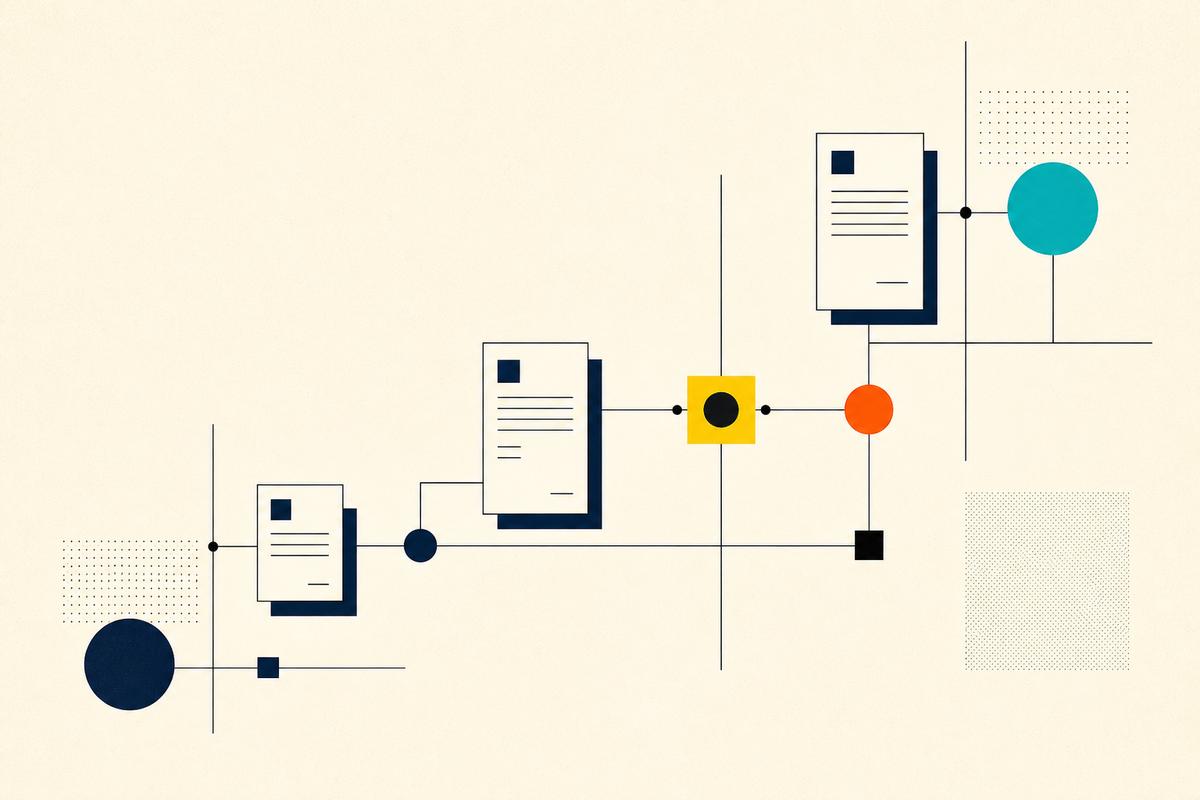
Business purchasing is full of details that consumer payment systems can politely ignore. Buyers may need cost centers, user limits, parent-child accounts, negotiated prices, tax fields, purchase-order matching and invoices delivered as PDF, EDI, XML or cXML. A payment can be technically successful and still produce weeks of trouble if the invoice reaches the wrong entity or lacks the data a buyer requires.
TreviPay's pitch is that these details belong in the buying experience, not in a cleanup queue. Its Pay by Invoice offering gives an approved buyer a dedicated credit line and net terms across channels. Its A/R platform handles qualification, billing, dunning, disputes and reconciliation. Smart invoicing localizes formats and supports country-specific rules. A self-service portal lets buyers check available credit, download invoices, make payments and manage authorized purchasers.
The useful trick is organizational. A seller can modernize receivables without replacing its ERP or hiring a parallel credit department. TreviPay integrates as a layer across existing systems and absorbs the exceptional work that software rarely eliminates entirely. A billing question can still reach a person. A dispute still has an owner. Collections can be configured to preserve the relationship instead of treating every late invoice like a stranger's debt.
“The payment is the small visible moment. The product is everything required to make that moment trustworthy.”YesPress observation
Who buys the invisible work
TreviPay targets enterprises with large distribution networks and repeat business buyers - retailers, manufacturers, transportation companies, airlines, hotels, marketplaces and banks. Its public client roster includes Walmart Business, Lenovo, United Airlines, Staples Canada, Albertsons Companies, Best Buy Business, Samsung, Air Canada, GM and PACCAR. These are not merchants looking for a weekend plug-in. They operate across channels, currencies, countries and procurement systems.
Consider Staples Canada. Its TreviPay-backed commercial program lets approved customers buy online or use a mobile app in more than 300 stores, with the line available immediately rather than after a plastic card arrives. A published case study reported that registered members nearly doubled and year-to-date volume grew 112 percent. Lenovo introduced localized net terms on its LenovoPRO store in 14 countries and reported a 114 percent increase in average order value.
Those results should not be treated as universal forecasts. They do show the commercial logic. A business buyer with a generous, controlled line can place a larger order than one squeezing a purchase onto a card. A seller that receives guaranteed settlement can offer that flexibility without letting days sales outstanding wander. Payment choice becomes a sales tool, and the accounts-receivable department becomes part of customer retention.
A forty-eight-year overnight story
TreviPay's history predates the language now used to describe it. The business began in 1978 and later operated as Multi Service Technology Solutions, or MSTS, within World Fuel Services. Corsair Capital acquired it in 2020, creating a standalone company with management investing alongside the private-equity firm. In 2021, MSTS took the TreviPay name - a nod to Rome's Trevi Fountain and to the three parties in its model: buyer, seller and payment partner.
The inheritance matters. Underwriting businesses is slow-earned expertise: commercial credit files are uneven, ownership structures are complicated and fraud can hide inside a perfectly ordinary-looking order. TreviPay says its automated decisions draw from more than 30 data sources, alongside KYC, KYB, anti-money-laundering and sanctions checks. The company now lists about 885 employees on LinkedIn and says it operates in 35 countries. It reports an average client tenure above 10 years.
Software
APIs, portals and automation connect checkout, ERPs, invoices, collections, reporting and cash application.
Operations
Underwriters, risk teams and support staff carry the messy work that remains when an exception refuses to automate.
This also shapes the business model. TreviPay does not publish self-serve pricing. It sells negotiated enterprise programs with recurring platform and service economics, transaction activity, and - depending on the arrangement - financing or risk components. Capital can come from TreviPay, the client or a financial partner. That flexibility lets a merchant buy the operating model it wants rather than accept a single balance-sheet recipe.
The contested middle
TreviPay sits between two busy categories. On one side are A/R automation companies such as Billtrust, HighRadius, Versapay, BILL and Paystand. On the other are B2B trade-credit and pay-later specialists including Balance, Credit Key, Resolve Pay, Billie, Mondu, Slope and Tranch. Banks, cards, factors and internal credit teams remain alternatives too. The choice often depends on geography, buyer size, risk appetite and how much operational work a seller wants to keep.
TreviPay's difference is scope. It can offer an enterprise supplier a closed-loop branded credit program, automate the order-to-cash path and staff the buyer experience. It can also expand acceptance through Mastercard, whose commercial-card capabilities power Universal Acceptance. That product allows suppliers already accepting Mastercard to receive TreviPay-authorized net-terms transactions with less integration work. Financial Partner Gateway offers banks APIs for deploying their own capital through TreviPay's underwriting and receivables stack.
That breadth addresses a recurring enterprise failure: each department can optimize its own step while the buyer experiences one long malfunction. Sales approves a special price that billing cannot reproduce. Credit opens an account that the web store does not recognize. An invoice arrives without the purchase-order field, so accounts payable rejects it. Collections then calls about a balance the buyer believes is in dispute. None of these errors looks dramatic in isolation. Together, they delay cash and teach a customer that buying elsewhere may be easier.
A managed network gives TreviPay a chance to close those handoffs. Transaction data can move from authorization into invoice creation, then into reconciliation and account monitoring. The seller gains one view across ecommerce and offline orders; the buyer carries the same approved line into each channel. The advantage is not that every step is novel. It is that fewer seams are left for the buyer to discover.
Travel adds another variation. In 2025, TreviPay became a UATP issuer, offering airlines and intermediaries outsourced issuing for digital and physical products. In retail, Albertsons added 30-day terms for corporate grocery shoppers across banners including Safeway, Vons and Jewel-Osco. Walmart Business followed with Pay By Invoice online, in its app and in stores. The common thread is a buyer who needs more control and documentation than a consumer card supplies.
Can receivables disappear?
TreviPay now calls its direction “Zero Touch A/R.” The phrase describes a workflow in which invoice data is checked automatically, credit decisions adapt to new signals, reminders are timed without manual lists, payments are matched to open invoices and exceptions surface before they become overdue surprises. The company is adding AI to onboarding, fraud detection, cash application and predictions about buyer behavior.
The ambition deserves a practical reading. Enterprise receivables will not become literally touchless while buyers dispute quantities, procurement systems reject formats and regulations change by country. The valuable goal is narrower: remove routine touches, send humans the consequential exceptions and use payment behavior to identify both risk and sales opportunities. In 2026, TreviPay announced a Growth Center aimed at that last piece and added a senior executive dedicated to issuer relationships across Visa and Mastercard.
There is a tradeoff. A broad managed platform is built for enterprises with enough volume and complexity to justify integration and governance. Small suppliers may prefer a lighter product. Sellers must also decide how much of the buyer relationship, credit policy and data layer they are comfortable placing with a partner. The same scope that differentiates TreviPay can make a decision more consequential than subscribing to one A/R tool.
For the right merchant, however, the value is wonderfully plain. The customer clicks once. Behind that click, somebody checks the company, sets a limit, records the order, constructs a compliant invoice, answers the phone, applies the eventual cash and absorbs a default if the program calls for it. TreviPay wants to be that somebody - present in every operational detail and nearly absent from the buyer's view.