credit-underwriting
(15)
Earnest lets borrowers set the payment. The hard part is everything behind it.
The student lender built its name on loans that fit a monthly budget. Its journey through venture funding, a Navient acquisition and a $2.5 million settlement shows what that promise demands.

The $5.3 Billion Deal That Died - and the API That Got Bigger
Plaid was supposed to disappear into Visa. Instead, the blocked $5.3 billion sale left it free to turn a bank-linking button into a broader financial intelligence network - with a valuation reset, a privacy reckoning and one very copyable startup lesson along the way.

Alloy Took 100 Investor Noes. Now It Helps 900 Banks Say Yes.
The founders started with a failed nightlife app, found a sharper problem inside bank payments, and endured 100 investor rejections. Their reward is a quiet piece of infrastructure that helps more than 900 financial institutions approve good customers without giving fraudsters a free pass.

Alexandre Liege Is Building the Pipes Behind Africa’s Next Credit Market
After a career moving money through mobile networks, Mastercard and fintech, the Cauris co-founder is applying an operator’s eye to private credit - one repayment, covenant and data feed at a time.
The Credit Score Hiding in How You Use Your Phone
Credolab does not read a borrower's credit history. It studies the anonymous choreography of a digital application - then gives lenders a second opinion in less than a second.
The Credit Card Company Hiding in America’s Shopping Bags
Bread Financial sits behind the cards, rewards and payment plans of brands from Ulta to the NFL. Its quiet advantage is not a flashy app - it is the machinery that turns a checkout into a long-term financial relationship.
TreviPay Wants the Invoice to Feel Like a One-Click Checkout
The 48-year-old payments company sits behind the checkout, deciding who gets terms, sending the invoice and taking the collection risk - so merchants can treat trade credit as a growth channel instead of a back-office burden.

Enova International
Enova built a multibillion-dollar lending business by treating credit decisions as a software problem. Now the Chicago fintech is preparing to add something decidedly old-school to the machine: a bank charter.
Upstart
Upstart wants to replace the blunt instrument of conventional credit scoring with a learning system that prices each borrower more precisely. Its next test is larger than approval rates: proving an AI marketplace can grow through a full credit cycle without becoming the bank it once said it did not need to be.

Taktile
Taktile is an AI decision platform for banks, insurers and fintechs. Its Agentic Decision Platform lets risk and engineering teams combine AI agents, business rules, third-party data and human oversight to automate high-stakes decisions - approving customers, underwriting credit, flagging fraud and processing claims - using low-code building blocks, 200+ data integrations, and built-in testing and monitoring. Founded in 2020 by Maik Taro Wehmeyer and Maximilian Eber, the company operates across New York, Berlin, London, Sao Paulo and Iasi, and raised a $110M Series C led by Goldman Sachs Alternatives in June 2026.

Maik Wehmeyer
Maik Taro Wehmeyer is the co-founder and CEO of Taktile, an AI decision platform that helps banks, insurers, and fintechs automate high-stakes risk decisions like credit underwriting, onboarding, fraud detection, and claims. A Harvard-trained statistician and former QuantCo, McKinsey, and Bosch alum, he started Taktile in 2020 with fellow Harvard classmate Maximilian Eber after they repeatedly rebuilt the same decision infrastructure for enterprise clients. In June 2026 the company raised a $110M Series C led by Goldman Sachs Alternatives, bringing total funding to roughly $189M, and now serves more than 150 financial institutions from offices in New York, London, and Berlin.

Accend
Accend builds human-in-the-loop AI agents that automate commercial credit underwriting for banks and fintechs. The San Francisco startup, founded in 2023 by ex-Brex risk operators, ingests financial documents and tax filings, spreads financial statements, models cash flow, and drafts credit memos - with every AI-generated spread reviewed by human analysts. Customers report application processing times cut by up to 80%, and the company positions itself as a replacement for offshore BPO spreading teams.

Pranjal Daga
Pranjal Daga is the co-founder and CEO of Accend (YC S23), a San Francisco fintech building human-in-the-loop AI agents for commercial credit underwriting and compliance at banks and fintechs. Before Accend he led AI product on the Risk team at Brex, where his work helped prevent roughly $20M in fraud losses, and earlier helped build Cisco Innovation Labs from a single person to a 35-person team. He dropped out of a PhD in AI/ML at Purdue to chase the build, has done research at Adobe and IBM, and is racing to replace slow, manual back-office compliance work with audit-ready AI.
Heka Global
Heka Global is a New York and Tel Aviv based fintech that turns scattered public web signals into structured, explainable consumer profiles for financial institutions. Its AI-driven web intelligence engine helps banks, insurers and pension providers detect fraud, verify identities, reconnect dormant accounts and underwrite thin-file customers - using a proprietary database of millions of records plus live open-web data. Heka raised a $14M Series A in July 2025 led by Windare Ventures with participation from Barclays and Corn`er Banca.
Idan Bar-Dov
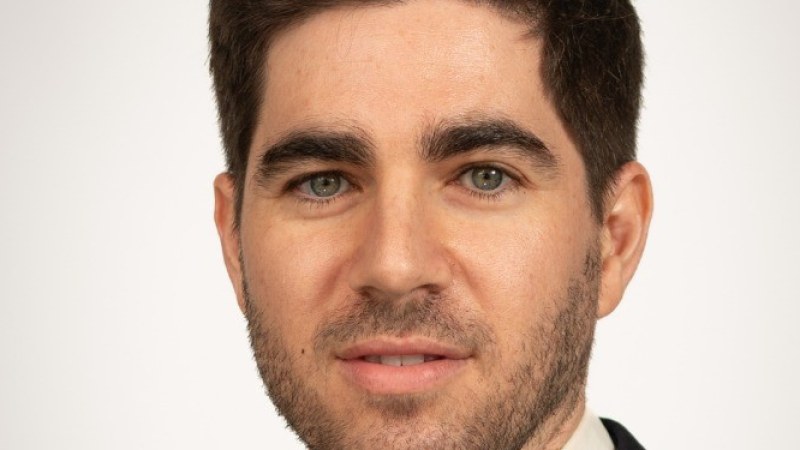
Idan Bar-Dov is the co-founder and CEO of Heka Global, a New York and Tel Aviv company that turns the public web into real-time, audit-ready digital identities for banks, insurers, and pension funds. A fintech lawyer turned operator, he started Heka during the pandemic to reconnect people with lost financial assets and grew it into a fraud-fighting web-intelligence engine used by institutions like Barclays and Pictet. In July 2025 Heka closed a $14M Series A led by Windare Ventures, with Bar-Dov arguing that the credit bureaus built for a paper era cannot see a world where both consumers and risk now live online.