You meet Bread Financial at the register, though its name may never make the introduction. Perhaps you are buying lipstick at Ulta, a necklace at Kay, a sofa at Raymour & Flanigan or tickets attached to an NFL rewards card. The cashier mentions points. The checkout page offers monthly payments. A small line in the card agreement names Comenity Bank. Behind that moment sits Bread Financial, a Columbus company with roughly 6,000 employees, nearly 100 major brand programs and about 34 million open accounts at the end of 2025.
This is not a startup that woke up when “embedded finance” became a conference-panel phrase. Bread traces its corporate life to 1996, when two pieces of retail plumbing - J.C. Penney’s transaction-services business and The Limited’s private-label credit operation - were combined into Alliance Data. It went public in 2001. The Bread name arrived much later, after Alliance Data bought a purchase-finance fintech in 2020, stripped away other businesses and rebranded the focused company in March 2022.
The name is friendly; the operation is industrial. Bread decides whom to lend to, funds the loan, processes and services the account, watches for fraud, handles customer care, designs rewards and helps a retailer decide which offer should appear to which shopper. A store card is the visible edge of a system built to answer a harder question: how can payment make a customer return?
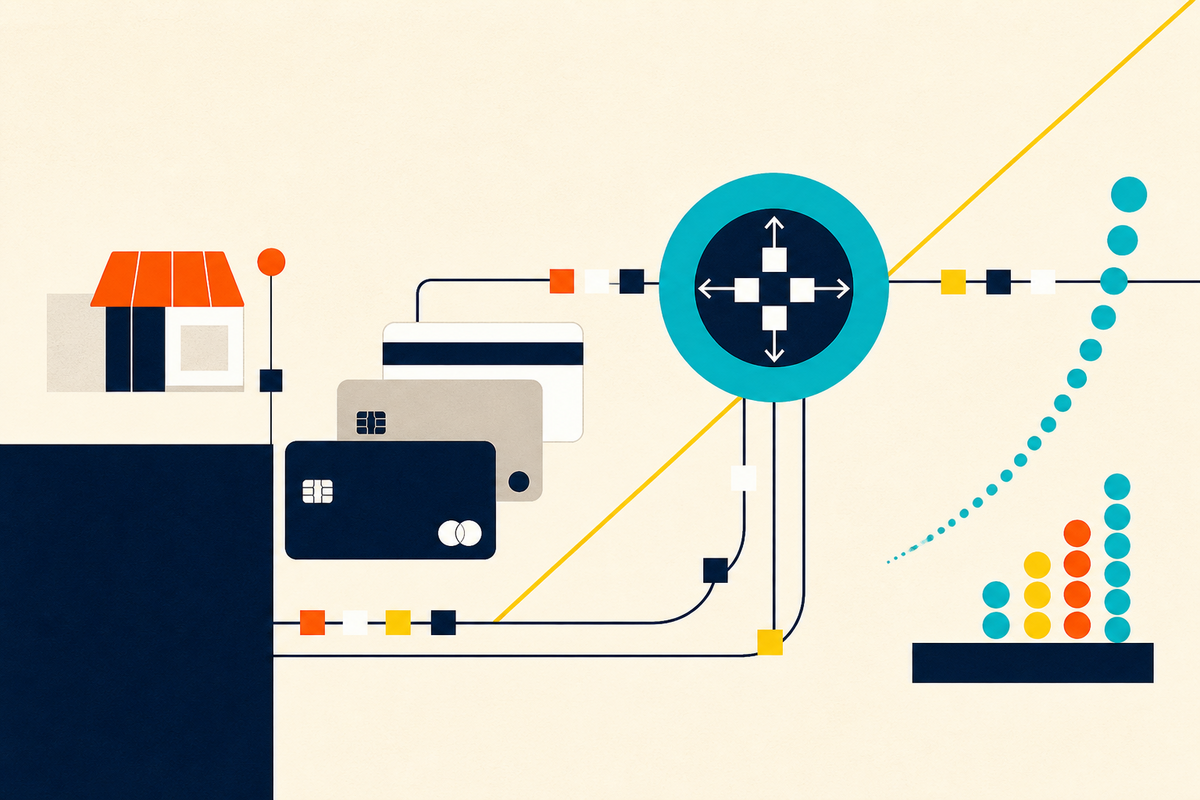
The card is a loyalty program with a balance sheet
Bread’s core products come in two flavors. A private-label card works only with one retailer. A co-brand card rides an American Express, Mastercard or Visa network and can travel beyond the partner’s stores. The distinction changes the economics. In 2025, co-brand cards produced 52 percent of Bread’s credit sales, while private-label cards produced 43 percent. Co-brand customers tend to have higher credit scores and larger balances; their spending elsewhere also generates interchange revenue. Private-label programs generally produce higher lending yields and can support long promotional periods on furniture, jewelry or medical work.
For a brand, the pitch goes beyond financing. Bread can prescreen a shopper in real time, prefill an application, issue a virtual card and return the customer to the purchase without ejecting them from the retailer’s site. Its Enhanced Digital Suite helps place relevant credit earlier in a shopping journey. Transaction data then feeds customer segmentation and campaigns across web, email, mobile, direct mail and the store. The objective is an appealing loop: a better offer lifts conversion; a useful reward encourages another visit; another visit creates more information.
“Bread Financial combines the heart and hustle of a fintech with the discipline and stability of a well-established bank.”Ralph Andretta, president and CEO
Andretta’s line neatly describes the company’s desired position. Bread is not merely software sold to a bank, nor merely a lender waiting for borrowers to arrive. It brings regulated bank subsidiaries, a large credit book and decades of underwriting experience to the same table as APIs, wallet provisioning and checkout design. Its contracts with brand partners typically last five to 10 years. That endurance matters in a market where a polished interface is easier to copy than an operating history through several credit cycles.
A menu for the moment of purchase
Not every shopper wants a revolving store card. Bread Pay fills the gap with fixed installment loans, usually lasting three to 84 months, and a split-pay option that divides a purchase into four payments. More than 1,400 small and midsize merchants use the platform, while larger Bread partners can add installments beside their card programs. In early 2026, the company said Academy Sports + Outdoors offered the full trio: co-brand credit, private-label credit and installment loans. AAA, Dell and Ford also added Bread Pay financing.
This range solves a merchant problem disguised as consumer choice. A retailer does not know whether the next customer wants points, a short interest-free schedule or a longer fixed loan. Offering only one format sends some purchases elsewhere. Bread can match the financing tool to the basket, channel and customer without asking the retailer to assemble separate vendors for every option.
Consumers can also meet Bread without a retailer. Bread Cashback, launched in 2022 on the American Express network, pays unlimited 2 percent cash back with no annual or foreign-transaction fee. Bread Rewards, introduced the following year, leans into higher rewards on everyday categories. Both can move quickly from approval into a mobile wallet. They give Bread a relationship that does not depend on a retail partner and help it capture spending outside a single store.
The saver funds the shopper
Bread Savings seems like the odd item in a collection of checkout tools: high-yield savings accounts, certificates of deposit and IRA certificates, all delivered online without branches. On the balance sheet, it makes perfect sense. Consumer deposits are funding for consumer loans. Bread can gather money from savers, lend through cards and installment products, and keep more of the machinery inside the company.
Retail deposits grew from $7.7 billion at the end of 2024 to $8.5 billion a year later, representing 48 percent of Bread’s average funding sources in 2025. By the end of the second quarter of 2026, direct-to-consumer deposits had reached $9.4 billion, up 16 percent from a year earlier. It is an elegant circularity, provided Bread prices both sides carefully: savers expect a competitive rate; borrowers must remain able and willing to repay.
That last condition is where the pastel fintech vocabulary meets banking reality. Bread made $3.845 billion in total net interest and non-interest income in 2025. Interest and fees on loans are the principal source. Credit losses, delinquencies, funding costs and regulation are not footnotes to the model; they are the model’s weather. The company processes millions of applications using its own algorithms and credit-bureau data, monitors accounts for fraud and adjusts limits and collections strategies as risk changes.
A moat with a concentration problem
Bread’s breadth is its clearest difference from narrower competitors. Synchrony and major banks contest the card programs. Affirm, Klarna, Afterpay and PayPal compete at checkout. Ally, Marcus and Discover compete for deposits. Bread’s answer is to combine the jobs: issue the card, supply installments, manage loyalty, analyze the customer, service the debt and fund lending partly with deposits. A partner can buy a system instead of a feature.
The risk is visible in the same relationships that make the company valuable. Its five largest card programs generated roughly 49 percent of 2025 revenue, excluding a portfolio-sale gain. Signet Jewelers, Ulta Beauty and Victoria’s Secret each represented at least 10 percent. A retailer changing issuers, weakening financially or losing relevance can remove both loans and future purchase volume. Saks Fifth Avenue, a newer partner, entered Chapter 11 protection in January 2026 - a reminder that the retailer’s health travels into the lender’s results.
Bread is responding by leaning toward co-brand cards, proprietary products, new industries and more partners. In the first quarter of 2026 it launched programs with Ford and Ethan Allen, extending into automotive and home. The second quarter brought evidence of momentum: credit sales rose 11 percent to $7.5 billion, average loans rose 3 percent and revenue rose 7 percent. Those are operating results, not proof that concentration has disappeared. Diversification takes years because the contracts and portfolios are large.
The unglamorous advantage
Bread’s most defensible expertise may be the work few shoppers want to consider: risk scoring, compliance, collections, fraud review and answering the phone when a payment goes wrong. Its customer-care operation earned BenchmarkPortal’s Center of Excellence certification for the twentieth consecutive time in 2025. The company completed a mobile-app rollout across eligible branded programs that year, but the app sits on top of a service operation spanning phone, mail, email, text and web.
There is also a modern data layer. Bread uses machine learning in fraud detection and marketing, and it has built an AI-powered knowledge tool for service associates. It says transaction analysis helps partners find more loyal, frequent shoppers. The value is practical rather than mystical: catch a suspicious application, choose a sensible credit line, send a relevant offer and make it possible for a customer to solve a problem without calling.
At 30, Bread Financial occupies a useful middle of the market. It has the regulated balance sheet and operating memory of an established issuer, yet it distributes products where fintechs trained consumers to expect them - inside the purchase flow and inside a phone. Its next chapter depends less on inventing another way to pay than on making its many ways to pay work as one coherent system.
The shopper will still see a discount, some points or four neat payments. The retailer will see conversion and repeat business. Bread sees the entire relationship, including the bill that arrives later. That is the company’s quiet power, and the reason the least noticeable name in the shopping bag may have the longest memory.