credit-underwriting
(4)
Alexandre Liege Is Building the Pipes Behind Africa’s Next Credit Market
After a career moving money through mobile networks, Mastercard and fintech, the Cauris co-founder is applying an operator’s eye to private credit - one repayment, covenant and data feed at a time.

Maik Wehmeyer
Maik Taro Wehmeyer is the co-founder and CEO of Taktile, an AI decision platform that helps banks, insurers, and fintechs automate high-stakes risk decisions like credit underwriting, onboarding, fraud detection, and claims. A Harvard-trained statistician and former QuantCo, McKinsey, and Bosch alum, he started Taktile in 2020 with fellow Harvard classmate Maximilian Eber after they repeatedly rebuilt the same decision infrastructure for enterprise clients. In June 2026 the company raised a $110M Series C led by Goldman Sachs Alternatives, bringing total funding to roughly $189M, and now serves more than 150 financial institutions from offices in New York, London, and Berlin.

Pranjal Daga
Pranjal Daga is the co-founder and CEO of Accend (YC S23), a San Francisco fintech building human-in-the-loop AI agents for commercial credit underwriting and compliance at banks and fintechs. Before Accend he led AI product on the Risk team at Brex, where his work helped prevent roughly $20M in fraud losses, and earlier helped build Cisco Innovation Labs from a single person to a 35-person team. He dropped out of a PhD in AI/ML at Purdue to chase the build, has done research at Adobe and IBM, and is racing to replace slow, manual back-office compliance work with audit-ready AI.
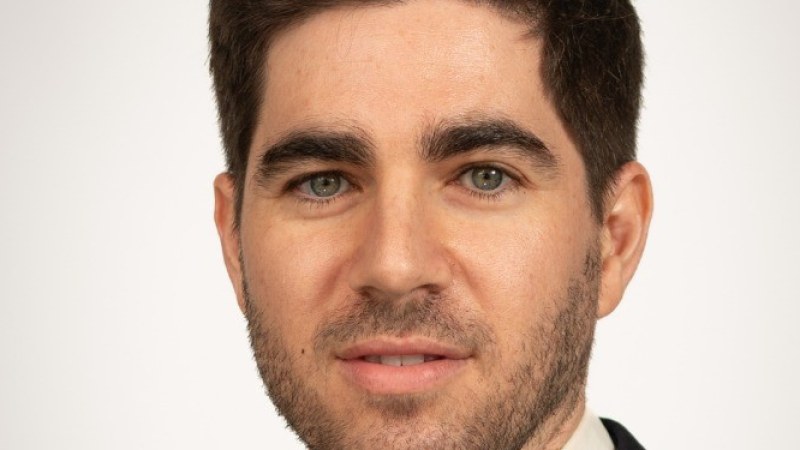
Idan Bar-Dov
Idan Bar-Dov is the co-founder and CEO of Heka Global, a New York and Tel Aviv company that turns the public web into real-time, audit-ready digital identities for banks, insurers, and pension funds. A fintech lawyer turned operator, he started Heka during the pandemic to reconnect people with lost financial assets and grew it into a fraud-fighting web-intelligence engine used by institutions like Barclays and Pictet. In July 2025 Heka closed a $14M Series A led by Windare Ventures, with Bar-Dov arguing that the credit bureaus built for a paper era cannot see a world where both consumers and risk now live online.