The least glamorous person in a bar may be the one holding an invoice at six in the morning. A delivery has arrived. The beer is getting warm. The manager is hunting for a checkbook, checking payment terms and wondering whether the distributor can legally leave the cases. Fintech built a company around removing that little scene from American commerce.
The Tampa company is easy to confuse with the industry whose name it shares. But Financial Information Technologies, LLC was founded in 1991, before “fintech” became a pitch-deck category. Its first obsession was specific: make alcohol invoice payments electronic without tripping the state-by-state rules that govern how retailers and wholesalers settle.
That distinction matters. Fintech is not a consumer wallet, bank or checkout button. It is back-office infrastructure for retail and hospitality. Its software receives invoices, translates inconsistent supplier files into a common format, initiates payments on the correct date, tracks credits, reports spending and sends clean data into accounting or enterprise systems. The result is less paper, fewer re-keying errors and a searchable record of what was bought, from whom, at which location and for how much.
The first failure was permission
Founder Scott Riley’s problem was not convincing a computer to move money. It was convincing a regulated market that the computer should be allowed to do it. Cash, checks and money orders were the accepted machinery. Riley later recalled that electronic funds payment for regulated products was illegal at the time. Getting acceptance across every state took roughly 15 years.
“At that time, it was illegal to pay through electronic funds for regulated products.”Scott Riley, founder and former CEO
That slog explains more about Fintech’s position than any feature list. A generic software company can add ACH. It cannot instantly reproduce years of regulatory interpretation, distributor relationships, payment-term logic and confidence among both sides of a transaction. Compliance was the obstacle first. Then it became the wedge.
The product that emerged, PaymentSource, automates electronic alcohol payments according to invoice terms. Fintech says it sends instructions through a secure banking channel when payment is due and never takes ownership of the retailer’s funds. Around that transfer sits the more valuable machinery: invoice capture, product standardization, general-ledger coding, credit management, reconciliation and spend analysis.
The product is the exception layer
PaymentSource can ingest EDI files from sophisticated suppliers, scanned pages from less sophisticated ones and invoices built in a free vendor tool. It standardizes names and line items, then returns the data through one of more than 1,200 managed integrations or a custom file. A multi-location operator gets one view instead of a scavenger hunt across stores, inboxes and filing cabinets.
Its reporting is unusually concrete. Cost Variance identifies products and locations where purchase prices moved. Expected Cost Analysis compares an operator’s anticipated price with the invoice. Split-case reporting surfaces the fee for buying less than a full case. None of this sounds cinematic. To an operator protecting a thin margin across hundreds of deliveries, it sounds like Tuesday afternoon returned to the calendar.
Customers span both ends of the network: single-site bars, restaurant groups, hotels, convenience stores, grocers, alcohol wholesalers, suppliers and accounting firms. Fintech publicly displays brands including Wawa, Kroger, Albertsons, Circle K, Whole Foods, Family Dollar, Hilton and Marriott. The company says 326,000 businesses and their trading partners support more than 1.3 million B2B relationships on its platform.
The appeal is easiest to see in the small operational moments. Ford’s Garage began with PaymentSource at one location in 2015, then extended it across the restaurant group. Managers gained online invoice detail, rolling history and a way to request and track credits without reconstructing a paper trail. S&G Stores later rolled automated alcohol payment across its locations so distributors would be paid according to the terms on each invoice. The software did not invent a new task for either customer. It made an unavoidable one less dependent on memory, handwriting and the manager who happens to know which drawer holds the checks.
That scale creates a quiet flywheel. Every integrated distributor makes the service easier for more retailers. Every retailer connection makes electronic collection more useful for distributors. Each invoice adds standardized data that can power better reconciliation and analysis. Fintech can offer a permanent Free plan for basic regulated-alcohol payment because a low-friction entry point helps the network fill in.
What changed its mind about the market
For years, alcohol was the identity. Under CEO Tad Phelps, who joined in 2017, the company listened for adjacent complaints. Customers did not only dislike alcohol invoices; they disliked invoices. In May 2024, Fintech expanded PaymentSource to cover goods, services and supplies, turning a specialized payment rail into a broader accounts-payable platform.
The business model followed. PaymentSource now runs from Free through Lite, Pro, Premium and Premium Plus subscriptions. Free is limited to regulated alcohol invoices, two users, ten locations and recent payment history. Higher tiers add longer archives, downloadable line-item invoices, reporting, integrations, non-alcohol processing and more payment controls. Exact monthly paid prices vary by plan and contract. On the other side, accounts-receivable tools help vendors distribute invoices, collect electronic payments and reconcile remittances.
The expansion also moved onto the shelf. Fintech acquired assets from iControl and Nexxus Group in late 2023 and 2024, adding scan-based trading expertise. In that model, a vendor retains ownership of inventory until a shopper scans it at the register. Point-of-sale data then triggers invoicing and payment. The retailer avoids paying upfront for inventory it has not sold; the supplier receives store- and SKU-level visibility.
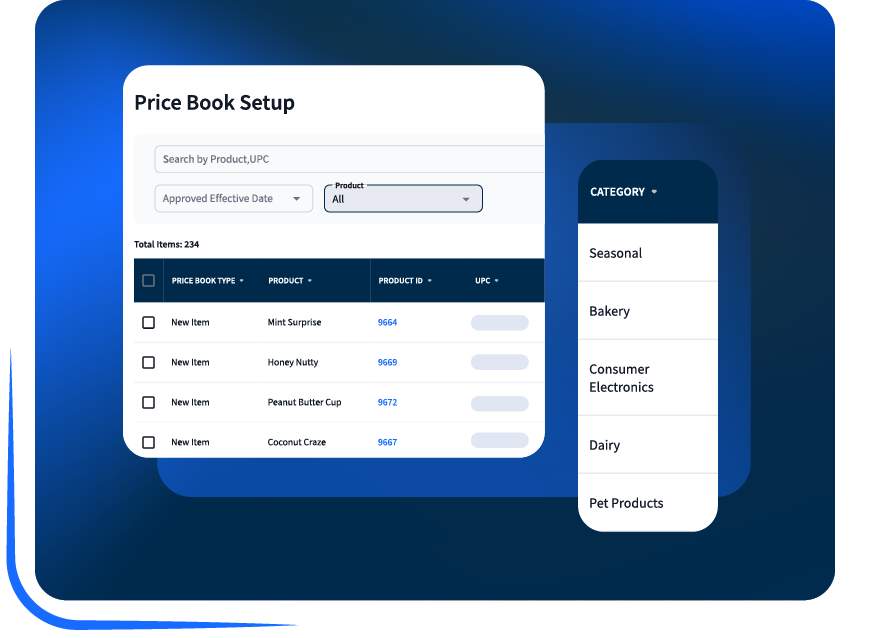
In April 2026, Fintech launched a rebuilt supply-chain partner hub that combines point-of-sale and direct-store-delivery data, a jointly validated price book, exception handling and automated payment. The company reported 67 percent of third-party-managed scan-based trading programs, covering 85,000 retail doors at more than 150 retailers and over 3,500 suppliers. In July, the product became a finalist in CSP’s Retailer Choice awards.
A moat made of unlovely details
Fintech competes with several categories rather than one obvious rival. Restaurant365, MarginEdge, Ottimate and BILL tackle pieces of accounts payable. Craftable and inventory specialists help hospitality operators control food and beverage costs. Large chains can build EDI and treasury workflows internally. The old alternative remains stubbornly competitive: spreadsheets, paper and people who know where the bodies are buried.
Fintech’s difference is the combination. It understands alcohol payment rules, connects a large buyer-supplier graph, normalizes line-item data and maintains the integrations that carry it into existing systems. Its expertise is not “payments” in the abstract. It is knowing what to do when a credit lands late, a distributor calls a product by another name, a location crosses a state line or a purchase order does not match the invoice.
The moat is not moving money. It is knowing why this invoice, from this distributor, in this state, is different from the one beside it.
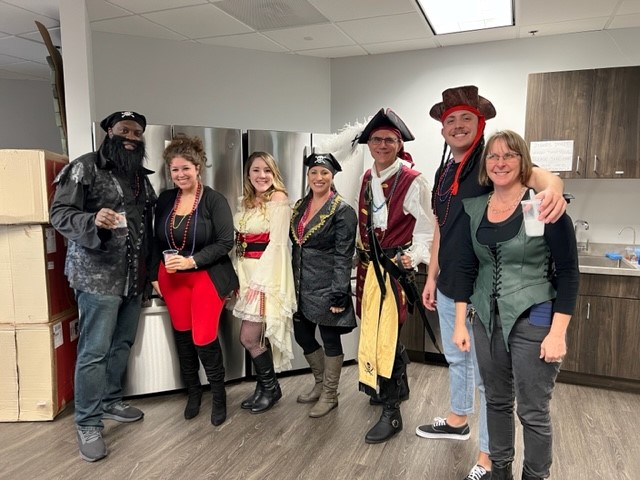
The company’s culture is less visible than its transaction count, but there are clues. LinkedIn places the team in the 201-to-500 employee range. Fintech has appeared on Tampa Bay Times workplace lists and Florida Trend’s Best Companies to Work For list. Its employee Culture Club stages bowling, March Madness and a Gasparilla party complete with pirate costumes. It is a pleasingly local detail for a company whose software otherwise disappears into national plumbing.
What builders can steal
- Choose a compulsory workflow. Nice-to-have software is easy to postpone; a regulated invoice still comes due.
- Own the exceptions before the dashboard. The hard cases create expertise a general tool cannot fake.
- Connect both sides. Buyer convenience improves supplier collection, which attracts more buyers.
- Standardize the exhaust. Payments create invoice data; clean data creates reporting, reconciliation and new products.
- Expand by job, not slogan. “All invoices” is adjacent to alcohol invoices. A consumer wallet would not be.
When the playbook breaks
This strategy is not a permission slip to chase any dusty industry. It works when transactions recur, compliance makes mistakes expensive, both parties benefit from a common record and integrations can be reused across many customers. It is weaker when purchases are rare, rules change faster than software can absorb them, suppliers refuse a shared standard or each customer requires a bespoke implementation whose cost overwhelms the subscription.
There is also execution risk in widening the product. Alcohol gave Fintech a crisp reason to exist; general AP is crowded. Scan-based trading depends on accurate POS and delivery feeds from two parties whose records may disagree. The company’s advantage will matter only if its validation system resolves those disagreements better than an internal team or a specialist alternative.
Still, the arc is instructive. Fintech started with a payment that could not legally happen, stayed through the state-by-state work, and used the resulting trust to organize the information around the payment. Thirty-five years later, the bar tab is the least interesting part. The business is the network of rules, records and relationships hiding behind it.