Friday ought to be a modest ambition for a software company. At Diesel Direct, however, the weekly check run was a small production: print, find signatures, fill envelopes. Meanwhile, invoices accumulated in the inbox. The company already had software. That was part of the problem. A supplier could change an invoice layout and send the supposedly automated process back to its human custodians.
- Vic.ai connects invoice coding, matching, approvals and payments to existing accounting systems.
- Its customers buy capacity: fewer routine touches, more room to handle exceptions.
- Autonomy depends on confidence, usable data and controls. A scanned invoice is only the opening act.
The template broke first
“Every time a vendor tweaked their invoice, the template broke.”
Andrew Turkish, Diesel Direct · Vic.ai customer account
His team had to rebuild the template. The supposed shortcut had acquired a maintenance department.
Vic.ai’s pitch appealed partly because it covered the journey through payment. Diesel Direct adopted invoice processing, bill-of-lading matching, approvals and analytics alongside payments, connected to Microsoft Great Plains. The published case study reports a move from four days to three for the AP close. These are customer results presented by the supplier, rather than a forecast for every buyer.
The broader lesson is wonderfully unglamorous. Count the work that survives automation. If staff still correct fields, decide accounting codes and chase approvals, a document moving faster through the scanner may have changed very little. The bottleneck has simply acquired a better entrance.
Let the machine earn its freedom
Vic.ai attacks those decisions with models trained for accounting. The software extracts header and line-item information, predicts general-ledger coding and matches invoices to purchase orders. A confidence assessment determines whether predictions need review or qualify for Autopilot. Corrections supply feedback. The practical ambition is to move people from entering routine information to supervising the uncertain cases.
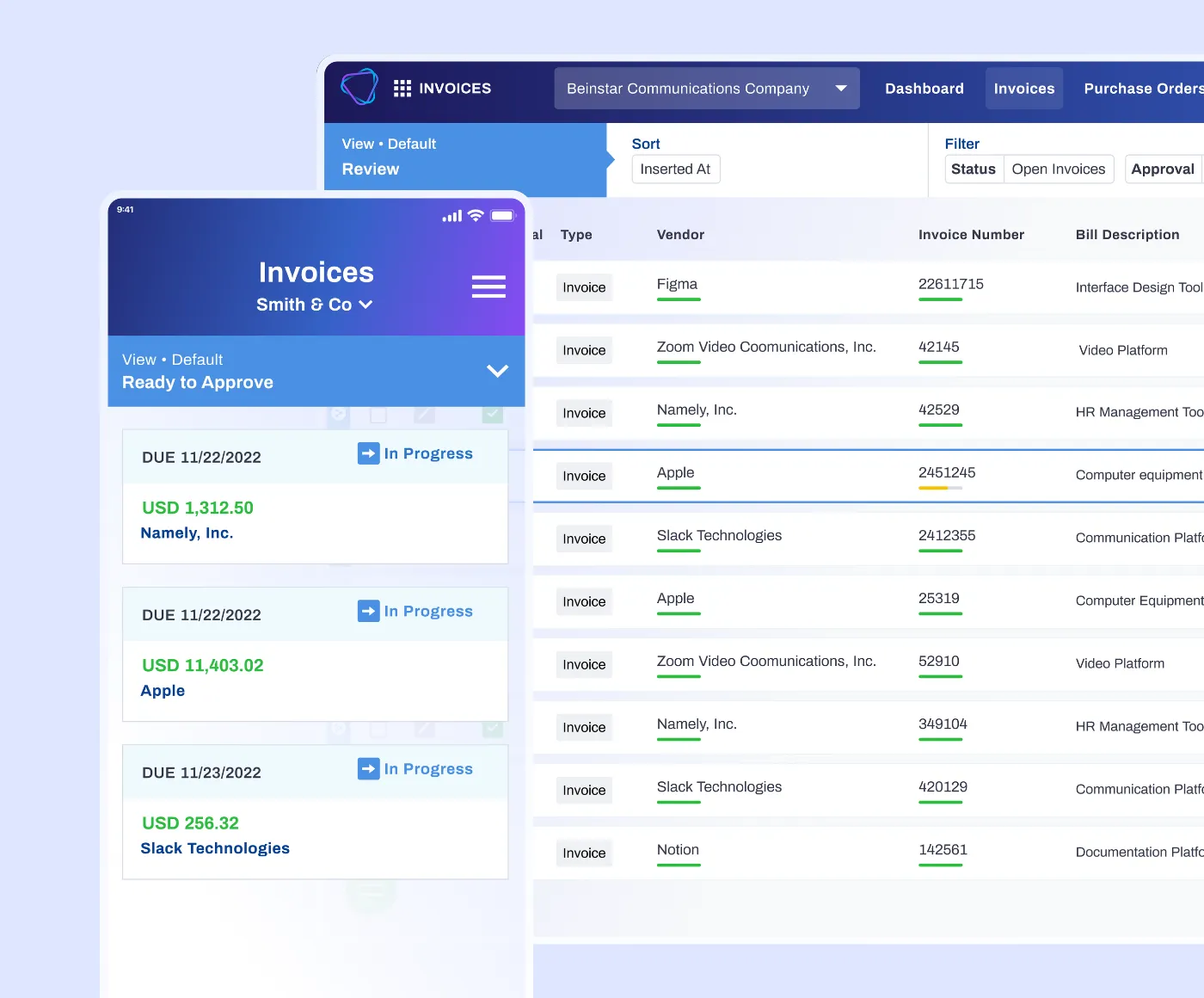
That distinction matters. Recognition asks what a document says. Accounting asks where its contents belong. A readable invoice can still carry the wrong department, an unfamiliar description or a purchase-order discrepancy. Finishing the job requires context, not merely legible characters.
Swedish housing cooperative HSB supplies a useful second example. Its previous workflow involved scanning, filling gaps and then coding in another system. The organization began implementing Vic.ai in June 2020. Its published account reports 96% coding accuracy and 72% no-touch invoice processing. Those percentages describe different things: correct predictions and invoices handled without a person’s intervention.
For a controller, the gap is the interesting part. A prediction may be right and still need approval. An unusual transaction may deserve attention regardless of the model’s general performance. Autonomy becomes useful when the organization decides which work can proceed and which work must stop.
The bill has an entourage
Alexander Hagerup and Kristoffer Roil launched Vic.ai in 2017, following an idea the company traces to 2016. Hagerup brought a finance and accounting background alongside earlier technology ventures. Roil brought experience building businesses and their operating systems. Their chosen territory was the office of the CFO, approached through accounts payable.


Invoice processing proved a doorway into adjacent work. VicPay handles vendor payments; the Vendor Portal handles onboarding, payment preferences and status. VicAnalytics looks at performance and spend. Expense management and VicCard extend the remit to corporate purchases. The common thread is the transaction and the administrative company it keeps.
In June 2025, Vic.ai announced VicAgents, with Contract and Analytics agents in limited beta. VicInbox was already operating. Today its help documentation describes Chrome and Outlook tools that categorize AP messages and prepare replies using invoice and payment information. Drafting a response is useful; understanding who may send it remains a separate responsibility.
For finance departments managing several entities, the attraction is coordination. Vic.ai integrates with accounting systems through connectors and an open API. The ERP remains the system of record. Implementation involves documenting the existing AP process, configuring the connection, testing and training users. The invoice cannot outrun bad master data forever.
The price of an unfinished job
This is business software sold by contract. The AWS Marketplace listing supplies a concrete reference: $25,000 for twelve months of the AP Module, plus $2 for each invoice above the contracted annual commitment. The agreed volume matters; this is a starting point for a purchasing conversation, not a universal price for the entire platform.
VicPay advertises zero transaction fees for US payments. That does not make the software subscription free. A buyer’s calculation should include the contracted modules, implementation effort and the residual work. Saving ten minutes in processing while creating ten minutes of exception handling would make an excellent demonstration and a disappointing investment.
BILL and Tipalti also offer AI-enabled accounts payable and payments. Vic.ai’s positioning rests on learned coding and confidence-based processing within enterprise workflows. A sensible comparison asks each vendor to handle the same difficult invoices. The word “AI” on a brochure settles surprisingly little.
Keep the reasoning with the record
The September 3, 2026 launch of AP Invoice Chat offers a revealing detail. Team conversations and vendor correspondence can now sit on the invoice. Vendors reply through ordinary email; the reply returns to the thread. Sending permissions are managed separately from reading access.
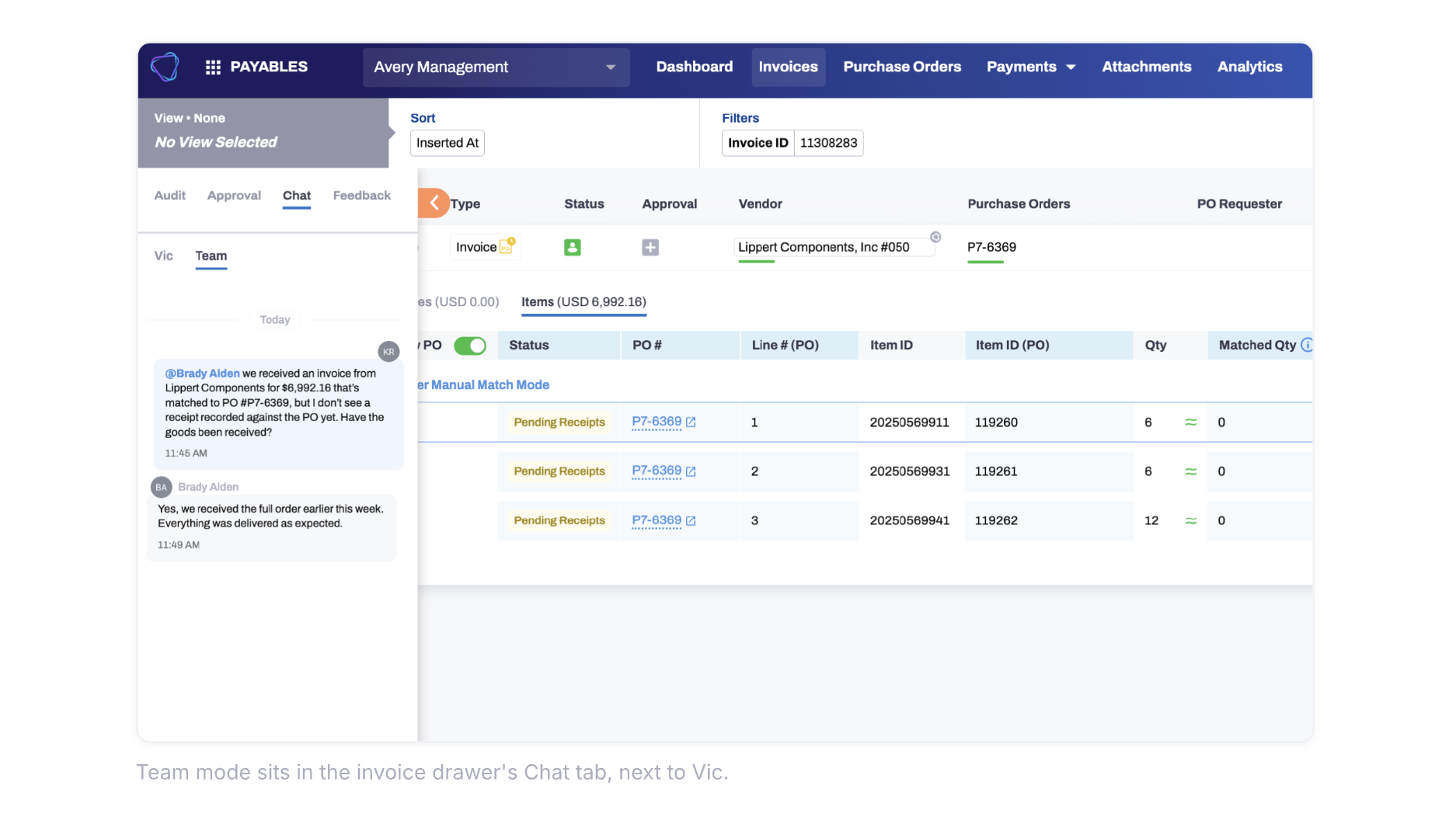
For an auditor or a new colleague, that record can matter as much as processing speed. Why was this amount approved? Who resolved the mismatch? A decision preserved beside the document is easier to inspect than a decision scattered through inboxes.
The approach is worth copying: map the entire transaction, measure human touches, keep exceptions visible and retain the reasoning. Teams with little invoice volume or unreliable underlying records may struggle to justify the effort. Vic.ai’s proposition is most persuasive where repetitive accounting work is abundant and the organization is prepared to govern what software does with it. Friday is a respectable place to start.
Website · LinkedIn · X · Instagram · Facebook
Company blog · Newsroom · Product tour
YouTube videos · NetSuite demo replay · 2026 product webinar