At Scoular, an agricultural supply-chain business, an ocean freight invoice came with a peculiar choice. Pay promptly, or risk a carrier putting the account on credit hold. If the bill was wrong, the finance team could pursue the money afterward. The awkward word was “afterward.” By then, the cash had gone and somebody had acquired a new job: persuading the supplier to give it back.
- OpenEnvoy checks invoices against supporting records before payment.
- Its sweet spot is complex spend: freight, manufacturing, and media bills with troublesome detail.
- It connects to existing accounting systems and also automates incoming cash.
- Judge it by verified exceptions and work removed, not a tidy demonstration.
The signature is not the evidence
Scoular had already tried a third-party matching system and an internal build. According to OpenEnvoy’s customer account, the former disappointed; the latter struggled with how vendors would use it. What failed first was the fit between software and everyday work. Approval was possible. Reliable checking before approval was harder.
OpenEnvoy worked through the reconciliation process with the team and developed dispute tracking in response to its feedback. Over six months, the case study reports $1.948 million in duplicate invoices identified and $3.7 million in overbillings flagged for review. Those are identified amounts, not interchangeable measures of cash recovered. They should not be casually added together.
“Manual reconciliation is not fun”
Scoular controller, in OpenEnvoy’s customer account
The attraction is easy to understand. A signature tells you who accepted a bill. It does not establish that every charge belongs there. OpenEnvoy’s business begins in that gap.
A machine with a taste for awkward paperwork
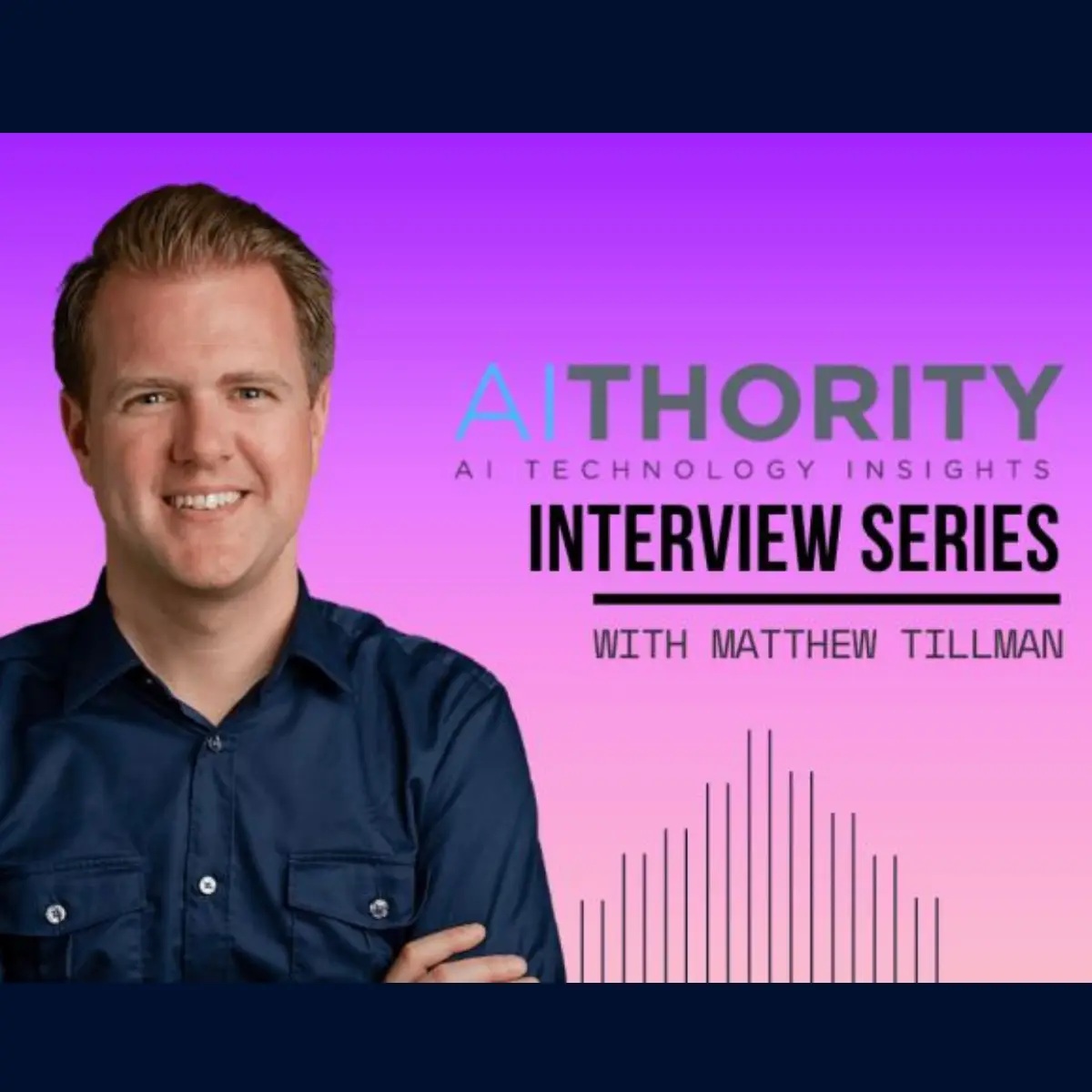
Founded in 2020 by Matthew Tillman and Parker Moore, OpenEnvoy initially set out to stop companies overpaying suppliers. Its April 2021 seed announcement described invoice auditing and raised $6.5 million, led by Riot Ventures. A $15 million Series A led by RRE Ventures followed in May 2023. That is $21.5 million across those two disclosed rounds, money to build and expand the company rather than a price paid by customers.
The software’s central task is to turn an incoming invoice into something that can be checked. Capture the fields and individual line items. Compare them with purchase orders, contracts, receipts, or rate cards. Identify duplicates, excess charges, and mismatches. Then send verified records onward and give exceptions somewhere useful to go.

Its freight offering shows why that is a specialist problem. The company describes checks for detention and demurrage, rate amendments, currency changes, and contractual compliance across transport modes. The bill is the conclusion of several documents, events, and agreements. Reading it correctly is only the beginning.
OpenEnvoy sells into an established market. Tipalti also offers invoice capture and purchase-order matching. Esker offers AI-powered payables and receivables tools. ERP workflows, outside freight auditors, and internal builds are alternatives too. OpenEnvoy’s strongest positioning is its emphasis on complex, variable-cost invoices and verification before payment. Buyers should test that emphasis against their own documents; “uses AI” scarcely narrows the field.
- 01Read the billCapture fields and line items.
- 02Check the claimCompare with source records.
- 03Resolve the mismatchGive exceptions an owner.
- 04Post verified dataPass the record to the ERP.
A simplified view of OpenEnvoy’s verification approach.
The supplier who never had to log in
Raney’s Truck Parts supplied a useful constraint: its vendors should not have to change their habits. Small suppliers sent inconsistent invoice formats and were reluctant to adopt a portal. A system dependent on their cooperation would inherit the problem it was meant to solve.
OpenEnvoy’s published case study says Raney’s digitized invoices across its entire supplier base in 60 days, without vendor configuration. Suppliers continued sending bills as before. Following a matching-platform migration in early 2026, the company reported 87% automation and 79% touchless processing in April, with invoice cycle time below four hours.
That distinction is useful far beyond Raney’s. Digitization means the paperwork has entered the system. Automation means software performs work. Touchless means an item travels through without manual intervention. A buyer who asks only the first question can end up with a remarkably modern place to do the same old work.
A ledger has two sides
The pattern appears in media as well as freight. Bliss Point Media, now part of Tinuiti, faced thousands of bills with hundreds of line items and little standardization. Its published customer story reports 88% of invoices requiring no manual intervention. Finance leader Matt Cohen’s implementation case included an estimate of 700 to 800 hours saved each month at steady state. That estimate explained why the project mattered: more capacity for the next operational problem.
OpenEnvoy has extended that logic to accounts receivable. Its cash-application release describes matching remittances and bank transactions, connections to banks and Oracle Cloud, and manual handling for unmatched items. Money arriving creates its own paperwork. Until a payment is matched to the right receivable, a balance can be confusing even when the bank account looks reassuring.
Schreiber Foods made the broader ambition concrete. In January 2025, OpenEnvoy announced both an AP and AR implementation and a strategic investment from Schreiber’s venture arm. The investment amount was undisclosed. A September update reported 90% AP automation within one month and cash application moving from three or four days to same-day processing. These are company-reported deployment results, not a schedule every customer can assume.
The chatbot arrives after the detective
On June 9, 2026, OpenEnvoy launched Ask OE. Its matching agent explains an exception; its document agent accepts corrections in ordinary language; its analytics agent builds reports from AR and cash-application data. AP analytics was described as coming later at launch. The conversational interface sits on top of the company’s structured, verified records.
That ordering matters. A fluent explanation of a bad number remains an explanation of a bad number. The valuable question is whether someone can trace an answer back to the transaction and understand why it was accepted, changed, or disputed.
The integration story is similarly concrete. OpenEnvoy’s May 2026 Sage Intacct Marketplace announcement describes daily vendor and general-ledger synchronization, followed by creation of an AP bill when verification succeeds. It is a layer connected to the accounting system companies already operate. That makes the source of records and the point of approval central design decisions.
Moore’s account of the company’s design practice emphasizes listening to customers, familiar interaction patterns, shipping, and iteration. His neatest observation is that “design literally has a seat at the table.” In finance software, familiar controls can be a commercial advantage: the person resolving the exception still has to understand what happened.
Buy the exception, not the demonstration
The current commercial model uses prepaid processing tokens shared across products, with unused tokens rolling over. Essentials has no annual minimum; Scale lists 50,000 tokens and Enterprise 500,000. Implementation services can be an add-on. Ask OE interactions are metered. Scope, volume, and integration work therefore belong in the buying conversation alongside the software’s capabilities.
A practical evaluation starts with difficult material. Bring a rate amendment, a duplicate with slightly altered wording, an invoice without a neat purchase order, and a remittance covering several balances. Ask what evidence the system used, where the exception lands, and who has authority to release it.
Then measure the work left behind. Invoices processed is a useful count; hours spent correcting them is a useful counterweight. Compare flagged discrepancies with confirmed discrepancies and distinguish money challenged from money actually retained. Agree on the baseline before the pilot so that a good-looking percentage cannot quietly change its denominator.
This approach depends on accessible source records, usable business rules, and people who can resolve disputes. Missing contracts or unreliable supplier data can limit what any verification system establishes. A simple operation with few predictable bills may have less to gain from specialist matching. A complicated one needs to prove that the added control is worth its integration and operating cost.
What a reader can copy is the order of events. Assemble the evidence. Check the claim. Decide who handles the disagreement. Let the money move when the record supports it. The invoice may be dull. Its timing is anything but.
Follow the paperwork
Explore the company, see the product, or hear the argument in its own words.