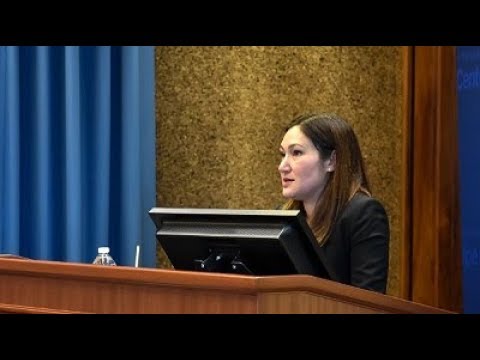
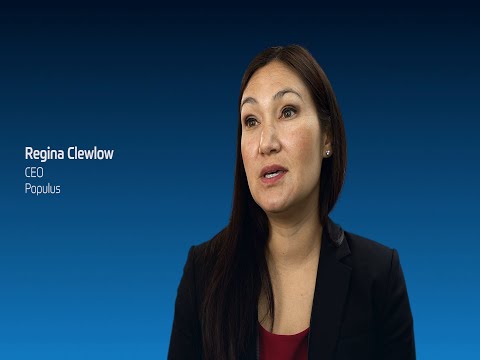
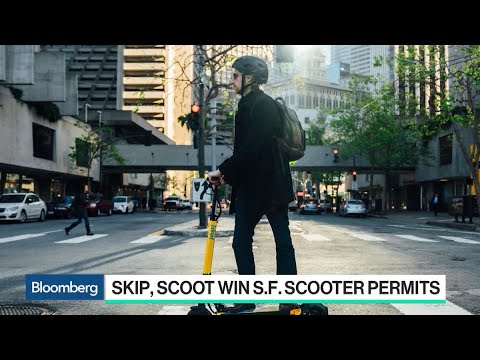
She built the software that tells Chicago where the scooters go, Milan how to price its curbs, and Oakland who is parked where. The city street, it turns out, is the most undervalued data asset in America. Regina Clewlow saw it first.
In 2017, a mobility researcher named Regina Clewlow looked at San Francisco's streets and noticed something everyone else had normalized: cities had no idea what was happening at their curbs. Electric scooters were multiplying. Delivery trucks were double-parking. Ride-hail cars idled in bike lanes. Autonomous vehicles were on their way. And the government agencies responsible for all of it were operating on paper permits, phone calls, and institutional memory.
Clewlow co-founded Populus to solve this. Not with a single app, but with an operating layer - software that could ingest GPS data from any mobility provider, translate it into regulation-aware intelligence, and give city transportation departments something they had never had: a real-time picture of what was happening on their streets.
The idea required a very specific kind of founder. Someone who understood transportation data at the research level (check - she had published academic papers on it). Someone who understood city government (check - she had spent years building tools cities actually wanted to use). Someone who could talk to mobility startups as a peer (check - she had run business development at RideScout before Daimler acquired it). And someone who could raise venture capital for a company whose primary customers were municipalities.
That last part is hard. Government tech is notoriously slow-moving. But Clewlow made the case convincingly enough that Populus raised $19 million across multiple rounds - including backing from Comcast Ventures and Robert Downey Jr.'s FootPrint Coalition, which funds climate tech. In November 2025, IPS Group acquired Populus, giving the platform the infrastructure to scale globally.
"One of the key issues that cities face around mobility services is that these services are arriving faster than most cities can keep up."Regina Clewlow — Interview, Union of Concerned Scientists
Mass Transit Magazine
40 Under 40 (2018)
San Francisco Business Times
40 Under 40
World Economic Forum
Technology Pioneer
MIT Energy Fellow
Massachusetts Institute of Technology
EPA STAR Fellow
Environmental Protection Agency
Eisenhower Transportation Fellow
U.S. Department of Transportation
Professional Excellence Award in Innovation
International Parking & Mobility Institute
New Face of Engineering
National Engineers Week
Engineers for a Sustainable World
Founding Executive Director - NSF & UNESCO backed
Populus built two product lines that together covered everything happening at a city curb. Curb Manager digitized the physical world - taking parking regulations, loading zone rules, and curb designations off paper and making them queryable, enforceable, and priceable in real time. Mobility Manager handled the moving part: aggregating real-time data from shared scooters, bikes, and mobility providers, giving cities compliance dashboards and policy levers they had never had.
The client list became a geography lesson. Chicago. San Diego. Oakland. Milan. Redwood City. Tel Aviv. Each city brought a different problem - different fleet compositions, different curb regulations, different political constraints - and Populus had to adapt the platform to all of them. That adaptability, built city by city, became the company's real competitive moat.
Clewlow consistently framed Populus's value through a regulatory lens borrowed from her academic research. Her argument: commercial airlines are required to share 10% of all trip data in exchange for using public airspace. Why shouldn't mobility companies operating on public streets face similar requirements? That framing - data sharing as the price of access to public infrastructure - became genuinely influential in how cities thought about regulating the new mobility economy.
"GPS trace data can recreate trips and attach other data sets to identify specific people."Regina Clewlow — On mobility data privacy and the case for regulatory frameworks
The thing that makes Clewlow an unusual tech founder is the depth of the technical and policy work that preceded Populus. Most mobility company founders came from the consumer side - apps, user growth, venture math. Clewlow came from a place where you had to prove your thesis with peer-reviewed research before you were allowed to make the next claim.
Her academic work at Stanford, UC Berkeley, and UC Davis explored how emerging transportation technologies - rideshare, automation, electrification - changed the actual equations of how people moved and how much energy cities consumed. This wasn't speculative; it was empirical. She was tracking behavioral data and modeling energy impacts before anyone had an app called "Uber" on their phone.
That background shaped how Populus was built. The product wasn't designed around a consumer experience or a flashy interface. It was designed around data precision, regulatory interoperability, and the specific information flows that city transportation departments actually needed. That sounds boring. It's also why Populus could go 5 miles deep in a city like Chicago instead of being a surface-level dashboard anyone could build.
Even further back: while still at Cornell, Clewlow created what became Engineers for a Sustainable World. The organization embedded sustainability and social impact into engineering curricula at universities globally - earning backing from the National Science Foundation and UNESCO. She was already thinking at systems scale before she had a startup to run.
The RideScout stint - the commercial interlude between academia and Populus - was a crucial bridge. Running business development at a company that was aggregating mobility data across multiple providers gave her first-hand experience with the messiness of real-world mobility data: the format inconsistencies, the missing fields, the vendor politics. When she went to build Populus, she already knew exactly where the bodies were buried.
Clewlow left a tenured-track adjacent career at three of America's top research universities to go work at a startup - then left that startup to found her own company. Each step was a harder bet on conviction over safety.
Among Populus's Series A backers: Robert Downey Jr.'s FootPrint Coalition Ventures. The actor's climate tech fund saw Clewlow's curb management platform as carbon-reduction infrastructure - because optimized street use means fewer circling cars means lower emissions.
Clewlow's regulatory proposal - that mobility companies should share trip data the way airlines share flight data - preceded the policy debates that followed the scooter boom. Cities that adopted the Mobility Data Specification (MDS) were, in part, enacting ideas she had been publishing about for years.
She serves on the board of SPUR - the San Francisco Planning and Urban Research Association - keeping one foot in the civic world even as she built a commercial platform for it.

"Commercial airlines are required to report on a 10 percent sample of all trips in exchange for using public airspace - mobility services should operate under similar frameworks."Regina Clewlow — Interview, Union of Concerned Scientists
She holds a Computer Science degree from Cornell alongside Civil Engineering - rare enough that most transportation researchers don't have the software background to build the tools they propose.
Populus's city clients span three continents: Chicago and San Diego in the US, Milan in Europe, and Tel Aviv in the Middle East - each with entirely different mobility regulations.
She was publishing policy proposals for mobility data regulation before anyone in venture capital had heard the word "micromobility." The field largely caught up to where she had already been.
Engineers for a Sustainable World - which she founded as a Cornell student - earned backing from both the National Science Foundation and UNESCO, and transformed engineering education globally.
Robert Downey Jr.'s FootPrint Coalition Ventures invested in Populus's Series A. The logic: better-managed curbs mean less circling traffic, which means lower urban emissions - curb management as climate infrastructure.