The easiest way to read Kumar Ganapathy’s résumé is as a parade of technologies: modems, cellular phones, packet voice, flash storage, cloud infrastructure, visual AI. The more revealing way is to look for the obstruction. Again and again, he appears where a computer system has become good enough to expose its next weakness. Then he builds near that weakness until the rest of the machine can move.
It is a distinctly engineering kind of ambition. The glamorous part of a technology wave is usually visible to everybody. The constraint is less photogenic. It sits in a rack, a memory hierarchy, a data pipeline, or an awkward handoff between software and the physical world. Ganapathy’s companies have lived in those uncelebrated joints. Their products made networks carry more conversations, servers spend less time waiting, and vision models deal with the flood of images arriving from cameras and sensors.
The commercial record is unusually crisp. VxTel, which he founded in 1999, was acquired by Intel in 2001 in a deal announced at roughly $550 million. Virident, co-founded in 2006, was acquired by Western Digital in 2013 for roughly $685 million in cash. Akridata, started in 2018, was acquired by industrial-AI company DIMAAG in May 2026. Three transactions make a tidy timeline. The interesting story is the method hiding between them.
01 / The trainingA medal, a modem, and a taste for architecture
Ganapathy graduated from IIT Madras in 1987 with a B.Tech. in electrical engineering and the Siemens Gold Medal. He earned a master’s in electrical and computer engineering from the University of Massachusetts Amherst in 1989, then completed a Ph.D. at the University of Illinois Urbana-Champaign in 1994. His doctoral work concerned novel computing architectures for digital signal processing - a field built around getting useful work done within unforgiving limits of time, power, and silicon.
At Rockwell Semiconductor and Conexant, he became a principal engineer and fellow. The products included 56-kbit modems and GSM phones, the little miracles that once made a screeching telephone line feel like a portal. This was an education in systems whose users never wanted to know the architecture. They wanted the call to connect. They wanted the page to load. The engineer’s job was to make a pile of constraints disappear behind an ordinary experience.
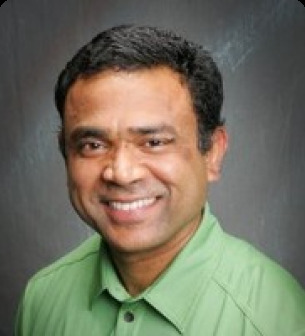
Kumar Ganapathy’s public work has moved from semiconductor architecture to company building and deep-tech investment. Photograph: Calient.
VxTel took that instinct into carrier networks. The company developed a specialized digital signal processor and related software for moving voice and data over packet networks. Its system could handle more than 2,000 simultaneous voice connections on one card. The acquisition placed Ganapathy inside Intel, where his roles included architecture and engineering leadership in communications. A founder had become part of the large machine he had once supplied.
The categories changed. The method didn’t: find the expensive thing that is waiting.
02 / The second wallWhen the server was fast but the data was late
By 2006, compute was accelerating while storage still behaved like a clerk searching a distant archive. Ganapathy and Vijay Karamcheti co-founded Virident around server-side flash. Put fast storage nearer the processor, their argument went, and expensive machines could spend more time computing and less time idling.
In 2008, Ganapathy put a number on the waste: server utilization at large internet companies and corporations was “barely 10-20 per cent” because of memory restrictions. Virident believed its technology could improve utilization by two to six times, reducing both energy costs and the physical footprint of data centers. It was an architectural argument with an accountant hiding inside it. A faster component mattered because it made everything already purchased around it more useful.
Virident’s FlashMAX products put enterprise flash on PCIe cards inside servers, aiming at databases, analytics, virtualization, and other impatient workloads. The company eventually raised substantial venture funding and assembled leadership from storage and networking companies. Western Digital’s HGST subsidiary bought it in 2013. Ganapathy moved into a global strategy and products role at HGST. IIT Madras later recognized him with its Distinguished Alumnus Award in 2016.
There is a temptation to turn those acquisitions into mythology, but infrastructure businesses are less romantic in practice. They require years of compatibility work, customer proof, financing, and timing. The market has to feel the pain sharply enough to replace familiar architecture. Ganapathy is credited with more than 75 patents and 12 publications. That technical record matters because deep-tech persuasion starts with a working system, not a sparkling adjective.
Three eras, three constraints
VxTel built processing architecture for dense voice-over-packet networks.
→Virident moved enterprise flash closer to servers and demanding applications.
→Akridata tackled visual data from edge collection through model workflows.
03 / The edge arrivesThe camera creates its own traffic jam
Enterprise Labs, a startup foundry focused on cloud infrastructure, gave Ganapathy another way to repeat the process. Its orbit included PrimaryIO, Ampool, DeepVision, and Akridata. Instead of betting one career on one company, the foundry model let experienced builders reuse scar tissue: how to recruit a technical team, how to narrow a large problem, and how to turn architecture into a product a customer can actually install.
Akridata began with visual data across the lifecycle of AI training. Cameras and other edge sensors can produce vast quantities of images, but quantity is not the same as usefulness. Teams still need to ingest, explore, curate, label, compare, and refine those datasets. The rare frame may matter more than the million ordinary ones. A model’s mistake may be less about the model than about what it was shown.
Ganapathy described the shift as exascale problems becoming led by data and appearing in ordinary businesses, not only supercomputers. Akridata’s tools evolved from visual-data management toward inspection systems that combined AI judgment with human review. The work expanded into manufacturing workflows, edge processing, traceability, and the practical job of improving inspection accuracy. The company had moved from helping models see their training data to helping organizations see defects in the world.
In May 2026, Akridata joined DIMAAG’s broader physical-AI business spanning computer vision, robotics, sensor fusion, edge intelligence, and industrial infrastructure. For Ganapathy, the event completed a third passage from hidden constraint to strategic asset. Packet voice had become part of Intel. Server-side flash had become part of Western Digital. Visual inspection had become part of a company trying to connect AI software with field operations.
04 / The next architectureCapital can have bottlenecks too
In 2020, Ganapathy co-founded 3i Partners. The firm presents itself as a bridge for India’s deep-tech founders, drawing on technologists and entrepreneurs from the United States and India. Its stated interests include frontier technology and climate technology. Its premise feels consistent with Ganapathy’s operating career: differentiated engineering needs more than applause. It needs patient capital, credible advice, global customers, and a route from invention to repeatable company.
He also serves on the board and investment committee of Upaya Social Ventures, which uses entrepreneurship to create dignified livelihoods, and has advised or invested in other young companies. These roles widen the definition of infrastructure. Sometimes the constrained system is a data center. Sometimes it is the route by which a capable founder reaches markets and capital. Sometimes it is access to work itself.
A December 2025 seminar on semiconductor entrepreneurship put him in conversation with India’s next generation of builders. The program drew lessons from VxTel and Virident and asked whether India was ready to lead in areas such as accelerator chips, edge computing, storage-class memory, and home-grown intellectual property. Ganapathy’s qualification was not prophecy. It was having lived through the long interval between a technical thesis and a strategic outcome - twice.
The engineer became an investor without leaving engineering. Only the system got larger.
Away from the circuitry, Ganapathy likes to ski with his wife and two children, and to hike and travel with friends and family. Skiing is another negotiation with constraints: gravity is fixed, the terrain is indifferent, and elegance comes from choosing the line. One should not torture a metaphor, but this one volunteered.
The useful lesson in Ganapathy’s career is not “pick semiconductors,” “pick storage,” or “pick AI.” Those were answers to particular moments. The reusable habit is to watch what has become abundant and ask what that abundance now overwhelms. More network traffic exposed voice-processing limits. More compute exposed slow storage. More cameras exposed the disorder of visual data. Each wave created the wall that shaped the next company.
Trends invite imitation. Bottlenecks demand observation. Ganapathy has spent a quarter-century making a business of the difference. His current work suggests that he now sees founders themselves as the valuable capacity too often left waiting. The next product on his résumé may not carry his name on the box. It may be a company whose architecture, timing, and nerve improved because an engineer-investor recognized the constraint early.