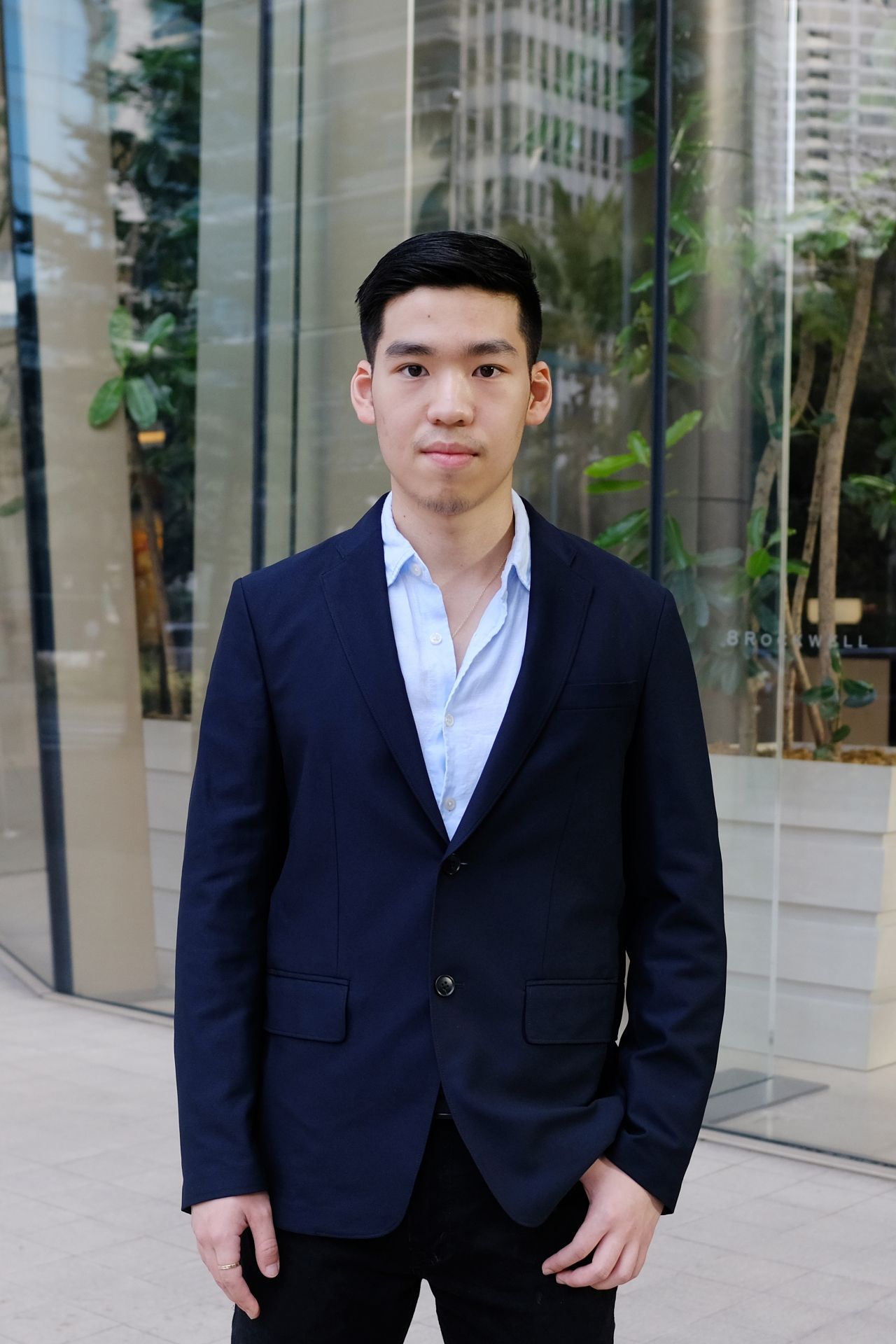
The Boy Who Read Shipping Labels for Fun
Somewhere between a Southeast Asian warehouse and a Stanford computer lab, King Alandy Dy figured out that the world's biggest logistics bottleneck wasn't ships, trucks, or ports. It was paper. Specifically: the towering, unstructured, siloed, error-prone avalanche of documents that freight forwarders process by hand every single day - bills of lading, commercial invoices, packing lists, customs declarations. Documents that decide whether your factory gets its parts or your retailer gets its inventory. Documents that, until Expedock, no software reliably knew how to read.
King grew up inside that system. His family ran an international import-export business spanning Southeast Asia, China, and the Philippines, and by age 16 he wasn't just watching - he was running it. He understood the rhythm of cross-border trade not as a case study but as a lived daily grind: the phone calls to freight forwarders, the wait for documents to clear, the margin anxiety of not knowing what you'd actually made until the quarter closed. "Instead of determining margins quarterly," he'd later say of Expedock's promise, "customers can see everything live." That sentence wasn't product positioning. It was a personal grievance resolved.
Before there was Expedock, there was a Stanford dorm room and a kid running a dev shop in Manila via Slack and time zone math. King Alandy Dy was already three businesses deep by the time most people finish their first internship. One of those early ventures was recognized by the Harvard Social Innovation Collaborative. Another became a cautionary tale he documented publicly on Medium - the $250/month SaaS waste, the remote team communication failures - with the kind of transparency that most founders save for post-mortem talks years after the fact.
At Stanford he studied Computer Science and Product Design - an unusual combination that proved useful when building products that need to do something technically hard while also making sense to a logistics manager in Rotterdam at 6am. He interned at Shopee, where he built a Natural Language Processing + Random Forest Classifier model to automatically tag user reviews. Then at Intuit, where he engineered a K-Means Classifier dashboard to surface high-value bank requests. Each stop was a ratchet: a tighter grip on how machines learn to read things humans wrote for other humans.
The co-founding story has the texture of a good startup myth: King met Rui Aguiar as his seatmate in a Stanford CS class. That adjacency became a company. Jeff Tan - whose family also ran a freight forwarding business - joined as COO. Jig Young, a product veteran from Y Combinator and the fintech world, came on as CPO. Four people, all of whom had watched the global supply chain operate on fax machines and PDFs, all of whom believed that shouldn't be true anymore.
"The entire global supply chain today is run by semistructured information and siloed data systems." - King Alandy Dy, TechCrunch, 2022
Expedock's thesis is deceptively narrow: if you can reliably read a freight document - any freight document, in any format, without pre-configuring templates - and extract structured data from it, you unlock everything downstream. Automated invoice processing. Real-time margin visibility. Customs reconciliation. Container tracking. The 99.95% accuracy claim isn't marketing bravado. It's the number that gets a freight forwarder to put it in front of their biggest clients. Kuehne+Nagel, CMA CGM, Maersk, CEVA Logistics: the names on Expedock's client roster are the names printed on the side of ships. These aren't early adopters. These are the industry itself.
The August 2022 Series A told its own story. Insight Partners led the $13.5 million round, joined by WIN, Motion Ventures, Decent Capital, and others. Notably, a number of individual backers were C-suite executives and board members at Meta, Salesforce, LinkedIn, and VMware - the kind of angels who've seen enough SaaS companies to know when a vertical AI wedge is actually defensible. Total funding reached $19.8 million. The team, which was 13 people at the time of the raise, was targeting 40 by year's end.
King was recognized on Forbes 30 Under 30 Asia 2023 in the Enterprise Technology category - one of seven Filipinos on that year's list. Tatler Asia had already called him a Gen.T Leader of Tomorrow in 2021, citing him "for using AI to bring the world closer." The recognition tends to describe Expedock in terms of its technical achievement, but the more interesting thing is what it means operationally: a freight forwarder using Expedock doesn't need a data team. They need an API key. The sophistication is all upstream, invisible, and already done.
Expedock's AI reads shipping documents - PDFs, emails, scans, any format - and turns them into structured data your TMS can actually use. No template setup. No manual keying. No waiting until quarter-end to know your margins. The platform integrates with CargoWise, Magaya, ShipThis, and custom TMS environments. Accuracy: 99.95%. Operational cost reduction reported by customers: up to 90%. That's not a demo benchmark. That's what clients tell journalists.
By 2026, Expedock has grown to roughly 150 employees, with annual revenue tracking around $53 million. The company's reach has expanded from pure document extraction into container tracking, customs automation, BI dashboards, and a tech-enabled workforce platform that combines offshore talent with AI tooling. King describes the broader vision in terms of access: making the infrastructure of global trade available to businesses of every size, not just those that can afford full operations departments.
What makes King Alandy Dy interesting as a founder isn't the pedigree list - Stanford, Forbes, Insight Partners. Those are outcomes, not character. What's interesting is the line from a sixteen-year-old calling freight forwarders in Manila to a CEO in San Francisco whose AI processes the paperwork for the world's largest shipping companies. The specific knowledge that came from growing up in that world - the patience for operational complexity, the tolerance for unglamorous infrastructure problems, the understanding that the last mile of global trade is often a fax machine - that's not teachable at any university. It was already there before Stanford. Stanford just gave it a compiler.