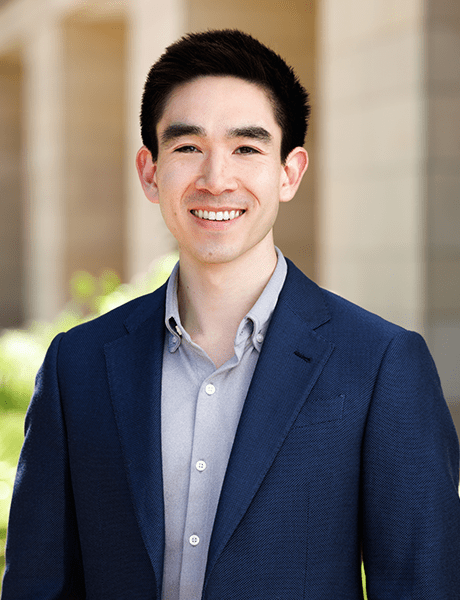
There's a moment in every PhD student's life when they decide whether to write another paper or build something. Kevin Parker, somewhere between a gel and a gigabyte of sequencing data in Stanford's Howard Chang lab, chose the second option - and hasn't slowed down since. By the time he defended his dissertation on single-cell and functional genomics in 2020, he'd already started the company that would put him on Forbes' 30 Under 30 list and eventually get Pfizer Ventures, a16z, Amgen, and LG Corp all writing checks in the same round.
Parker grew up in science. At Harvard he worked in Kevin Eggan's stem cell biology lab, the kind of foundational training that teaches you what cells are actually doing when they decide what to become. When he arrived at Stanford for his PhD, co-mentored by dermatologist-oncologist Howard Chang and pathologist Ansu Satpathy, something clicked. Single-cell sequencing was getting good enough to ask questions that had been impossible before. Not "what does a tumor look like in bulk?" but "what is each individual cell doing - and which antigens are actually displayed on the surface of tumor cells, and not on healthy tissue?"
People keep trying to hammer at the same biology without making progress. As a result, you get off-target toxicity.- Kevin Parker, CEO, Cartography Biosciences
That frustration - watching CAR-T therapies and bispecific antibodies hit the wrong targets, causing serious toxicities in patients whose tumors shared too many surface proteins with healthy tissue - became the thesis of Cartography Biosciences. Parker, Chang, and Satpathy co-founded the company in 2020 to build what they called an antigen atlas: a comprehensive, cell-by-cell map of which proteins appear where, in healthy tissue and in tumors, across thousands of patient samples. The goal wasn't incremental. It was to find targets that were genuinely specific to cancer - rare proteins that tumors display and healthy cells barely touch.
The company emerged from stealth in 2022 with $57M in combined seed and Series A funding, led by 8VC, with backing from Andreessen Horowitz's bio arm and Wing Venture Capital. Parker had grown the team to over 30 people, building two core computational platforms: ATLAS, a tumor antigen atlas that integrates millions of cells across thousands of patient tissue samples, and SUMMIT, which identifies single and paired targets optimized for therapeutic programs. Put them together and you get a drug discovery engine that runs on petabyte-scale proprietary data, machine learning, and what Parker calls a "systematic" approach to a field that has largely operated on biological intuition.
The differentiation showed up in the lead program. CBI-1214 targets LY6G6D, a protein that has minimal expression on healthy tissue and is uniquely expressed in microsatellite stable (MSS) and microsatellite instability-low (MSI-L) colorectal cancer - the subtypes that represent the vast majority of CRC patients and have historically been resistant to immunotherapy. Parker's team engineered CBI-1214 as a T-cell engager designed to recruit immune cells directly to the tumor surface with a precision the field has been chasing for years. In December 2025, the FDA granted CBI-1214 an Investigational New Drug approval and Fast Track designation. By February 2026, the first patient had been dosed in a Phase 1 trial.
If you can actually go and every time you throw the dart it hits the patient's tumor, you're very precise.- Kevin Parker, CEO, Cartography Biosciences
Before CBI-1214 reached patients, Cartography had already validated its platform with a deal that signaled the industry was paying attention. In May 2024, Gilead Sciences entered a strategic collaboration with Cartography, paying $20M upfront to develop therapies for triple-negative breast cancer and lung adenocarcinoma - two cancers where new targets are desperately needed. Gilead exercised its first option under that collaboration in April 2026, a public marker that the ATLAS and SUMMIT platforms were producing results worth betting on.
The October 2025 Series B tells a similar story. At $67M, led by Pfizer Ventures and joined by Amgen Ventures, LG Corp, Samsung (via Lotte Holdings CVC), and the existing investor syndicate, the round represented one of the more strategically diverse biotech raises of the year - pharma giants, Korean conglomerates, and silicon valley VCs all betting on the same single-cell genomics platform. Total funding hit $124M.
Parker built the company with the same intentionality he brings to his sequencing pipelines. As a young CEO leading scientists older and more experienced than him, he developed a distinctive management approach: instead of asking broad questions about how things were going, he learned to ask hyper-specific questions designed to surface blind spots. He evaluates job candidates not just on credentials but on their response to problems - whether they look for root causes or look for someone to blame. He talks openly about wanting more PhD students and postdocs to consider company-founding, making the case that commercial impact and scientific ambition are not in opposition.
Outside the lab and the boardroom, Parker rock climbs. It's the kind of hobby that says something: finding routes through hard terrain, knowing when to commit, understanding that the line you can actually take matters more than the line you imagined from the ground. That instinct for practical navigation through complex systems is exactly what Cartography was built on - and exactly why the map analogy isn't just a name. It's a method.