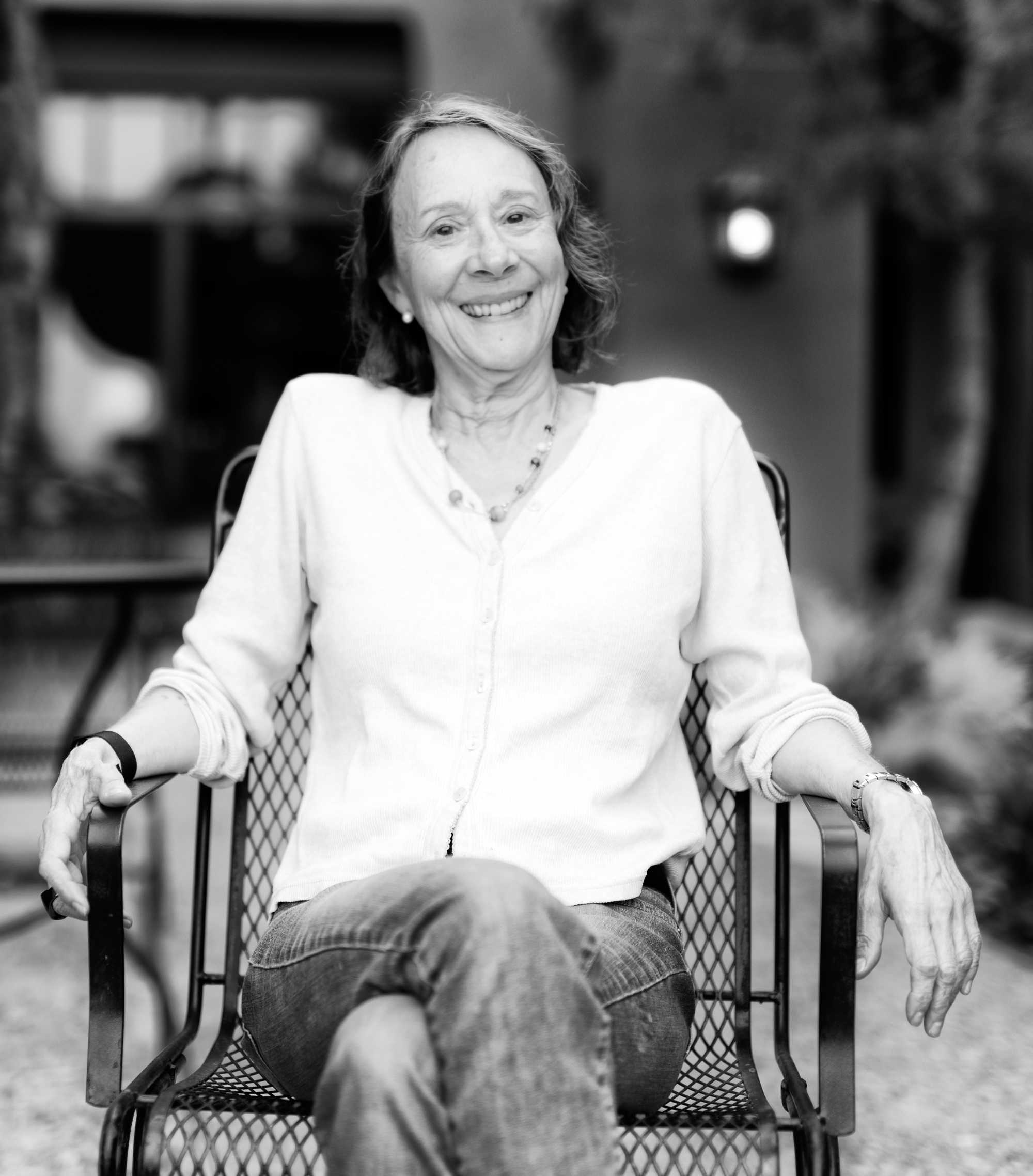
A life in productive discomfort
She started at Forbes as a fact-checker in 1972, which is a detail that explains everything. Not an editor. Not a reporter. A fact-checker. Someone who makes sure what people say is true. She has been doing that ever since - just at a scale that involves billion-dollar companies and the internet's naming system.
After Forbes came Wall Street - securities analysis at New Court Securities and then Oppenheimer Holdings, focused specifically on technology and electronics. She was tracking software companies before software companies were a category. When Ben Rosen, the most respected technology analyst of the era, decided to exit his firm in 1983, Dyson bought it.
She renamed it EDventure Holdings. The newsletter became Release 1.0. The annual conference - PC Forum - became the room you had to be in if you were building the technology industry. Bill Gates came. Mark Zuckerberg came. Reid Hoffman came. For two decades, if you wanted to know what was happening in tech, you read Release 1.0.
The ICANN years - governing the internet before anyone thought it needed governing
In 1998, the US government was trying to figure out what to do with the domain name system. They created ICANN - the Internet Corporation for Assigned Names and Numbers - to manage it. They asked Dyson to be the founding chair.
She took the job with characteristic Dyson logic: she was not qualified for it, which meant she would have to learn everything. She opened board meetings to the public. She built revenue models. She thought seriously about what it meant to govern something as inherently ungovernable as the internet. She served until November 2000, when she stepped down having made the institution functional.
Two decades later, she is still thinking about internet governance - just now through the lens of AI. Her proposal in March 2024 that AI developers should be required to carry liability insurance is recognizably the same mind: find the market mechanism, not the regulatory hammer.
Eastern Europe, early and often
Most Western investors discovered Eastern European tech in the 2010s. Dyson was investing there in the late 1980s, before the Berlin Wall fell. She joined Yandex's board, the Russian search giant, years before anyone considered it a serious company. She left in March 2022, after Russia's invasion of Ukraine - one of the fastest boardroom exits of that particular crisis.
The pattern is consistent: arrive before the category exists, help it take shape, exit cleanly.
The portfolio - curiosity turned into capital
She does not want the 100 best startups. She wants the ones she knows the most about. Her portfolio reflects a mind organized by genuine interest rather than sector analysis: Flickr (sold to Yahoo), del.icio.us, 23andMe, Evernote, Meetup, Square, Space Adventures, XCOR Aerospace, Icon Aircraft, Omada Health. The thread connecting them is not vertical - it is epistemic. These are companies she understood.
She is also pointedly self-deprecating about the wins. "I'm not proud of my investments - I'm lucky to have invested in them." This is not false modesty. It is an accurate description of how early-stage investing actually works, and most investors take a lifetime to figure that out.
Health as the next frontier
After selling EDventure to CNET in 2004, she turned her attention to health - first through investments in companies like Omada Health and 23andMe, then through Wellville, the nonprofit she founded in 2013. Wellville picked five US communities and spent a decade trying to improve their population-level health through systemic change. It concluded operations on December 31, 2024.
The model was ambitious, the results were mixed, and Dyson would say this is what "always make new mistakes" is supposed to look like. You fund the experiment. You learn. You move.
What the AI era looks like to someone who has seen every era
Her forthcoming book, Term Limits: Time and Scale in the Age of AI, makes an argument that only someone with her biography could make credibly. AI can scale infinitely. Humans cannot. Therefore, the human relationship with time - our finitude, our mortality, our irreproducibility - becomes more valuable, not less, as AI becomes more capable.
She is not a techno-pessimist. She is not a techno-optimist. She is, characteristically, a techno-fact-checker.