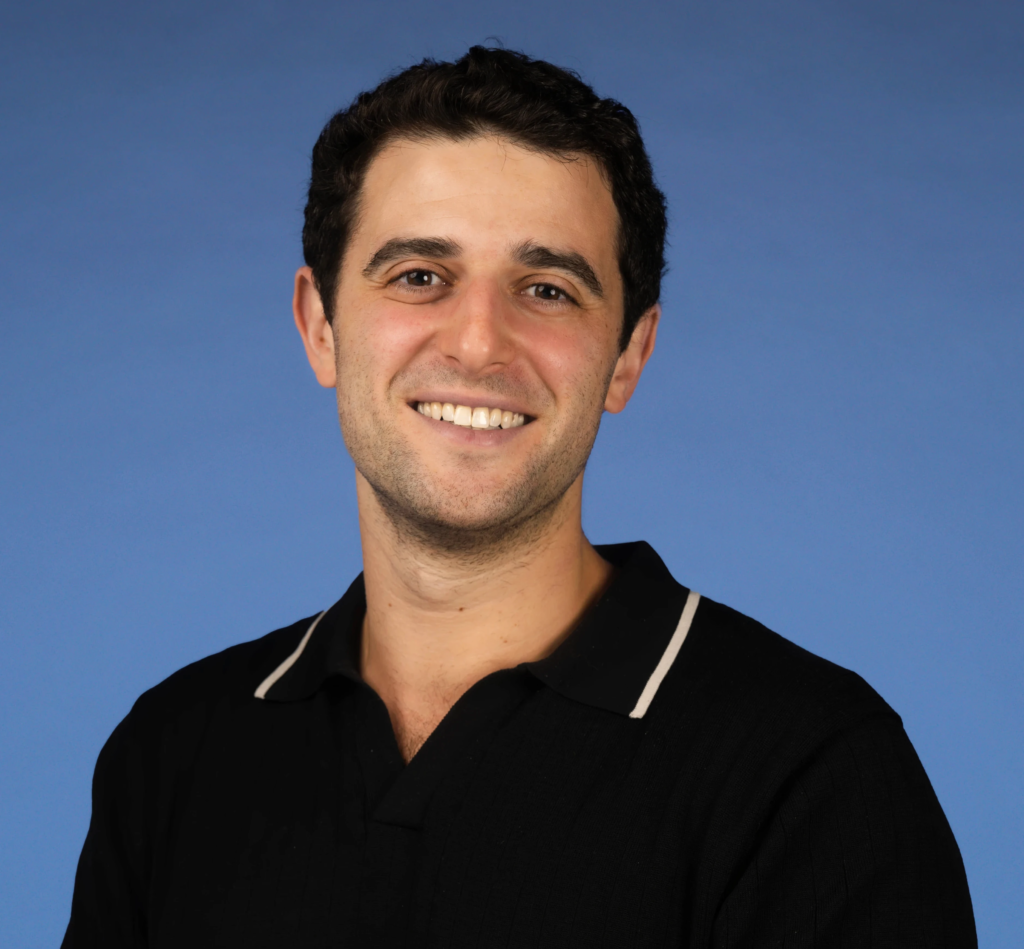
The wire transfer hit when he was sitting in his childhood bedroom in Baltimore, his parents somewhere nearby, the pandemic outside. The number had eight figures. He described the moment as "completely anti-climactic." Then he bought an Acura.
That is the Austin Rief story in miniature: a person built for execution, not fanfare. His greatest talent is the unsexy one - showing up every day to make something marginally better until it becomes undeniably great. He did not invent the business newsletter. He did not write most of Morning Brew's early content. What he did was see a PDF being emailed to 300 people and think: this could be a lot more. Then he made it so.
Ten years later, Morning Brew has 5 million subscribers, $70M+ in annual revenue, and a fully profitable P&L that embarrasses most VC-backed media companies. Axel Springer now owns it outright. Rief stepped back from the CEO seat in February 2025, became Executive Chairman, and started asking himself what act two looks like.
Raising venture capital and creating a long-term sustainable brand are inversely correlated.
One Email, Sent in 2014
Alex Lieberman was a Michigan senior. Austin Rief was a sophomore. Lieberman had started circulating a PDF called "Market Corner" - business news written conversationally, originally to help classmates prep for finance interviews. It had clip art of bulls and bears. The "distribution" was a BCC email.
When Rief saw it circulating in early 2014, he sent one cold email offering to help grow it. That email, by his own admission, is the hinge point of his career. "If I didn't send Alex that first email, I wouldn't be here today." He had no idea it would become a company. He just knew he was interested in being part of something.
The Machine They Built
The Morning Brew growth playbook has been written about extensively, but the texture of it is the thing. Rief and Lieberman would pitch in Michigan lecture halls, get professors to give them five minutes, then manually transcribe handwritten email signups - sometimes writing three spelling variants per address because the handwriting was illegible. They built a referral loop before "referral loops" were a growth-hacking trope. They hand-packed stickers and hats for referred subscribers every Friday afternoon in their WeWork.
The dental benefits for early employees were packs of flossers from 7-Eleven. The company lunch was $5 MealPal Mediterranean bowls.
"I think we may have broken a couple of laws to get our first couple thousand subscribers."
In 2017, instead of following the conventional wisdom that media companies need venture capital, they raised just $750,000 - enough to reach profitability. That single decision shaped everything that followed. Morning Brew never had to chase a VC's growth narrative. It could chase readers instead.
The Instagram Stories Breakthrough
In 2018, the company discovered Instagram Stories advertising before most brands had figured out the format existed. Rief describes refreshing the Facebook Ads Manager every 15 minutes, watching the subscriber counts climb in real time. At roughly two cents per subscriber, they added 150,000 new readers in two to three weeks from a single creative campaign. They may have been among the first-ever advertisers on the format.
The CEO Chapter (2021-2025)
When Alex Lieberman left Morning Brew in 2021, Rief stepped into the CEO role. He is honest about the distinction between himself and his co-founder: Lieberman is "incredibly creative," Rief is "the implementer." What the CEO years required was not creation but amplification - taking a working machine and running it at scale without breaking it.
Over the next four years, revenue tripled. Headcount grew from roughly 50 people to 250+. Morning Brew launched seven B2B industry vertical newsletters and over 20 multimedia franchises. The company remained profitable through all of it. Rief's talent for identifying what actually moves the needle - and refusing to be distracted by what doesn't - proved exactly the right operating mode for a profitable growth phase.
In February 2025, after a decade at the company, he handed the CEO title to Robert Dippell (former COO/CRO) and Devin Emery (named President), stepping into the Executive Chairman role. Axel Springer simultaneously completed its full acquisition of Morning Brew, buying out all remaining stakes.
After 10 years, I figured now was the time for me to reflect and figure out what I want to do with the rest of my life. We have an amazing team in place, and I wouldn't step down if I didn't feel fully confident.
What Rief Does When Not Building Morning Brew
He builds other things. The pattern is consistent: he found a problem himself, became a customer, noticed the company was undervalued, and got involved.
With Oceans Talent, he came in as a frustrated operator who struggled to hire quality offshore executive assistants. Oceans placed talent from Sri Lanka - STEM degree holders with previous experience at companies like KPMG, Dentsu, and Ogilvy - for a fraction of U.S. market cost. Rief became a customer, then a large investor, then co-owner. As of early 2025, Oceans had hit $15M ARR in under three years and was placing 30-40 new employees per month for 500+ client companies. When U.S. tariffs drove economic uncertainty in spring 2025, roughly half of Oceans' new customers that quarter cited cost pressure as their reason for switching. Economic headwinds became a tailwind.
The Investment Mind
Rief's venture activity runs through "Rief Ventures," a seed-stage fund and AngelList syndicate co-run with Blake Lieberman. He has made over 16 investments - across enterprise SaaS, media infrastructure, fintech, and crypto. His portfolio includes beehiiv (the newsletter platform), WRITER (enterprise AI, valued as a unicorn after its Series C in November 2024), and Affiniti Finance (Series A, April 2025).
His investment thesis is deliberately tied to his operational identity. Founders want him on their cap table not just for capital but for the specific combination of CEO coaching, media expertise, and hard-won growth-stage experience he brings. His stated philosophy: "Focus on increasing luck's surface area."
On the personal finance side, his post-acquisition allocation - 85-90% index funds, 5-7% crypto, 5% venture - is less the portfolio of a risk-taker than of someone who genuinely believes that most of his edge exists in building companies, not picking stocks.
The Person Behind the Platform
Rief grew up in Baltimore, attended Beth Tfiloh Dahan Community School, and arrived at Michigan's Ross School of Business in 2013. He and Lieberman were in the same fraternity. They have overlapping backgrounds in almost every dimension - same school pipeline, same Northeast Jewish upbringing, same finance-to-media pivot. Rief has said this shared context likely contributed to the coherence of their early partnership.
He prefers email to Slack, viewing Slack's frictionless nature as a noise generator rather than a productivity tool. He describes himself as an operator more than a creator - better at taking something from 1 to 100 than 0 to 1. He learns by absorbing expertise from specialists, acting as what he calls a "vacuum" - rapidly ingesting domain knowledge from new hires or collaborators.
On hiring, he is as close to a rule-follower as a founder can be: "I've never regretted spending too long to hire someone. The only hires we regret are the ones we've made too quickly." On focus: "Figure out what actually moves the needle for you, and only focus on that. Everything else is noise and a distraction."