The Contrarian Who Backed the Future Before It Had a Name
He wrote checks into SpaceX, Anduril, OpenAI, and Stripe when reasonable people were still asking if they made sense.
In March 2016, Brian Singerman wrote a check into OpenAI. It was a small nonprofit research lab. There was no product. No revenue. No obvious commercial path. The PDF describing their goals was essentially the entire pitch. He did it anyway.
This is the pattern. Not thesis-driven investing, not sector specialists, not consensus-building - but a relentless conviction that the founders who can see what doesn't yet exist are worth backing regardless of what the market thinks. At 27, he built iGoogle at Google, giving tens of millions of users their first personalized web experience. At 31, he joined Founders Fund as one of its earliest hires. By 40, he'd backed SpaceX, Stripe, Anduril, Affirm, Scale AI, Airbnb, and Oculus - often in the rounds before anyone else was looking.
He grew up in Los Angeles, son of a doctor and a teacher. Not a finance pedigree. Not a Harvard MBA. A Stanford computer science degree and an instinct, developed over two decades, that the most defensible companies are built by founders with the clearest vision of a world that doesn't exist yet.
He spent a year or two as a young Google engineer quietly angel-investing in friends' startups before most people had put a name to that activity. Then he built XGYC - "ex-Google, Y Combinator" - a personal $1 million fund focused on early YC companies, one of the first vehicles of its kind. It was essentially a prototype for what systematic early-stage venture investing would become.
Venture capital to me is purely a game of upside maximization. Downside minimization is completely unimportant to me.
- Brian Singerman, 20VC PodcastWhen Founders Fund came calling in 2008, he fit the culture precisely: autonomous, contrarian, generalist. At a firm that famously has no Monday morning partner meetings - where partners have authority to deploy capital without committee approval - Singerman became one of its most prolific investors. He made partner in September 2011. Over the following decade, the portfolio around him became one of the most celebrated in venture history.
Companies Singerman championed at Founders Fund. All pre-consensus. Most now defining their categories.
Also backed: Affirm (NASDAQ: AFRM - Board Director), Postmates (acq. Uber $2.65B), Ginkgo Bioworks, Freenome, Oscar Health, Palantir, Asana, and others.
Singerman has been unusually candid about how he actually thinks about investing. These are his stated principles, in his words.
"The way you make money in venture capital is by backing the truck in and being correct. I'm not looking for validation from other VC firms at all."
"I am just very very very dogma free and open to anything that walks in the door. I just don't know what you do when there's not a great company in that space."
"My expertise is in the founders, the execution of founders, the strategy and the moats that these companies have. And I think that just scales across all sectors."
"When you find a phenomenal founder, you back them regardless of what they are doing."
"We invested in Facebook before 'social media,' in Palantir before 'big data' and in SpaceX when building a private rocket company seemed outlandish."
"The only way to learn about investing is by investing. The seed, the early stage investing is absolutely as important."
The story of Singerman's Anduril investment is worth sitting with. In 2016-2017, when most of Silicon Valley was actively avoiding defense contracts - this was the era of Google employees protesting Project Maven - he was writing checks into a company built explicitly to arm the U.S. military with Silicon Valley technology. He compared founder Palmer Luckey to Elon Musk before Anduril had a single government contract. He wrote $400M across multiple rounds. As of June 2025, Anduril is valued at $30.5 billion. A Founders Fund-led round. A position now worth multiples of what it cost.
The conviction wasn't ideological. It was analytical. "We need to control our own destiny when it comes to national security," he's said. "Defense products need to be built on-shore." He saw the opportunity where others saw controversy, and he backed the truck in.
Singerman noticed that Anduril secured government contracts in roughly 2 years - compared to Palantir's decade-long timeline. That speed differential was the moat. Silicon Valley process applied to defense procurement. He saw it first.
In April 2016, AbbVie acquired Stemcentrx for $10.2 billion. Founders Fund had invested $300 million - still the largest single investment in the firm's history at the time. Singerman wrote about it on Medium. He was proud: it was validation of everything Founders Fund stood for. Investing without peer validation. Investing in spaces before they have a name.
Three years later, Stemcentrx's lead drug, Rova-T, failed Phase 3 clinical trials. AbbVie wrote down the acquisition almost entirely. The $10.2 billion became a cautionary tale about biotech exits that can reverse even after the champagne is uncorked. It's the kind of outcome that either breaks a thesis or deepens it. Singerman went on to back Freenome (cancer diagnostics, $1.1B+ raised) and Ginkgo Bioworks. The biotech conviction remained intact.
Before systematic YC investing was a recognized category, Singerman built a personal $1 million fund to back early Y Combinator companies while still at Google. He called it XGYC - "ex-Google, Y Combinator." It was angel investing with a structure before anyone had named that strategy. The XGYC fund was essentially a proof-of-concept for what dozens of funds now do as standard practice.
Most VCs specialize. Healthcare investors. Fintech investors. Enterprise SaaS investors. Singerman has made the opposite bet: that expertise in founders - their execution capacity, their strategic clarity, their ability to build moats - transfers across every sector. His portfolio is the argument for this thesis. Biotech. Defense. Consumer. Payments. AI. Robotics. Space. No rigid box. No thesis to protect.
"I'm not saying there's anything wrong with having a thesis and being proactive and knowing the space better than anybody else," he's said. "I just don't know what you do when there's not a great company in that space."
The honest version of this approach requires something most investors don't have: the ability to evaluate unfamiliar founders in unfamiliar markets with no peer validation and still pull the trigger. The XGYC fund was early practice for that. So was every bet that came before consensus arrived.
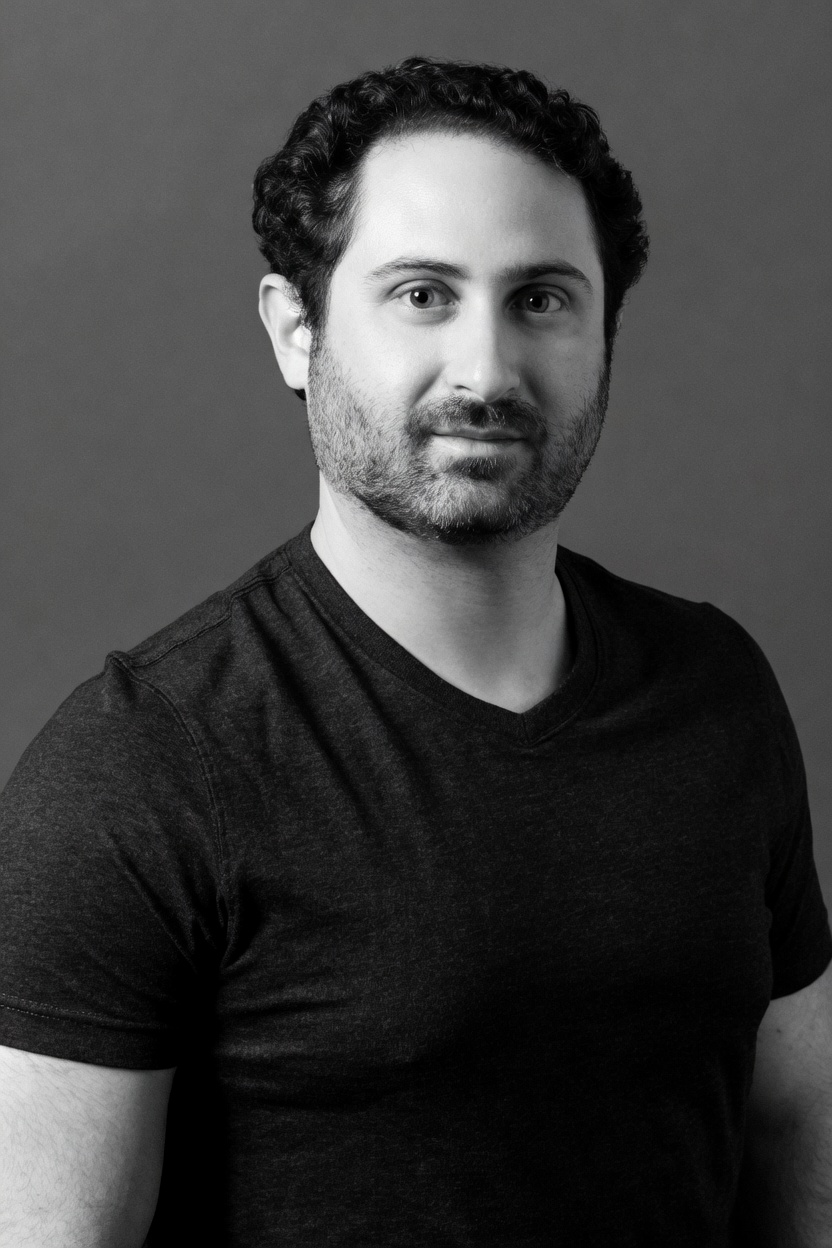
After 16 years at Founders Fund, Singerman's next bet is structural. GPx is not a standard VC fund. It's a hybrid that bets on the next generation of venture managers while capturing the best companies from their portfolios at later stages.
Co-founded with Lee Linden (co-founder and managing partner of Quiet Capital), GPx raised $500 million for its debut fund - closing in October 2025. Peter Thiel is reportedly its largest single backer, potentially contributing up to 50% of capital.
The thesis: the next generation of emerging VC managers will find the next SpaceX and Anduril before the mainstream. GPx bets on those managers early, then co-leads the later-stage rounds in their breakout companies. Fund-of-funds meets co-investment meets conviction capital.