There is a straight line from an interest-rate derivatives desk to the phone behind a neighborhood pizza counter. It is not obvious, and it is certainly not straight on a résumé. Wyatt Ozmore’s route passes through equity options, merger models, private equity, used-car shopping, home-renovation software and, finally, the digital machinery of an independent restaurant. The scenery keeps changing. The underlying question barely moves: what can be measured, improved and turned into an advantage?
Ozmore is the Chief Marketing Officer of Owner.com, a restaurant technology company that bundles websites, online ordering, mobile apps, loyalty and marketing tools. He joined in August 2025 after more than six years at Houzz, where he helped launch and scale Houzz Pro, the company’s software for contractors and designers. It is a career built around small operators, though it did not begin there.
It began with markets. In 2009 he worked in interest-rate derivatives at Lehman Brothers, followed by equity options at Bank of America Merrill Lynch in 2010. After earning a bachelor’s degree in mathematics and economics from the University of Pennsylvania, he spent three years in M&A investment banking at J.P. Morgan. Numbers were not decoration in those rooms. They were the room.
The analyst walks toward the customer
Finance teaches a particular kind of humility. A theory eventually meets a price. A model meets a transaction. A neat story encounters the less tidy fact of what someone will pay. Ozmore carried that habit into operating roles, first in private equity at New Evolution Ventures and then, from 2016, at TrueCar. The work moved him away from financial instruments and toward the mechanics of a marketplace: demand, acquisition, conversion and the many small frictions between curiosity and purchase.
At Houzz, the customer came sharply into view. Contractors and designers may buy software, but they do not spend their days admiring software. They quote jobs, coordinate crews, answer anxious clients, source materials and try to get paid. A growth team selling to them cannot live entirely inside an ad dashboard. It must understand the job the product is being hired to do.
Ozmore’s remit grew across paid marketing, lifecycle programs, search, business operations and analytics. He ultimately became Vice President of Growth Marketing. In his own account, launching and scaling Houzz Pro deepened his interest in software that gives small businesses capabilities they would struggle to assemble alone. The category was home improvement; the durable lesson was compression. Put a collection of complicated business functions behind one usable door.
Due diligence becomes a job offer
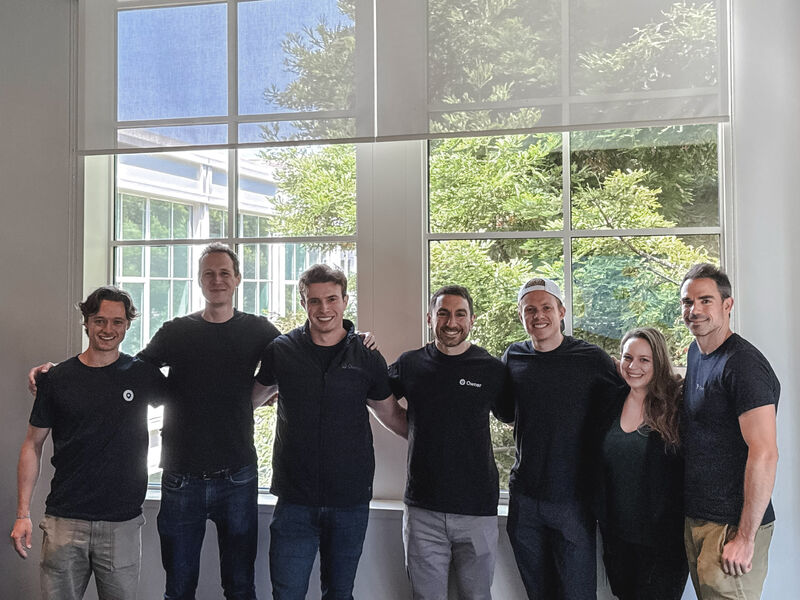
The Owner move arrived quickly. A month before announcing it, Ozmore saw co-founder and CEO Adam Guild demonstrate the product roadmap. He was impressed, then behaved like a former banker: he checked the work. During the following weeks, he spoke with restaurant owners, prospective colleagues and investors. Those conversations turned a product demo into a conviction that the company’s mission was present in the details, not merely laminated on a wall.
The competitive picture was plain. A national chain can employ web developers, search specialists, lifecycle marketers, data analysts and loyalty experts. An independent restaurant owner may perform several of those jobs badly at midnight, after performing a dozen other jobs all day. The imbalance is not talent. It is time, money and access to specialized labor.
“Small businesses are what make us love our communities, so they’re worth fighting for.”Wyatt Ozmore, announcing his move to Owner
Owner’s proposition is to bundle the missing department. It creates restaurant websites and online-ordering systems, supplies branded apps, manages customer relationships and automates parts of marketing. The company charges for software intended to help restaurants win more direct business, an important distinction in a market where third-party marketplaces can own the customer relationship and charge on every order.
For Ozmore, the move also extended a line from one set of proprietors to another. Houzz Pro served contractors and designers. Owner began with restaurant operators. In both places, the product sits close to someone’s livelihood. A button is never only a button when the rent depends on whether a customer presses it.
The CMO wants two clocks
Ozmore’s public marketing argument at Owner uses two clocks. The short clock belongs to performance: acquisition cost, conversion, demos and direct orders. The long clock belongs to brand: recognition, trust, organic distribution and the accumulated advantage of being useful before asking for a sale.
In May 2026, an Owner colleague ambushed him on camera with an intentionally clumsy question about organic distribution. Ozmore began an answer, discovered the prank and then gave the answer he had meant to give. Owner, he explained, remains deeply attentive to performance marketing while investing in brand and organic media across YouTube and social channels. Free products such as its restaurant grader and website improver connect those clocks: they can earn attention while doing actual work.
This sounds sensible only because it is difficult. Performance marketing offers quick feedback and clean-looking tables. Brand investment often reveals its value later, after familiarity has quietly lowered the cost of a click, a conversation or a decision. The former analyst has not thrown out the calculator. He has accepted that the calculator sometimes receives the news late.
Owner’s media operation makes the thesis visible. It produces restaurant case studies, long-form educational videos and behind-the-scenes material. The subject is not software in the abstract. It is food cost, direct sales, repeat customers and the lived economics of a restaurant. Ozmore’s role is to make that editorial work cooperate with the rest of the growth system without sanding away its usefulness.
AI, translated into a shift’s worth of time
In April 2026, Ozmore announced that Owner had passed $1 billion in sales driven for restaurant customers. He cared about the destination of the money: independent operators competing with chains whose marketing and engineering resources can appear practically infinite from the dining room of a single-location business.
The milestone arrived alongside Owner Grader, which the company describes as an AI CMO for restaurants. It audits online ordering and search visibility, recommends changes and connects to agents that can build optimized websites and campaigns. The phrase “AI CMO” is deliberately oversized; the actual value is granular. Find the missing information. Improve the page. Show up in search. Give a customer a reason to order directly and return.
“AI, packaged the right way, is the great equalizer for small business owners.”Wyatt Ozmore, on Owner Grader
Packaging is the operative word. Restaurant owners do not need another blank chat window and a lecture on prompts. They need completed tasks, sensible recommendations and a system that learns from experiments across many restaurants. AI earns its place when it becomes less visible than the job it finishes.
Ozmore’s view also runs against the most familiar corporate AI pitch, which emphasizes fewer people doing more work. His preferred frame is access: let a small business perform work it could never afford in the first place. The distinction is commercially useful and philosophically tidy. It makes the product an instrument of competition rather than merely a machine for cutting expense.
A larger balance sheet, the same neighborhood
In August 2026, Owner announced a $240 million Series D led by Goldman Sachs, with a reported valuation of $2.3 billion. The company also said it had passed $100 million in annual recurring revenue. For a CMO, figures of that size create opportunity and peril. They buy reach, talent and experiments. They also tempt a company to speak in the bloodless dialect of scale.
Ozmore’s language stays closer to the street. The future he says he wants has independent diners, taquerias and bakeries in it, not a chain on every corner. It is a picture specific enough to judge the marketing by. Does the campaign reach restaurant owners? Does the free tool give them a useful answer? Does the product help them own a customer relationship? Does growth for the software company produce growth for the shop?
Colleagues publicly describe him as setting a high bar on execution and customer-centricity. His own joining story supports the point. He did not stop at the roadmap; he called the people expected to live with the product. The habit resembles due diligence, but the object has changed. Once, the question was whether a transaction worked on paper. Now it is whether the software works during dinner service.
The arc from Wall Street to Main Street is convenient, perhaps suspiciously so. Careers rarely arrive with such good copy. Yet Ozmore’s has a consistent spine: quantitative training, operating detail and a steady move toward the person using the thing. His current wager is that sophisticated marketing can disappear into a simple product, leaving a restaurant owner with more direct orders and one fewer department to imitate after closing time.
That is what gives the billion-dollar statistic its scale. The number belongs in a funding memo. The orders belong in thousands of kitchens. Ozmore’s work lives in the distance between them.