A camera can watch a mistake beautifully. It can record the steel leaving a saw, preserve the forklift’s route, and offer an immaculate account of what everyone wishes had happened differently. At Metallus, the steelmaker formerly called TimkenSteel, cameras and sensors were already watching. The limitation was when their information became useful. Managers could reconstruct an incident afterward. The opportunity to intervene had often passed.
- Worlds connects existing cameras and sensors to a live record of physical operations.
- Its industrial applications include measurement, safety monitoring, asset tracking, and automation.
- The buying decision turns on a measurable result in a specific facility.
A camera with a better job
Worlds gave Metallus’ network several new assignments. A static camera measured the distance between a fixed point and a saw cut. Another application monitored the breast height of an electric arc furnace. Digital red zones prompted alerts when people occupied hazardous areas during particular processing steps. According to the companies’ case study, work that had depended on manual observation became automated monitoring within weeks.
There is a useful clue in how Metallus chose its partner. It had previously tried a supplier offering AI as an addition to other steel-industry products. Andrew Bissot wanted dedicated technology expertise. His request was pleasingly plain:
“I want an AI company.”Andrew Bissot, Metallus
A factory does not need its software to be impressed by a factory. It needs a measurement it can trust and a warning it can use. The glamorous phrase is physical AI. The unglamorous test is whether the saw cut lands where it should.
The fourth dimension is time
Worlds’ premise is that enterprises have accumulated considerable powers of observation without a corresponding ability to make sense of them. One camera sees a vehicle. A sensor supplies another reading. Enterprise software carries the schedule or process context. These observations become more useful when they describe the same operation.
The platform organizes physical observations in space and time. That explains its older description as a 4D digital twin: three spatial coordinates, plus the moment something happens. A twin is a live representation of an operation, capable of supporting tracking and alerts. A pretty model with stale information would be rather like a beautifully printed railway timetable from last year.
Worlds sits between computer vision, industrial analytics, and enterprise automation. Its argument against assembling separate point solutions is that customers need the connections between them. That is a positioning claim, rather than proof that every competing approach falls short. It does explain the breadth of the product.
A twin needs something to do
Worlds NQ handles model creation and training-data preparation. Its tools group similar objects by attributes such as shape, size, and color, then help label them together. The product supports different imaging technologies, including thermal, infrared, and X-ray. The practical attraction is reducing the tedious work between collecting images and having a usable model.
Worlds RT runs the operational applications: identifying vehicles at control points, monitoring tank levels with thermal imaging, tracking objects, and managing zones. Its spatial layer supplies location and measurement. Its integrations put observations into enterprise systems. The company offers private-cloud, on-premise, edge, and air-gapped deployment options, a consequential detail for industrial buyers.
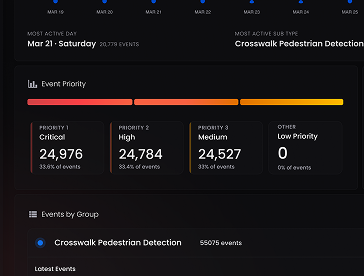
The current platform presentation emphasizes search, monitoring, analysis, and action in one place. On its homepage, Worlds reports a 30-50% reduction in manual quality inspections and a 19% year-over-year reduction in total recordable incident rate for powered-industrial-vehicle monitoring. Those are company-reported outcomes from particular applications. They belong in a buyer’s questions, rather than automatically in a buyer’s forecast.
Year over year, in a warehouse vehicle-monitoring use case. A result to investigate, not a promised saving.
The demo met the purchasing department
The obstacle Copps describes is commercial discipline. In Microsoft’s June 2026 Founder Friday interview, he recalled learning that enterprises buy risk reduction, compliance, and efficiency. Impressive AI still has to pass a security review.
Worlds responded with customer-facing, forward deployed engineers who configure the platform for individual facilities. Copps calls that team a major structural change. A workflow that looks simple in a presentation develops complications where people, equipment, and process meet. Selling a reusable platform still requires attention to the particular building.
For another enterprise founder, that is a useful lesson to copy: give deployment expertise a place in the business model. For an operator, it suggests a better first conversation. Bring a process, an existing measurement, and a decision that improved information could change.
Follow the work, then the money
Copps and Rohde previously built Brainspace, working with machine learning and enterprise data. Worlds emerged from Hypergiant Sensory Sciences and announced $10 million in funding in 2020. A $21.2 million Series A1 followed in January 2023, led by Moneta Ventures. Publicly named customers include Chevron, PETRONAS, Hillwood, and Metallus. This is enterprise software sold into operations where a delayed answer can be expensive.
Microsoft’s invitation-only Pegasus program added technical resources and enterprise market access in 2024. Worlds’ integration with existing infrastructure is part of the sales proposition: customers can make use of investments already made. Economically, the sensible comparison includes deployment effort and the cost of the process being improved. A camera already purchased is helpful; integration and validation still require work.
A floor that can answer back
By 2026, Worlds was describing a live operational record over which AI agents could reason. Copps also previewed Iris, a conversational interface for the physical environment. In August, the company appointed Dilawar Syed as a strategic advisor for enterprise strategy and partnerships.
The practical test remains wonderfully stubborn. Can the sensors observe the relevant event? Can the team validate the measurement? Will someone act on the alert? My reading of the deployments is that poor coverage, unresolved security requirements, or an alert disconnected from a workflow would weaken the proposition. Start with one process whose consequences matter. A factory floor gains a memory only when that memory helps its people make a better decision.