procurement-software
(24)
The Trouble With the Little Things
Simfoni built its business around the purchases too small to command attention and too numerous to ignore. Its wager is that a useful spend insight should lead all the way to a better purchase.

The Chemical Has a Name. The Buyer Needs a Match.
A drum of chemicals can carry the right name and still be the wrong ingredient. Valdera built its sourcing platform around the awkward details that decide whether a supplier can actually deliver.
LightSource and the $30 Billion Spreadsheet
At Tesla, Spencer Penn watched car parts move through spreadsheets and email. LightSource is his attempt to give the people buying those parts a record that survives the next design change.
The Company Directory That Learned to Worry About Its Neighbors
Craft began by mapping companies. Then supply chains taught it a sharper question: which company, somewhere beyond your supplier, could make tomorrow go wrong?
The Company That Put Contractors on the Org Chart
VNDLY found a lucrative blind spot in the modern corporation: the people doing the work but missing from its people system. Workday paid about $510 million to bring them into view.

The $540 Million Lesson Hidden in a Spreadsheet
Procurement software had plenty of features and almost no affection. Four founders discovered that the real rival was not another platform, but the spreadsheet people quietly preferred - then sold the remedy to Workday for roughly $540 million.
Xpedeon Put the Whole Construction Back Office on One Screen
Construction runs on thin margins and thick piles of paperwork. Xpedeon’s three-decade wager is that the site, the supply chain and the finance office should stop arguing from different spreadsheets.
Britain Wanted Proof of Social Value. This Company Put a Price on It.
Social Value Portal built the plumbing between a worthy promise and an auditable result. Its bet is simple: if procurement can count community benefit with the discipline it counts cost, good intentions have a better chance of surviving the contract.
Once For All Is Turning Construction's Paper Chase Into a European Data Network
Construction runs on specialist subcontractors - and a heroic quantity of paperwork. Once For All is betting that the same verified record can unlock a tender, flag a weak supplier and satisfy a regulator, without being rebuilt for every job.
The Price of Everything on Your Plate
Expana turns the stubbornly private business of food pricing into benchmarks, forecasts and negotiating leverage. Its unusual trick is pairing a publishing lineage that begins in 1858 with software built for the next supplier meeting.

The $10 Trillion Receipt: How Coupa Is Turning Corporate Spend Into an AI Advantage
Coupa spent 20 years persuading companies to put every purchase through one system. Now it is betting that the resulting data - roughly $10 trillion of it - can turn procurement from a back-office checkpoint into an autonomous operating layer.
GEP Wants to Put the Fortune 500's Buying Department on Autopilot
GEP spent decades helping giant companies buy better. Now it is folding its familiar software brands into one AI-native system - a bet that the winning procurement platform will not just recommend the next move, but make it.
The $1 Trillion Procurement Bet: Zycus Wants AI to Finish the Job, Not Just File the Form
Zycus spent more than two decades building the plumbing of corporate purchasing. Now it is betting that procurement's next interface is a sentence in Teams - and its next worker is an AI agent with guardrails.
SpendHQ Found the Missing Half of Spend Analytics: Proving the Money Was Actually Saved
Procurement teams rarely suffer from a shortage of spreadsheets. SpendHQ built a business by cleaning the mess, connecting insight to execution, and giving Finance a number it can believe.
The hospital repair problem PartsSource solved by admitting its first idea was wrong
A dot-com directory failed because biomedical technicians had their hands inside broken machines, not on a mouse. Twenty-five years later, PartsSource has turned that lesson into a clinical-technology operating system used across 15,000 sites.
Euna Solutions Is Building the Financial Back Office Government Forgot to Modernize
The public sector does not lack software. It lacks software that understands a bid protest, a grant audit and a city budget meeting. Euna Solutions is betting one connected suite can turn those peculiarities into an advantage.

Kathryn Madden Put the Office Supply Closet on Autopilot
She noticed the invisible work holding offices together, then built OfficeLuv to make it visible, measurable and easier to run.
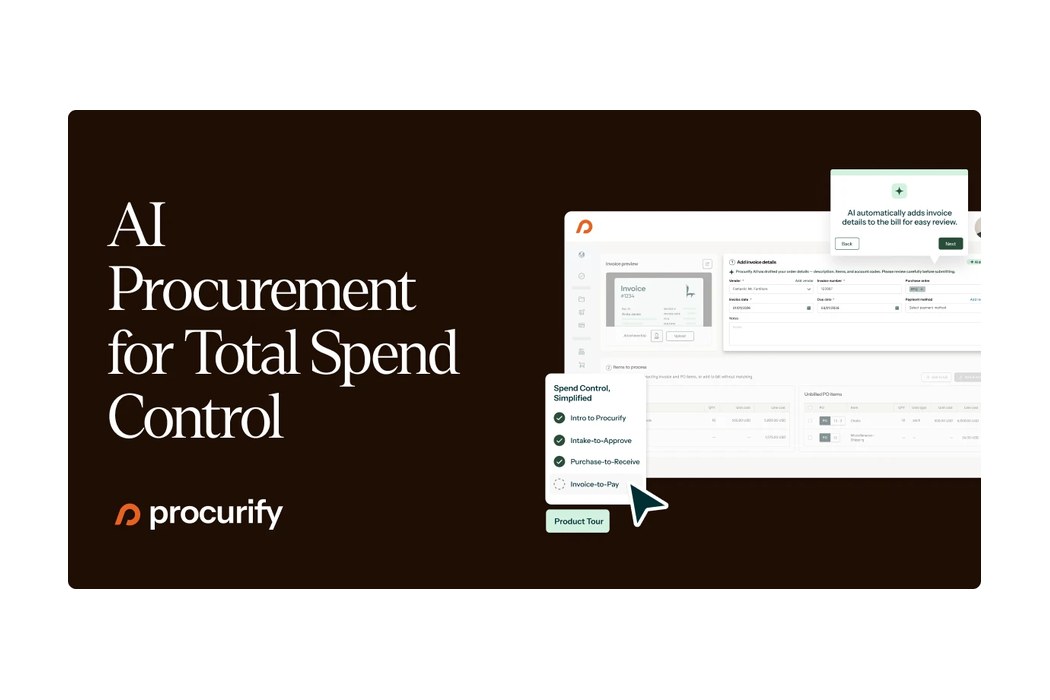
Procurify Wants to Catch Every Bad Purchase Before the Money Moves
The Vancouver company found a valuable gap between spreadsheets and enterprise procurement suites. Now it is betting that a decade of customer spend context can turn AI from a chatty assistant into a careful operator.
Part Analytics Bet Procurement Teams Were Done With Spreadsheets - Then Customers Rewrote the Product
Two former GE HealthCare operators built the electronics sourcing system they wished they had. Their useful trick was letting early customers pull it from a BOM tool into a broader operating layer for procurement - and the reported results explain why Altium bought it.

Alex Yakubovich and the Business of Removing Friction
After two acquisitions and years inside enterprise software, the Levelpath CEO returned to the same deceptively hard problem: making necessary work feel easier to do.

Watermelon Ecosystem
Watermelon Ecosystem is a Dubai-based B2B platform for the food and beverage industry that connects restaurants, hotels, cafes and caterers with local and global suppliers. Founded in 2020 by former restaurateur Omar AlShamsi, it bundles a supplier marketplace, cloud POS, analytics and embedded financing into one system so F&B operators can consolidate ordering, cut purchasing time and paperwork, manage inventory and access working capital. The company raised a $4 million Series A in 2024 at a $29 million post-money valuation.

Concord
Concord is an AI-powered contract lifecycle management (CLM) platform that lets any team - legal, sales, procurement, finance and HR - create, negotiate, e-sign, store and track agreements in one place. Founded in 2014 by Matt Lhoumeau and Florian Parain, the company targets the mid-market with fast deployment and transparent pricing, and says its software is used by hundreds of thousands of businesses worldwide.

Gaurav Baheti
Gaurav Baheti is the founder and CEO of Procol, a procurement and sourcing software company he started in 2018. A designer and engineer by training who once built user experiences at Google in New York, he now leads a roughly 120-person team building tools for intake, RFx, negotiations, supplier management and spend reporting. Procol powers procurement for enterprises across India, the Middle East and Southeast Asia, cumulatively managing billions of dollars in B2B spend, and is backed by Peak XV Surge, Blume Ventures, Beenext and others. A Forbes 30 Under 30 honoree, Baheti wants to move procurement from a cost-cutting function into a source of strategic advantage.

Levelpath
Levelpath is a San Francisco-based enterprise software company building an AI-native procurement platform that unifies intake, sourcing, contracts, and supplier management in one system. Founded in 2022 by the team behind Scout RFP (acquired by Workday for $540M), Levelpath aims to make procurement software people actually enjoy using - mobile-first, fast, and powered by AI agents that automate the repetitive 'ugh' work of buying at large companies. It has raised roughly $100M total, most recently a $55M+ Series B led by Battery Ventures in June 2025.