Imagine a procurement manager with two suppliers of a critical component. On paper, that looks like a sensible hedge. Then somebody asks whether both suppliers buy a specialized part from the same small factory. The answer lives a layer down, beyond the neat columns of the vendor spreadsheet. It is the sort of question Craft.co turned into a business.
In brief
- What it sells: company data, supplier risk signals, network mapping, and a place for teams to act.
- Who buys it: enterprise procurement and risk teams, plus government programs screening vendors and award applicants.
- The move: a broad company directory became a platform focused on the companies behind a contract.
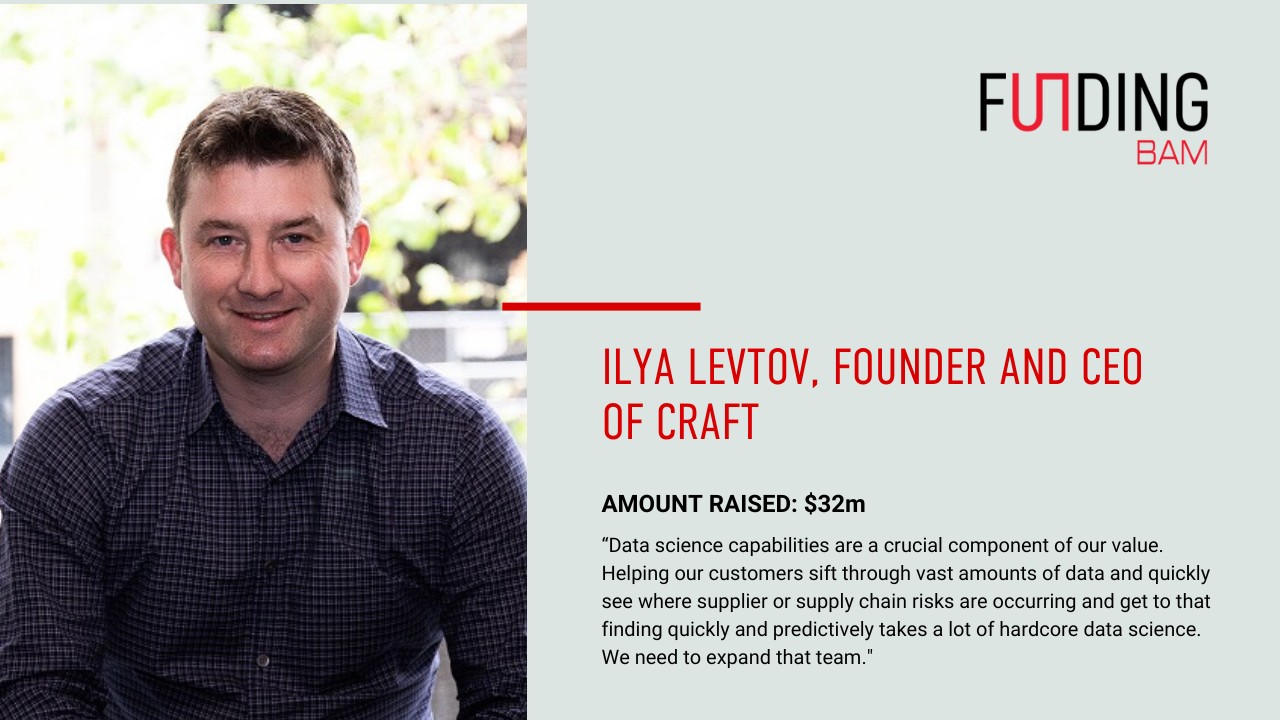
Craft was founded in San Francisco in 2015. Its founder and CEO, Ilya Levtov, came to software by an unusual route: he trained as a classical cellist before working in business and venture capital. The music makes an appealing biographical detail. The more useful detail is what his company noticed. A corporation can know its own operations with astonishing precision and still know remarkably little about the organizations it depends on.
First, the directory. Then the uncomfortable question.
Craft’s early product assembled profiles of companies from public and commercial information. Its 2020 financing announcement said those open profiles appeared in 50 million organic search results and served more than a million professionals monthly. A search engine was useful for discovery, recruiting, sales, and competitive research. Yet the company was already selling a more consequential application: a portal that let organizations watch their suppliers for changes in financial health, ownership, cybersecurity, litigation, and other signals.
The timing was rude but clarifying. Craft closed a $10 million Series A in August 2020, when pandemic disruption had turned obscure supplier dependencies into boardroom conversation. The funding announcement framed the business around supply chain intelligence; by the $32 million Series B announced in February 2023, Craft described a three-layer platform. The first layer collected external and internal supplier data. The second interpreted risk through tools such as Risk Hub, alerts, and multi-tier mapping. The third gave colleagues shared notes and case management. A directory answers “Who is this company?” A risk system asks “What changed, who needs to know, and what shall we do?”
The company described this three-layer architecture when it announced its 2023 Series B.
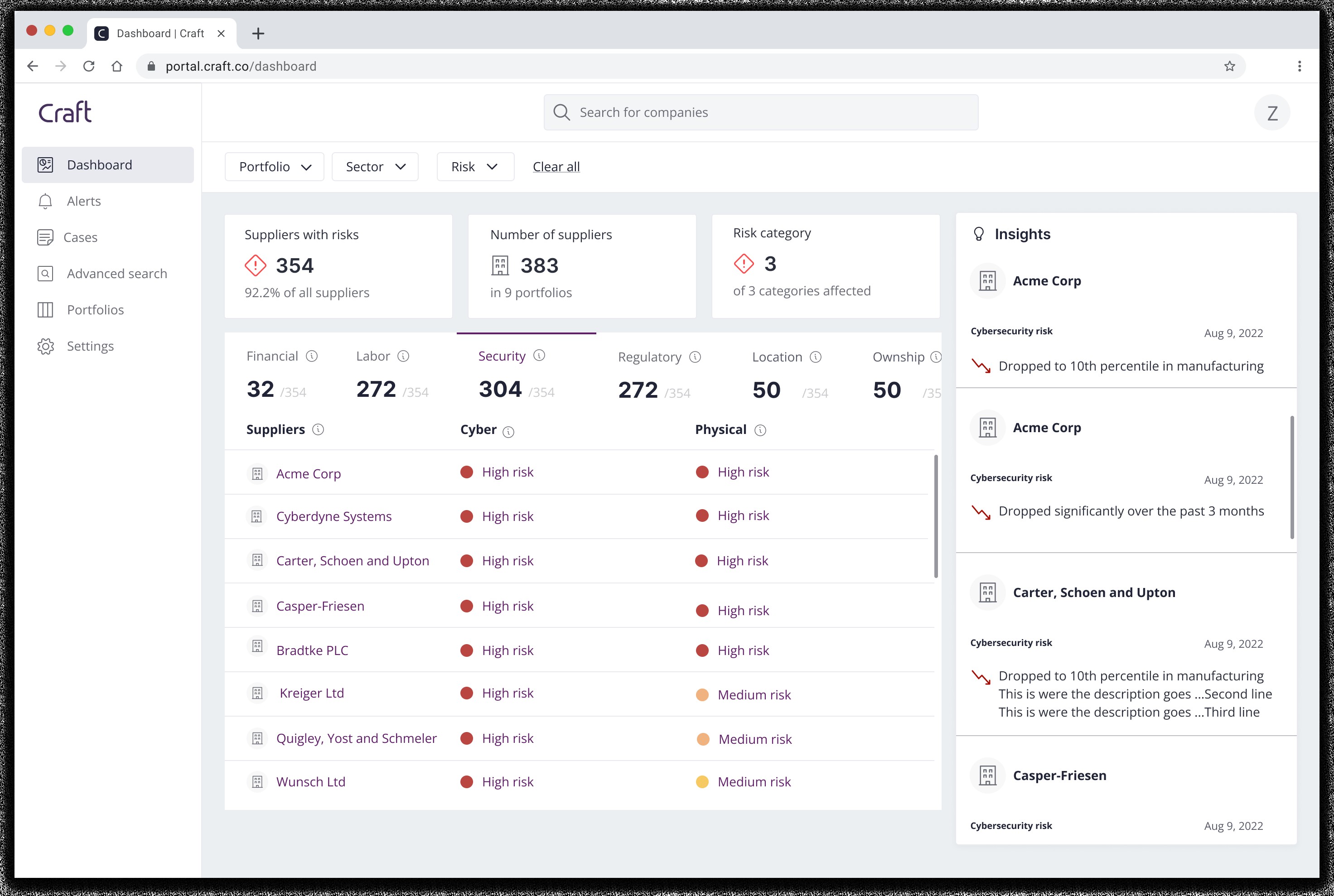
The distinction matters because a warning is not a decision. A supplier’s cyber rating might slip; the team must still know whether that supplier handles sensitive data, whether an alternative exists, and who is authorized to intervene. Craft’s Workspace and case functions are an answer to the last mile of intelligence: assigning attention and keeping a trail of it.
A shipper, 40,000 suppliers, and one missing view
Hapag-Lloyd offers a good test of the proposition. In a Craft event recap, the shipping company described a supplier base of roughly 40,000 and a problem that sounds less glamorous than “AI” but more urgent: no common source of facts about them. Its procurement team used Craft’s portal to bring supplier information together and receive alerts when circumstances changed. The quoted aspiration was almost comically modest: sit back and wait for an email when there is relevant news. Anyone who has tried to monitor thousands of counterparties by hand will recognize the luxury.
“How can we set up a global source of data for facts and figures about our suppliers?”Ingmar Mester, Hapag-Lloyd supplier management, in a Craft event recap
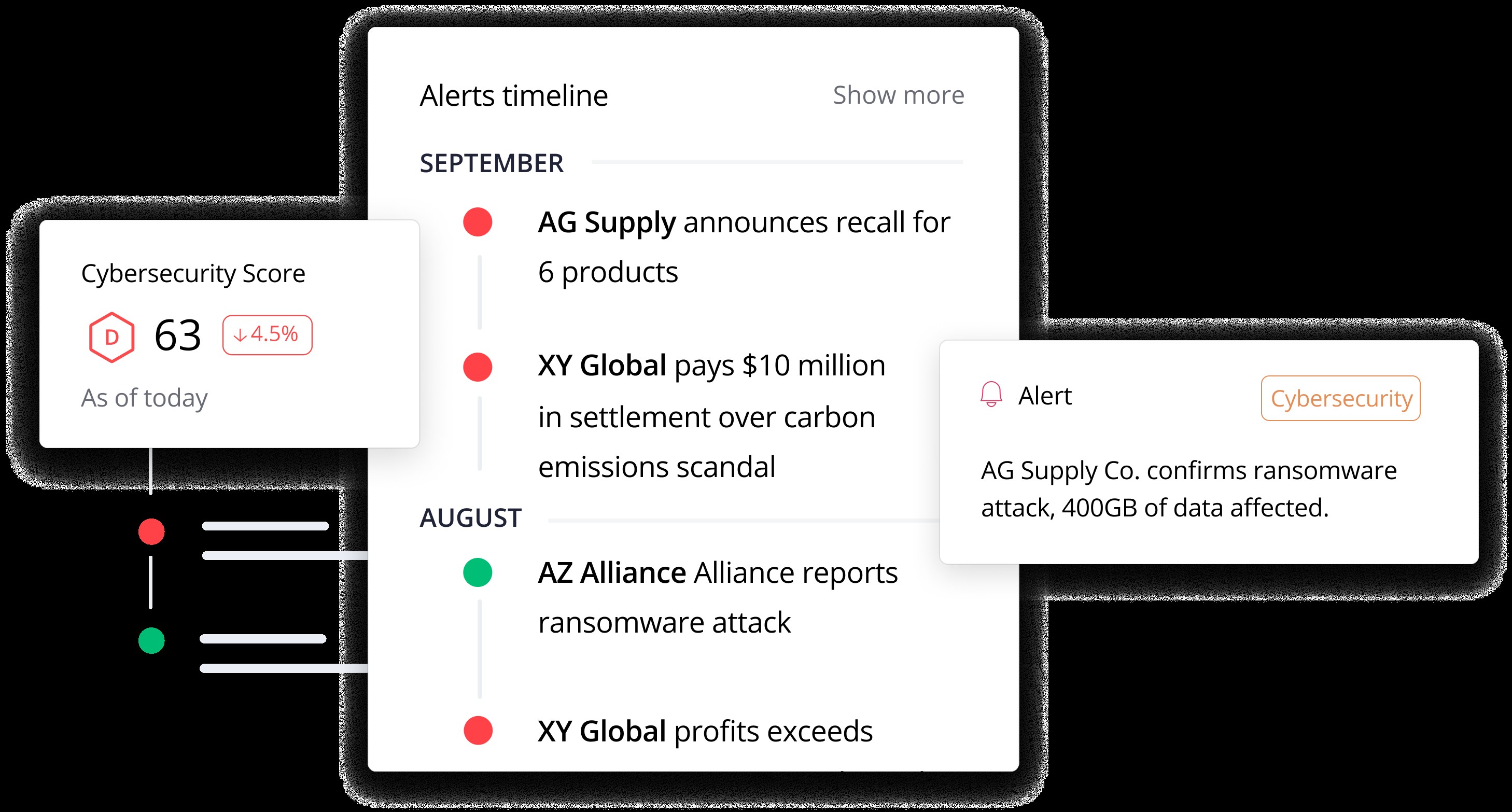
The product’s parts follow from that problem. Search and company profiles help teams find and compare vendors. Risk Hub organizes financial, regulatory, ESG, and security indicators. Alerts watch for events and changes. N-Tier Mapping tries to show the supplier behind the supplier, where a single factory can hide inside two apparently independent contracts. The API sends intelligence into a customer’s other systems. Newer AI-assisted reports package the findings for onboarding and review. Craft says its 2026 platform draws on more than 500 data points and 1,300 data streams. Those are company claims about coverage, not a guarantee that every obscure dependency is visible.
The contract that made the stakes plain
In May 2024 Craft announced a five-year, $28 million agreement with the Secretary of the Air Force for supplier risk and intelligence technology. Its release said the Department of Defense and 23 other federal agencies were using the platform for due diligence and foreign influence checks; it also said one Defense office had evaluated and monitored more than 35,000 organizations seeking support through small-business innovation programs. The company reported that about 15 percent were flagged for additional vetting. A flag is a request to look closer, not a finding of wrongdoing.
That use case explains Craft’s place in the market more clearly than any tagline. It sits between raw business-data providers and the systems that approve spending. A conventional vendor management tool can organize forms and contracts. A specialist cyber rating service can score one kind of exposure. Craft’s pitch is to join many kinds of external signals to a supplier identity, show relationships across tiers, and carry the result into a review workflow. Some buyers will need all of that; others will be well served by existing records and a narrower screening tool.
Craft has also put its data where procurement already works. It announced a Coupa application and a Google Cloud Supply Chain Twin integration, with data available through BigQuery. Its 2023 announcement named integrations with SAP and ServiceNow. Partnerships like these are practical distribution: a clever supplier graph has little value if the person approving a purchase never sees it.
What a buyer can borrow
Craft does not publish a standard subscription price. The public figures here describe capital raised and government contract value, not what an ordinary customer pays. The cost worth studying is more basic: maintaining accurate company identities, matching them to a buyer’s vendor list, filtering noise, and giving staff enough time to investigate a real alert. Automation may compress the search, but it does not eliminate the judgment.
The copyable lesson is to begin with a question, not a dashboard. Which supplier could stop a product line? Which vendor handles sensitive information? Which hidden parent or sub-tier relationship would change an approval? Name the consequential decision, collect evidence beyond the supplier’s own questionnaire, then decide who reviews a change and where that decision is recorded. Craft productized that sequence. A smaller organization can practice it with fewer vendors and simpler tools.
There are limits. Mapping works best when the underlying company records are fresh and identities match; alerts are useful only if someone can separate a meaningful change from background noise. Deep network analysis is less valuable when a purchase is easily substituted and carries little operational or regulatory exposure. In a high-stakes chain, though, the next unpleasant surprise often starts with a company no one put on the first list. Craft built its business around looking at the second.