oakland
(40)
Outlier AI wanted to ask the questions your dashboard missed
The Oakland startup turned business data into a daily shortlist of surprises. Its seven-year experiment explains why finding the right question can be harder than finding the answer.

Sublime turned a sticky problem into Fuzzies
An Oakland cannabis maker found a product hiding inside a packaging nuisance. Its next chapter shows why a popular brand and the factory behind it can end up on different paths.
Resolute Direct Capital and the price of buying time
A commercial property deadline can be merciless. Resolute Direct Capital offers private credit for deals that can survive the scrutiny as well as the clock.
The Carbon Machine That Changed Its Address
A tax credit sent Noya’s carbon capture machines away from cooling towers and toward storage wells. The pivot made industrial sense; the company still wound down in 2025.

The Company That Sells One Word at a Time
A memorable name may be only six letters long. Catchword has spent more than a quarter-century building the machinery that makes those letters feel inevitable - and keeps them out of court.

The Worker Agency Makes a Protest Hard to Ignore
The Oakland firm does not merely pitch stories. It builds objects, coalitions and moments that make abstract fights visible - then gives organizers the language to carry them forward.
Before the concrete: VSCE’s other construction work
A bus depot needs somewhere to park the buses. It also needs a closed street, a public hearing, and people who can keep the paperwork moving. Oakland’s VSCE has made a business of connecting those jobs.
Change Consulting puts a good cause to work
A worthy mission still needs someone to make the calls, shape the message and get the story out. This Oakland agency has built its business around that unfinished work.
VR Research reads the fine print before you sign
A polished pitch can survive a meeting. Can it survive the county records office? VR Research turns public documents into pointed questions for investors, lawyers, and campaign strategists.
Message Lab asks: did anybody actually read it?
A client had 82,000 pageviews and a five-second problem. Message Lab at Orchestra builds editorial programs around the difference between attracting a click and earning someone’s attention.
A game needs a launch. It also needs someone to explain the delay.
ONE PR Studio brings publisher-side experience to the business of getting games understood. Its work lives between the reveal, the review, and the awkward update nobody wanted to send.
Winter goes looking for the people missing from the meeting
A Bay Area consultancy takes transportation planning to farmers markets, classrooms, and neighborhood conversations. Its work makes a practical argument: who gets asked helps determine what gets built.

Study Hall gives brands a life beyond the logo
A search bar enters the Upside Down. A security company learns to loosen its tie. Inside the Oakland studio that designs what brands do, as well as how they look.
Busse Design and the software that needed a translator
A recommendation engine that confused merchandisers. An accreditation process buried in text. Busse Design’s portfolio shows what happens when software starts speaking its users’ language.
Okay knows a good brand needs something real to stand on
A whale, a whiskey label, and a 50-pixel square: inside the design practice of Carl Bender, where the useful detail does the talking.
USA Marketing knows the joke has to arrive fresh
Avocado toast for new homeowners. Noisemakers delivered before the inning ends. Inside the Oakland company that makes promotional ideas work in the physical world.
Oakland had the talent. BRIDGEGOOD built the first assignment.
A furniture-store meeting became a nonprofit design studio with a practical answer to a familiar problem: how do you get experience when nobody has hired you yet?
Sunstone Strategies takes climate policy to the kitchen table
A gas stove, a truck route, a utility bill. Sunstone Strategies builds climate campaigns around the places where energy policy becomes personal.
CliffordMoss and the hard arithmetic of yes
A California political consultancy helps communities pay for schools, trains and public services. Its work reveals why a popular idea can still lose - and what has to happen before the campaign starts.
Wolf Den Makes the Ad. And the Parts That Keep It Moving.
The Oakland animation studio works behind campaigns for Pinterest, Cash App and Meta AI. Its most revealing work shows how a good-looking film becomes a practical system for brands with more than one screen to fill.
Rods and Cones Wants Your Next Print Run to Be Boring
Wrong colors. Repeated clicks. Another file sent back. Rods and Cones has built a business around removing the little production problems that make printing expensive.
Barretto-Co. puts design to work close to home
An Oakland studio pairs corporate branding with public-school pride and civic reporting. Its most revealing work shows what happens when design has to answer to the people down the street.
The $6.7 Billion Company Hiding in Your Cleaning Closet
Clorox began with five men, $500 and a bottle of industrial bleach. More than a century later, its real product is a portfolio of small, repeatable solutions to messy everyday life - now with Purell at the center of a sharper health-and-hygiene bet.
Viable
The AI that read your customer feedback so you didn't have to - one of the first companies to turn GPT-3 into a working analyst.

Firebrand Artisan Breads
Firebrand Artisan Breads is an Oakland-founded, Alameda-based wood-fired bakery that describes itself as a jobs program that happens to sell bread. Founded in 2008 by Matt Kreutz, it wholesales artisan breads and pastries to hundreds of Bay Area retailers - including Whole Foods - and runs a direct retail cafe. Its defining feature is an Open Hiring model that prioritizes people with high barriers to employment (formerly incarcerated, formerly homeless), paired with a perpetual purpose trust that locks the mission in permanently and shares profits with workers.

Cirrus Identity
Cirrus Identity is an Oakland-based software company that runs managed, cloud-hosted identity and access management for higher education, research institutions, non-profits and healthcare. Founded in 2013 by former UC Berkeley identity staff, it acts as a proxy and bridge between commercial identity providers (Entra ID, Okta, Duo, Google) and the multilateral research-and-education federations - InCommon, eduGAIN, the Canadian Access Federation and GakuNin - that campuses depend on but that most commercial IdPs do not support. More than 200 universities use it to retire aging Shibboleth deployments, let alumni and applicants log in with social accounts, and standardize authentication without rebuilding every application.
Tezza Foods
Tezza Foods makes the first dairy-free yogurt that goes spoon-for-spoon with Greek yogurt. By culturing and straining organic American-grown soymilk, the Oakland-based company turns whole soybeans into a thick, high-protein yogurt with the protein and probiotics of dairy Greek yogurt - plus fiber and omega-3s - using about 90% less land, water and emissions than dairy. Founded in 2019 by MIT-trained microbiome scientist Nathaniel Chu and Josh Moser, Tezza is a public benefit corporation built on the idea that the world's most nutritious and sustainable protein should be the one we all eat.

TEECOM
TEECOM is a technology planning, design, and engineering firm that makes technology work in buildings. Founded in 1997 and led by founder David Marks, the remote-first company partners with architecture, engineering, and construction (AEC) teams to design the unseen layer of modern buildings - structured cabling, networks, audiovisual, acoustics, security, wireless, distributed antenna systems, and emergency responder radio. With 150-plus engineers, designers, and subject-matter experts, TEECOM has delivered integrated technology systems across more than 28 countries for clients like Salesforce.

Molten Industries
Molten Industries is an Oakland, California climate-hardware startup that uses methane pyrolysis to crack natural gas into clean hydrogen and high-value synthetic graphite, with no carbon dioxide emitted in the process. Founded in 2021 by Dr. Caleb Boyd and Dr. Kevin Bush, the company aims to onshore battery supply chains and decarbonize heavy industry by producing battery-grade graphite for lithium-ion cells and low-cost clean hydrogen for fuels, ammonia, plastics, and green steel. It raised a $25M Series A in June 2024 led by Breakthrough Energy Ventures to build its first modular commercial reactor.
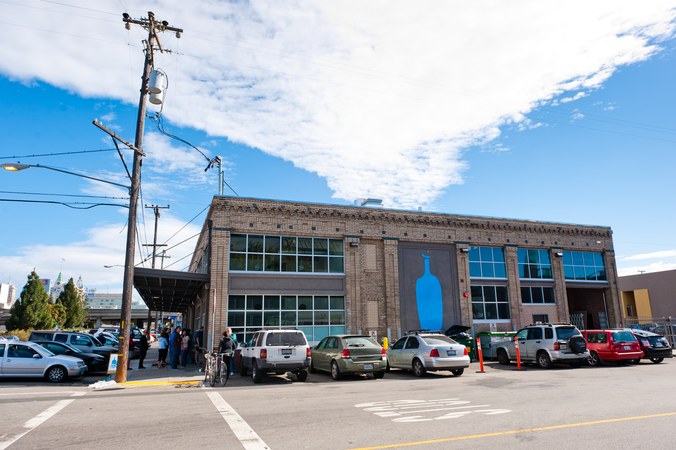
Blue Bottle Coffee
Blue Bottle Coffee is an Oakland-born specialty roaster and cafe chain that helped define the third-wave coffee movement. Founded in 2002 by clarinetist James Freeman, it built a reputation on freshly roasted single-origin beans, an obsessive 48-hour freshness rule, and a spare, Japanese-influenced cafe aesthetic. It now runs roughly 140 cafes across the US and Asia plus a sizable e-commerce and subscription business, and changed hands in 2026 when Centurium Capital agreed to buy its retail operations from Nestle.