hospitality-tech
(34)
Hostaway made a business out of your vacation’s busywork
Behind the holiday photos sit calendars, cleaners and a small mountain of messages. Hostaway turned that administrative mess into a software business, survived a travel shutdown and is now betting on AI to handle more of the shift.

Poster POS knows where the sauce went
A Ukrainian software company found a business in the unglamorous details of running a restaurant. Its pitch starts at the till and follows every ingredient, invoice and order behind it.
Access Hospitality wants to give hotels their time back
A hotel can sell a room in seconds and spend hours untangling the booking. Access Hospitality is connecting the systems behind the stay, with Guestline at the centre of a much bigger software bet.

Rota Put the Staffing Agency Inside the App
Rota began by filling last-minute hospitality shifts. The more durable business was the machinery behind the marketplace - software that lets employers, agencies and workers arrange an unruly week from the same screen.

ClearCourse Bought the Software Behind Britain’s Small Businesses - Then Put Payments Inside It
The quiet systems running a marina, a garage or a golf club are hard to replace and easy to overlook. ClearCourse has spent eight years buying those niche operators, joining their workflows to payments, and betting that useful beats fashionable.

Lavanda Was a Laundry App. Then the Landlords Called.
A consumer laundry service discovered its best customers were property operators with a stranger problem: empty beds, mismatched software and no clean way to mix hotel-speed stays with residential leases. Lavanda followed the demand and built the operating system instead.

Cvent Nearly Died With $400,000 on the Founder’s Credit Cards. Then It Sold for $4.6 Billion.
A lawyer built software to escape the sticky-note chaos of event planning. The dot-com crash nearly buried it; a two-sided event machine, two IPOs and a private-equity relay turned it into a $4.6 billion business.

7shifts Fired Two-Thirds of Its Customers - Then Built the Restaurant Back Office
The Canadian scheduling startup found its edge by walking away from most of its market. Now 55,000 restaurants use it to turn sticky notes, shift swaps and payroll math into one connected system.

Epicurate Turned Vacation-Rental Concierge Chaos Into a Booking Engine - Then Journey Bought It
A former Le Bernardin cook saw luxury concierges running on email chains and memory. Six years later, his provider-first marketplace powered experiences across more than 12,000 homes - and became Journey's route into the moments beyond the room.

Relay Tried to Replace the Kids’ Phone. Frontline Workers Found the Bigger Job.
A $99 screen-free gadget for children found its real market in hotel corridors, stadium kitchens and factory floors. Relay’s second act is a useful lesson in letting an unexpected customer rewrite the pitch.

The $10,000 Beer Tap That Became an Operating System for Every Pour
Jose Hevia spent about $10,000 putting self-pour beer on a restaurant table. The real business appeared later: software that can identify a drinker, price every ounce and tell an operator what is happening inside thousands of ordinary dispensers.

The Restaurant App That Pays You to Eat - and Charges Only When the Table Fills
Restaurants cannot save tonight's empty table for tomorrow. Seated built a marketplace around that perishable inventory - then survived the shutdown that made every table empty at once.

The Phone Wouldn't Stop Ringing. Hostie Turned That Restaurant Headache Into a $16 Million AI Company
A restaurateur and an AI engineer started with one painfully ordinary problem: the phone ringing during dinner service. Their answer now handles millions of guest conversations - but its real test is whether automation can make a restaurant feel more human, not less.

The Company Betting That a Text Beats a Survey
Founded in 2010 with the Mall of America as its first account, Kipsu turned front-desk texting into a real-time engagement engine now used by 1,600+ organizations in about 30 countries.
The Local Travel Platform Teaching South Africans to Book Home First
A R12,000 garage project became a homegrown booking habit. Now LekkeSlaap is betting that local language, human help and 38,000-plus stays can keep travel value closer to home.
Shift4 Wants to Own the Moment Before You Tap 'Pay'
The Pennsylvania payments company built its edge by hiding complexity behind the checkout. Now a global acquisition spree is testing whether one platform can follow customers from dinner to the ballpark to a tax-free shopping counter abroad.

PoloTab
PoloTab is a Mexico City-based company building an all-in-one point-of-sale platform for cafes and restaurants. It bundles sales, inventory, invoicing, kitchen displays, delivery-app integration and multi-branch management into software that installs in about 15 minutes and keeps working without internet. More than 800 venues across 70+ Mexican cities run on it.

Zaplar
Zaplar is a Stockholm-based, Y Combinator (S26) startup building an AI-native operating system for hotels and event venues. Instead of stitching together the legacy hotel stack - PMS, POS, booking engine, CRS, RMS and MICE tools - Zaplar consolidates them into one platform where AI agents handle bookings, guest messaging, RFPs, event planning and follow-ups. Staff review and approve the agents' suggested actions, so hoteliers keep control while spending less time in front of a screen.
H2O Hospitality, Ltd.
H2O Hospitality is a Seoul-founded hospitality technology company that digitizes hotel operations end to end - from booking and mobile check-in to revenue and facility management. Its flagship platform, H2O Flow, connects reservation, property, revenue and facility systems into one workflow, and was the first service in Asia to achieve a validated integration with Oracle's OPERA PMS. Founded in 2015 by Cornell-trained, Forbes 30 Under 30 CEO John (Woong Hee) Lee, the company manages roughly 210,000 room units across seven countries and has raised about $48.5M, including a $30M Series C led by Kakao Investment and Korea Development Bank in 2021.

HXE (Huixiaoer)
HXE (Huixiaoer) is a Beijing-based MICE technology platform that lets companies search, compare and book hotel conference rooms, meeting venues and event services online. Marketed globally as Eventbest, it aggregates 150,000+ hotels and event venues, has served more than 400,000 corporate clients, and partners with major hotel groups including Marriott, Hilton, IHG, Shangri-La, Wyndham and Langham. HXE turns a traditionally offline, quote-by-phone procurement process - meetings, conferences, incentive trips and group business travel - into a one-stop digital marketplace covering venue data, price comparison, catering, accommodation and logistics.

Softinn Solutions
Softinn Solutions is a Malaysian hotel technology company that builds cloud-based hotel management software for boutique hotels, resorts, villas and hotel chains across the Asia Pacific. Its all-in-one platform pairs a Property Management System with a Channel Manager connected to 40+ OTAs, a commission-free booking engine, a website CMS and self-service check-in kiosks - designed around the mission to 'make hotelier work easier.' Founded in Melaka in 2012 by JeeShen Lee and Caren, Softinn serves 1,000+ hotel owners in markets including Malaysia, Indonesia, Vietnam, the Philippines and Singapore.

Bikky
Bikky is a customer data platform built exclusively for large, multi-unit restaurant brands. It unifies data from point-of-sale systems, online ordering, payments, and loyalty programs into a single guest view, letting operators measure how every marketing, menu, and operational decision affects guest behavior, frequency, and lifetime value. Founded in 2017 and based in New York City, Bikky serves brands like Bojangles, Dave's Hot Chicken, MOD Pizza, and Robeks across thousands of locations.
Blackbird Labs
Blackbird Labs is a New York-based restaurant technology company that pairs a consumer dining app with a blockchain-based payments and loyalty network. Founded in 2022 by Resy and Eater co-founder Ben Leventhal, Blackbird lets diners check in at participating restaurants, earn a rewards currency called $FLY, and pay their bill through the app, while giving restaurants lower payment-processing fees and direct ownership of their guest data. The company runs its own layer-2 network, Flynet, and operates in New York, San Francisco, and Charleston with roughly 1,000 restaurants on the platform.

Momos
Momos is an AI customer platform for multi-location restaurant and retail brands. It unifies customer service, reviews, reputation, listings, feedback and local marketing into one system so operators can respond to guests, catch problems in real time, and turn reviews and feedback into repeat visits. Founded in 2021 by former Uber and Grab operators, Momos powers tens of thousands of locations across brands including Shake Shack, Baskin-Robbins, Just Salad and Guzman y Gomez.
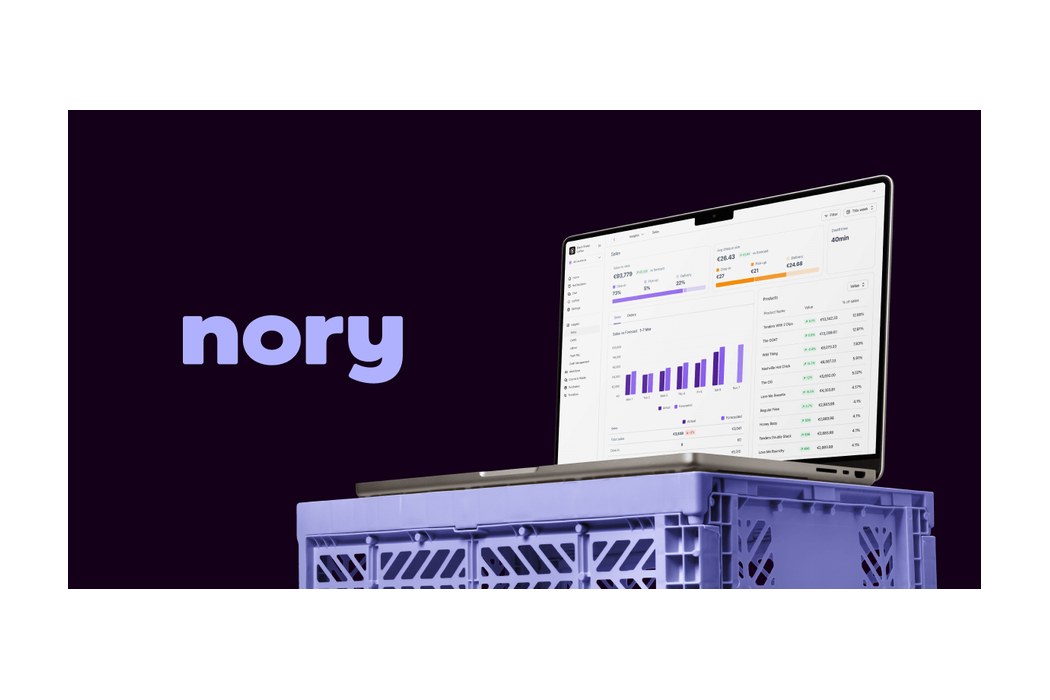
Nory
Nory is an AI-native restaurant operating system that unifies business intelligence, inventory, workforce management and payroll into a single control centre for hospitality operators. Founded by restaurateur Conor Sheridan, it plugs into a restaurant's existing tech stack and uses real-time data plus predictive analytics - and a crew of 'agentic' AI assistants - to forecast demand, plan staffing, manage ordering and keep the P&L on track. Operators report cutting operating costs by nearly 20 percent and reducing food waste by up to 50 percent. Backed by $62.6M in funding, Nory serves multi-site groups from Black Sheep Coffee to the Jamie Oliver Group and is expanding into the United States.

Franki
Franki is a Los Angeles-based mobile app that reimagines the restaurant review as short-form video. Often described as a 'TikTok for restaurant reviews,' it lets diners discover local spots through authentic video recommendations from vetted local creators, then earns them cash back when they eat and drink at participating venues. Creators earn for posting, consumers earn for going out, and restaurants get measurable, conversion-focused advertising - a three-sided platform aimed at the multibillion-dollar experience economy.

Innowi Inc.
Innowi Inc. is a Santa Clara, California restaurant-technology company that builds an all-in-one point-of-sale and ordering platform. Its stack spans POS, self-service kiosks, tabletop QR ordering, online ordering and delivery, a kitchen display system, marketing and rewards, analytics, and employee management - designed to help independent and multi-location restaurants cut third-party commission fees, sync orders across channels, and run leaner operations.

Incept AI
Incept AI is a New York-based voice AI company building order-taking systems for quick-service restaurants, starting with the two hardest environments in the business: the drive-thru and the phone. Founded in 2024 by former Amazon and Presto Automation engineers, Incept pairs a proprietary neural audio engine that strips out background noise, echo and crosstalk with foundation models and POS integrations, so the AI can complete restaurant orders end-to-end without a human stepping in. The company says its system reaches 95%+ order completion without human intervention, well above the roughly 83% where most competitors escalate to a person, and raised a $3 million pre-seed round led by Rally Ventures in early 2025.

MiChamba
MiChamba is a Mexico-founded startup that turns WhatsApp into an operational management platform for frontline and deskless teams across Latin America and the US Hispanic market. Instead of forcing workers onto a new app, it layers AI agents - led by an assistant named MarIA - on top of the messaging tool people already use, converting informal chats into trackable tasks, reports, and productivity data. It raised a $2.25M pre-seed round in 2025 and counts Hilton, Pemex, and Repsol among 50+ customers in construction, hospitality, logistics, and industrial sectors.

MustHaveMenus
MustHaveMenus is a Bend, Oregon software company that gives restaurants, bars, hotels, and hospitality groups an all-in-one platform to design, print, and publish menus across print, web, QR codes, and digital signage. Founded by serial entrepreneur Jim Williams, it started as a simple menu-design tool and grew into a menu operations system with the world's largest library of restaurant design templates - 15,000-plus and counting - used by tens of thousands of businesses worldwide.