At 7:30 on a Friday night, a restaurant table is an asset. At 6 on a Monday, it can be a very handsome liability: rent paid, staff scheduled, lights glowing, nobody ordering the burrata. Seated, the New York dining-rewards company, built its business around the awkward fact that restaurant inventory expires by the hour. You cannot put tonight's unused four-top in the walk-in and sell it tomorrow.
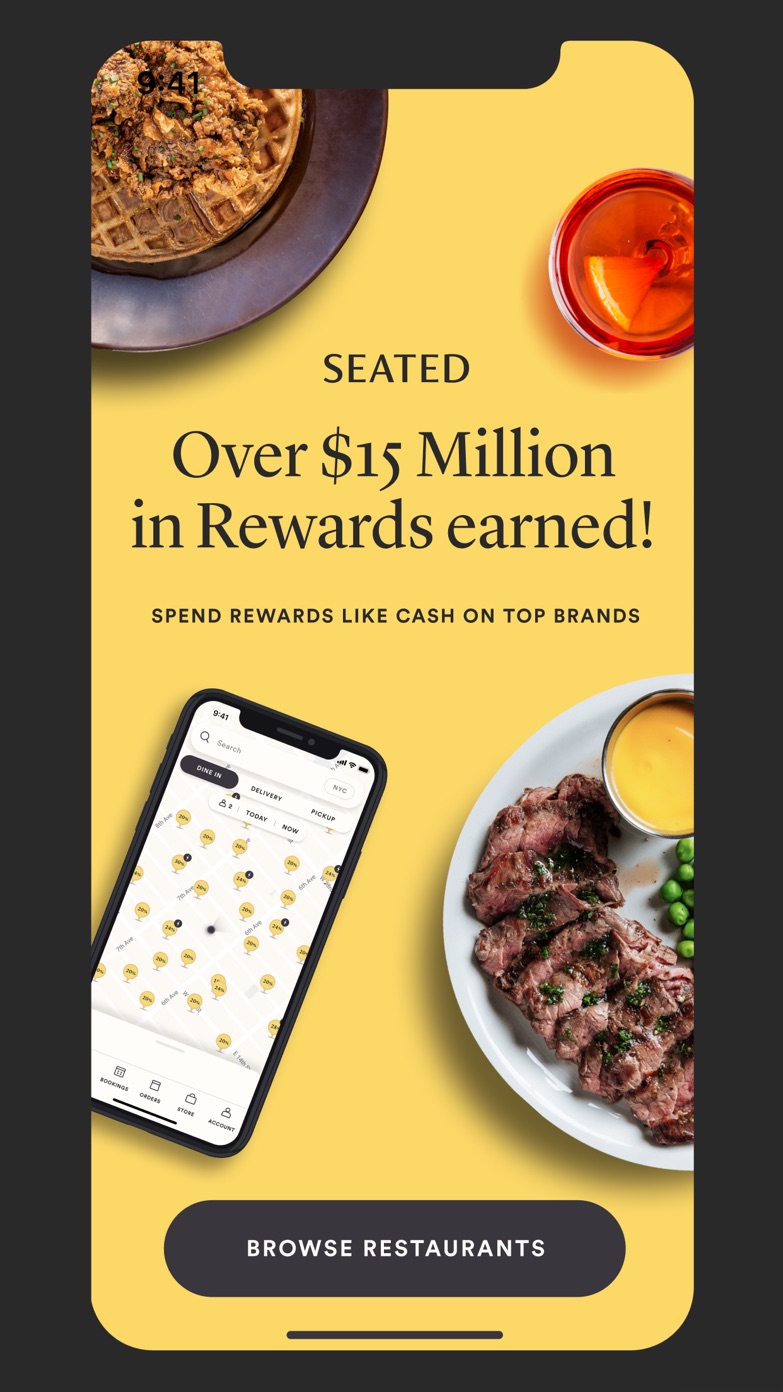
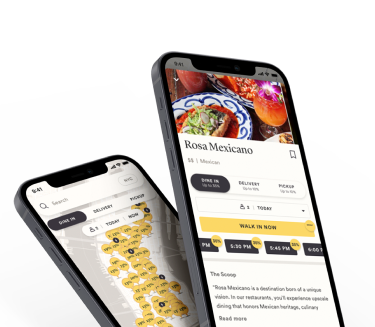
Its proposition is disarmingly concrete. A diner opens the Seated app, links a payment card and activates an offer at a nearby restaurant. After paying with that card, the diner earns rewards - the current app advertises as much as 30% back - redeemable with brands including Amazon, Target, Uber, Starbucks and Airbnb. The restaurant gets a customer at a time it wants more traffic. Seated gets paid when the visit happens, rather than charging an upfront or fixed fee.
That makes Seated several businesses wearing one dinner jacket. To consumers, it is a discovery and cashback app. To operators, it is performance marketing with a yield-management dial. To card programs and fintechs, increasingly, it is a supply of local restaurant offers. It does not need to replace OpenTable or Resy. It can sit beside the reservation system, recognize the payment and influence where the diner goes.
The finance guy at the food table
The founding observation arrived before the software. Brice Gumpel and his then-girlfriend ran a college food Instagram that grew to roughly 25,000 followers. Invitations from restaurateurs and publicists followed. Gumpel, who had worked in finance, kept asking owners what worried them most. Their answer was not culinary. Friday and Saturday took care of themselves; the rest of the week did not.
Gumpel teamed with Atallah Atallah, and early work took place at the Harvard Innovation Lab. Bo Peabody, the entrepreneur and investor who also operates restaurants, joined as co-founder and executive chairman. The company launched in 2017 with a useful behavioral wager: people are creatures of habit, but a sufficiently visible reward can persuade them to try the other Chinese restaurant down the street.

The novelty was not simply paying someone to eat. Restaurants could choose the services that needed help and raise the reward off-peak. A packed Friday required no subsidy. A dining room operating below its comfortable occupancy might. Seated's early pitch even enforced a quality floor: Gumpel said restaurants that fell below four stars in member ratings could be removed, because a reward that sends people somewhere disappointing is an expensive way to lose trust.
People are creatures of habit. Without that gift card, and without Seated helping you find that restaurant, you may never try it.Brice Gumpel, co-founder and CEO
What happens from tap to table
Seated's present consumer flow is shorter than its earlier versions. Members once photographed receipts to prove what they spent. That was clever startup plumbing: a camera created transaction verification without waiting for deep integrations. It also created friction. Receipts blur; totals mismatch; rewards change; support conversations begin. Reviews in both major app stores show the upside and the bruises - strong enthusiasm on Apple's store, and recurring complaints about missing rewards and reliability, especially on Google Play.
The four-beat dinner
In April 2025, Seated moved the center of verification to linked cards. Activate an eligible restaurant for the calendar month, eat there and pay normally; the reward appears when the transaction is recognized. The app also advertises a smaller base reward at restaurants outside an activated offer, provided the member stays active. The product has gone from reservation to receipt to payment rail - each version asking less of the diner.
The first thing that failed
Seated's original machinery assumed dining rooms existed. In March 2020, that assumption failed before anything else. New York restaurants closed, reservations stopped and the company's one-, two- and three-year plan became antique paper overnight. Gumpel later said the team initially did not know what to do and resisted making a theatrical pivot for its own sake.
What changed their minds was not a trend deck. It was restaurant customers. Seated asked operators where revenue could still come from. They pointed to pickup, delivery and - eventually - private events. The company quickly built Seated at Home, then positioned with zero commission to restaurants, and bought VenueBook rather than building event-booking supply from scratch. The acquisition price was not disclosed. VenueBook brought about 120,000 event planners and coverage beyond Seated's original city footprint.
The shift widened the product from a reservation reward into a multisource demand platform: dine-in, off-premise orders and events. In August 2020, Seated announced $30 million in combined Series A and B financing led by Insight Partners, with Craft Ventures, Greycroft and Rho Capital Partners participating. By then, it said it had filled more than 900,000 seats, generated $37 million for restaurant partners and produced $7 million in staff tips across roughly 800 restaurants. Those are company-reported milestones, not current annual revenue.
The case for a more expensive Monday
Company case studies illustrate the mechanism, with the usual caution that Seated selected and published them. At miss KOREA BBQ in Manhattan, the restaurant offered higher rewards during weaker periods while Seated targeted adventurous diners within five miles. Seated says the campaign brought more than 400 new customers in a month, most from Monday through Thursday, and lifted monthly sales by $22,000 - a reported 65% weekday increase.
At A La Turka on the Upper East Side, the company says rewards filled more than 85 otherwise empty seats each week. Monday occupancy rose by more than 50%, and management attributed about $2,400 in additional weekly profit to the program, nearly $125,000 annualized. These numbers explain the appeal better than a loyalty slogan. Rent and much of labor are already committed. If an additional cover pays for food, reward and acquisition cost with room left over, the quiet table begins contributing.
Reported weekday sales lift after higher off-peak rewards and local audience targeting.
Reported empty seats filled per week, concentrated in slower services.
The restaurant does not mark down the steak. The diner pays the check and receives value afterward. That separation matters: the public menu price stays intact, staff do not need a new tablet or coupon ritual, and the operator can treat the expense as measurable customer acquisition. Seated says there is no new software, upfront fee or staff training. Exact performance fees are not posted publicly, so an operator still has to compare the negotiated cost with contribution margin and likely repeat behavior.
Where Seated sits now
The competitive map has grown crowded. OpenTable and Resy own reservation habits. SevenRooms sells guest data and operations. Rewards Network supplies card-linked dining programs. inKind offers restaurant credit. Blackbird is experimenting with loyalty, identity and payments. DoorDash has moved from delivery toward in-store rewards and reservations. Seated's distinction is narrower than “restaurant app” and more interesting: dynamic, performance-priced demand for local restaurants, designed to coexist with tools already behind the host stand.
Its 2026 partnership with Kard points toward a second act. Kard put thousands of Seated offers into a network used by fintechs and financial institutions, describing Seated as more than 2,500 restaurants across 20 states. That turns Seated's restaurant relationships into inventory that can travel through somebody else's card program. The consumer app remains useful, but the distribution network could make the offers visible without every diner beginning in Seated.
What to steal - and when not to
The copyable playbook has five moves. Find inventory that expires. Let suppliers identify their genuinely weak windows. Make the buyer incentive meaningful enough to change behavior. Fit around the tools already in place. Charge after the outcome can be verified. Receipt photos may be enough to test the loop; payment data can make it scale. And when the core use case breaks, ask customers which adjacent revenue stream still has oxygen before announcing a pivot.
This is not universal magic. Dynamic rewards can subsidize people who would have visited anyway. A percentage that excites diners may erase the margin on a low-ticket meal. Card-linked verification depends on clean transaction matching and a user's willingness to connect a card. Rewards redeemable as brand credit are not the same as cash. Most important, no promotion repairs slow service, poor food or a location with too little local demand.
The model gets wobbly when...
- The restaurant is already full, so an incentive only pays existing demand.
- The incremental check cannot cover food cost, reward and acquisition fee.
- The reward is too small to change a diner's destination or timing.
- Transaction matching fails often enough to make “automatic” feel argumentative.
- The market lacks enough restaurants or diners to make discovery useful.
Seated's enduring insight is simpler than the software around it. Restaurants do not have one demand problem. They have a sequence of tiny, time-stamped demand problems: Tuesday lunch, the 5:30 gap, the canceled eight-top, the private room next month. Put the incentive on the problem instead of across the entire week, and the discount becomes a steering wheel. The diner sees free value. The operator sees one less chair staring back.