A restaurant can refrigerate the fish, polish the glasses and save the Bordeaux. It cannot preserve Tuesday's empty table for Wednesday. At the end of service, that inventory vanishes without so much as asking for the check. Brice Gumpel built his career around this small, expensive disappearance.
The clue arrived through an activity that looked more like leisure than market research. At Brown University, where Gumpel studied economics and played soccer, he and his then-girlfriend photographed the meals they ate. They turned those pictures into a food account. It gathered roughly 25,000 followers, which brought invitations from chefs, publicists and restaurant operators. Pretty plates opened the door; unpretty economics kept him in the room.
Gumpel asked owners what made their businesses difficult. Their answers exposed the strange rhythm of hospitality. Friday and Saturday could take care of themselves. Quieter services could not. Rent, labor and lights remained stubbornly present while customers exercised the very human right to stay home. Gumpel had found a problem with a clock attached.
An analyst follows his appetite
Before he tried to alter dining habits, Gumpel learned to model other kinds of behavior. He completed summer roles at Disney and Morgan Stanley, graduated from Brown in 2014 with a bachelor's degree in economics, and joined Nomura as a fixed-income analyst. The route from debt instruments to dinner reservations looks eccentric only if one ignores the common material: pricing, capacity, risk and incentives.
Food was less tidy, which may have been the attraction. Gumpel has said he grew up playing three sports and was always hungry, an excellent preparation for becoming an indiscriminate New York diner. He describes himself as willing to eat almost anything. That appetite gave him range, but the food account gave him proximity. Founders often speak about discovering a market. Gumpel was invited into one, meal by meal.
He left Nomura and moved into startup operations. Then he teamed with Atallah Atallah, whose connection to the Harvard Innovation Lab gave the early Seated team a place to begin. Entrepreneur and restaurant operator Bo Peabody joined as co-founder and executive chairman. By 2017, Gumpel was CEO of a company trying to make restaurant demand less accidental.
The nudge across the street
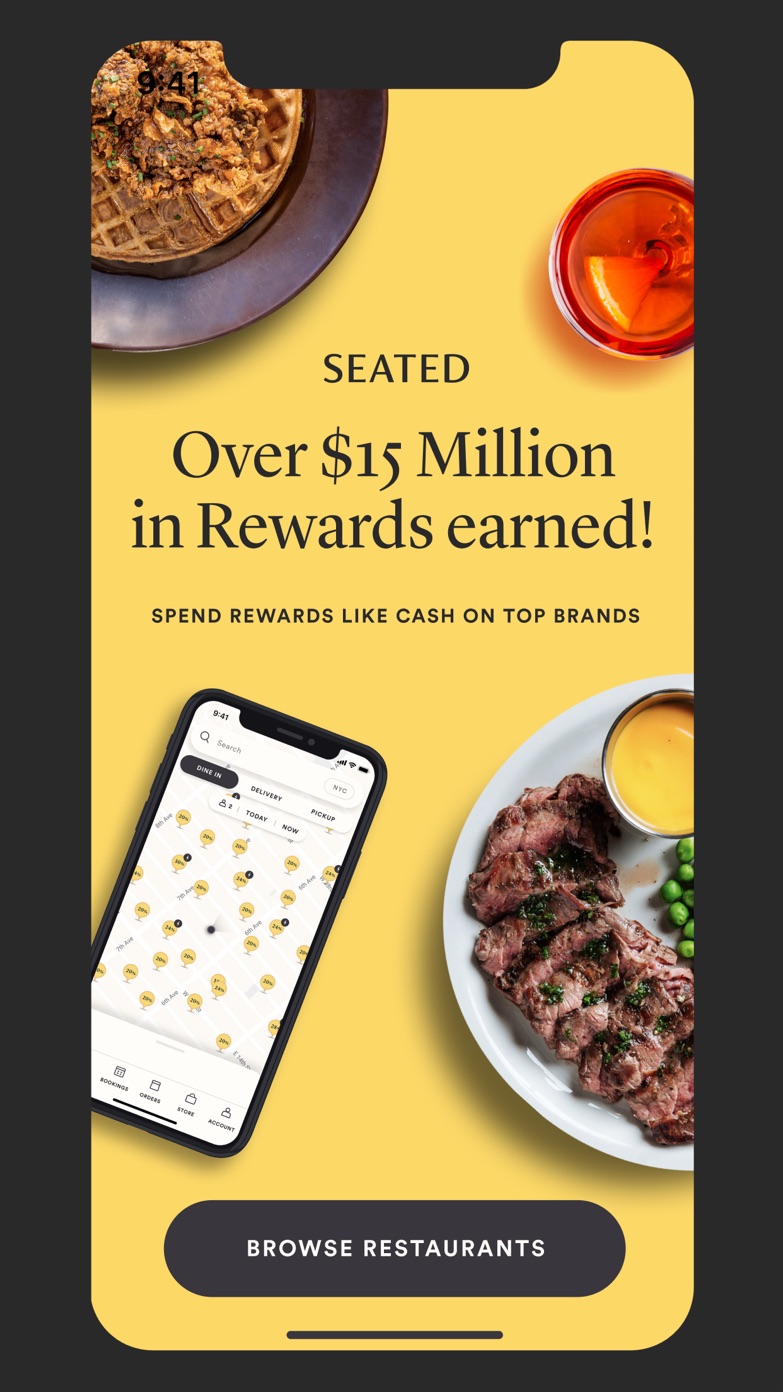
The early consumer proposition was cheerful enough: book through Seated, dine, and receive credit for familiar brands. Underneath sat a more particular wager. A customer may love the Chinese restaurant on one corner and never investigate the one on the next. A sufficiently visible reward can make curiosity feel less risky. For the restaurant, the incentive is useful only when it shifts demand toward a service that needs it.
This was dynamic pricing wearing a friendly dinner jacket. A busy Friday requires little persuasion. An underfilled Monday might justify a richer reward. Restaurants could target slower periods, and Seated would charge when it delivered a guest rather than demand a fixed upfront marketing budget. The distinction matters in an industry where margin is thin and attribution can be foggy. An occupied chair is unusually concrete evidence.
The four-beat dinner
The product has changed its plumbing over time. Earlier versions relied on bookings and uploaded receipt photos. The current app asks members to link a payment card, activate an offer and pay normally. Verification moves into the transaction. For a diner, the machinery disappears beneath dinner. For a restaurant, the aim remains familiar: bring in a customer when the dining room has room.
Quality had to travel with the incentive. In an early interview, Gumpel said Seated monitored member ratings and could remove a restaurant that fell below four stars. The rule guarded the consumer side of the marketplace. A large reward may persuade someone to break a habit once; a poor meal teaches the customer to distrust the next recommendation. The credit gets attention, but the restaurant has to earn the return visit.
The people around the idea also changed its shape. Atallah brought the early company into the Harvard Innovation Lab. Peabody brought experience from both technology and restaurant ownership. Stephen Carroll, whom Gumpel met on his first day at Nomura, joined the founding group before later starting the real-estate technology company Findigs. The network did not merely supply introductions. It combined a finance lens, technical building, startup pattern recognition and operator reality. Gumpel occupied the middle, translating between the dining room and the spreadsheet.
That translation is less glamorous than the reward graphic and more durable. Restaurant owners do not need another abstract promise of attention. They need to know whether a campaign put a paying customer in a seat, whether the visit happened during a useful service, and whether the economics survived the incentive. Seated's design keeps returning to those questions, even as the method of verification changes.
When the dining room disappeared
Then 2020 removed the noun from the business plan. Seated filled restaurant seats; dining rooms closed. Gumpel later described the company's one-, two- and three-year trajectory as derailed. The team did not know immediately what to do, and it resisted making a grand pivot merely for the theatre of decisiveness.
Instead, Seated spoke with restaurant partners. Operators still had kitchens, relationships and bills. What they needed were other routes to revenue: pickup, delivery and, when gathering returned, private events. The company followed those answers. It built Seated at Home as a rewards-based ordering product with no commission for restaurants. For events, it chose acquisition over invention and bought VenueBook, a platform already used by 120,000 event planners.
The same month, Seated announced $30 million in combined Series A and B financing led by Insight Partners, with Craft Ventures, Greycroft and Rho Capital Partners participating. At the time, the platform had facilitated more than 900,000 reserved seats across New York, Boston, Atlanta and Chicago. Restaurant partners had received a reported $37 million in revenue and their staff a further $7 million in tips.
The figures are a snapshot, not a fairy tale. Restaurant technology remains difficult because restaurants themselves are difficult businesses. Consumer rewards create expectations, verification creates edge cases, and every missing credit becomes a support conversation. A marketplace must keep diners, operators and economics at the same table, even when each has ordered something different.
The useful distinction
Gumpel's 2020 choices reveal a clean distinction between product and purpose. A reservation was one product. Restaurant demand was the purpose. When reservations became impossible, demand could be directed toward takeout. When events promised to return, demand could be prepared for private rooms. The format changed while the customer remained recognizable.
There is also a compact lesson in the build-or-buy decision. Seated could create an ordering system quickly enough. An event marketplace, with its venue supply and planner relationships, would take longer. VenueBook already had those pieces. Building preserved speed where the gap was manageable; buying compressed time where the network mattered. Strategy is often less a thunderclap than a sensible division of the shopping list.
The business continued to finance itself. Public company databases record an undisclosed convertible-note round in May 2024. Seated's current restaurant pitch still returns to the original observation: fill empty tables, target slower times, fit into the operator's existing technology and charge no fixed upfront cost. The language is less concerned with futurism than with Tuesday.
A life arranged around tables
Work and private life occasionally rhyme without permission. Gumpel met designer Emily Law in high school at Flintridge Preparatory School in Los Angeles. They sat beside each other in biology and, in Law's telling, paid so little attention that both received unusually poor grades. Years later, Gumpel proposed at Blue Hill at Stone Barns. He arranged a supposed birthday lunch and a tour, reached the barn tasting room, knelt down and forgot the speech.
They married in Tuscany in 2021 after changing plans and reducing the guest list. Their favorite grape, Sangiovese, grew at the property. Gumpel memorized his vows. At the reception, apparently buoyed by the occasion, he enthusiastically stabbed a fruit tart in place of ceremonially cutting a cake. Even away from the office, dinner refused to remain background scenery.
None of this makes the founder's path inevitable. College soccer did not point obviously to hospitality software. A food account did not demand a venture-backed company. Fixed-income analysis did not naturally end at a restaurant host stand. The connections appeared because Gumpel kept asking operators what hurt, then treated their answer as an economic system rather than a passing complaint.
The empty chair remains a fine symbol because it refuses abstraction. It is visible, timed and unforgiving. It represents food that may not be ordered, tips that may not be earned and a room that costs money whether anyone admires it or not. Gumpel's company offers a diner a reward for occupying it. The rest is software, finance and the old social pleasure of deciding not to cook.