An all-you-can-eat restaurant sells abundance, but runs on limits. Which dishes belong to which price tier? How many can a table request in a round? When may it order again? To the diner, these are the terms of a cheerful bargain. To the operator, they are instructions that someone must explain, remember and enforce while dinner is happening.
- Chowbus started with Asian food delivery, then built restaurant software.
- Fantuan bought the delivery operation in January 2024.
- Its product edge lies in specific service formats, from AYCE rounds to bubble tea modifiers.
- The next chapter adds multilingual voice ordering and a broader restaurant services ambition.
Chowbus has made those rules part of its product. On its tablet-ordering page, the Chicago restaurant Sushi Taku describes “precise item and round limitations.” That small phrase explains the business more neatly than a row of fashionable acronyms. A restaurant’s menu is also a description of how work gets done. Software earns its place when it understands both.
The rules hiding in the menu
Today, Chowbus sells restaurant technology: point of sale, ordering devices, kitchen displays, payments, online storefronts, memberships and marketing tools. Its particular fluency is in Asian restaurant formats. A hotpot operation, a Korean barbecue room and a bubble tea counter may all sell food, but they do not give their staff the same problems.
Consider the tea. Sweetness, ice and toppings are separate choices, each with consequences for preparation. Chowbus’s kiosks support those modifiers; in stores with supported tea-machine integrations, a QR-coded label can connect the order to automated preparation. This is the less glamorous meaning of restaurant technology: making sure the drink described at the screen becomes the drink made behind the counter.
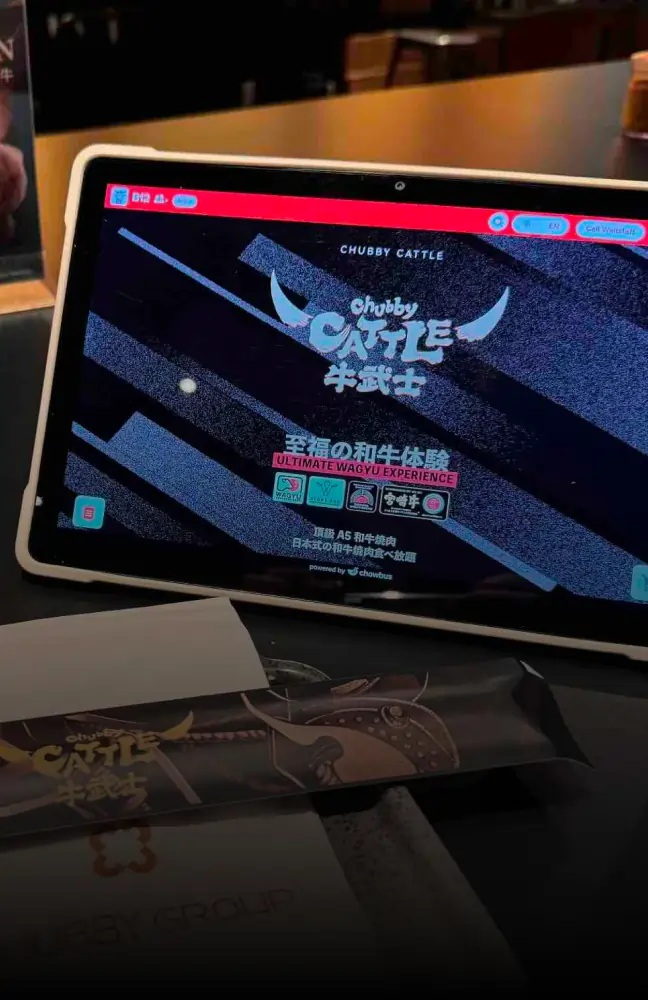
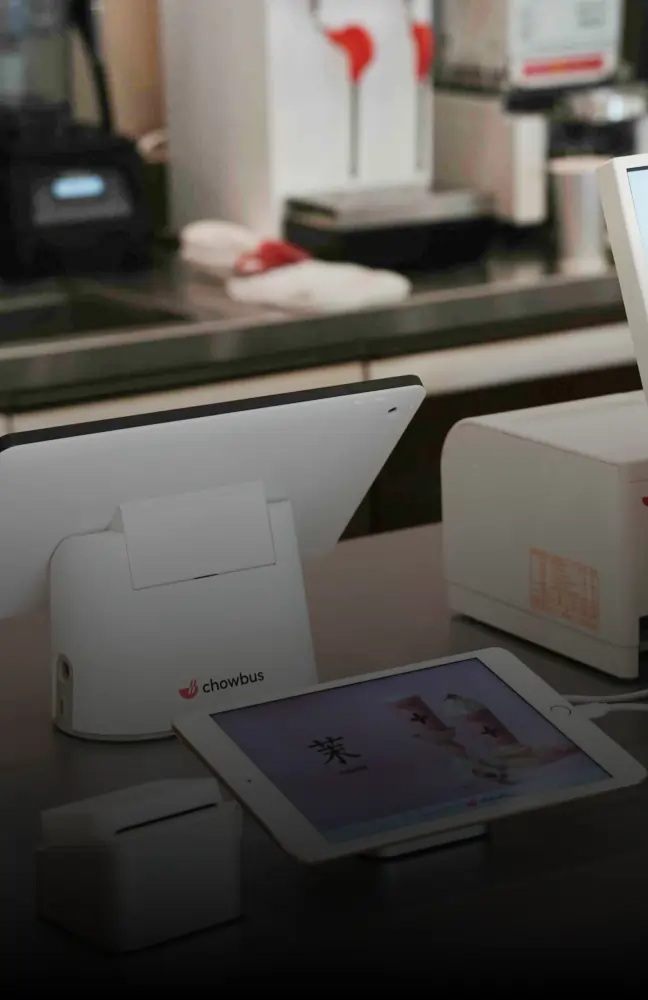
That specificity gives Chowbus a position in a crowded market. Its customer examples include Chubby Cattle, Molly Tea and Sushi Taku. The attraction is easy to understand: an operator can look at the product and recognize the restaurant, rather than spend the demo translating the restaurant into the product’s assumptions.
The customer stayed. The business changed.
Linxin Wen and Suyu Zhang founded Chowbus in Chicago in 2016. Wen became CEO; Zhang became CTO. The original business helped diners discover independent Asian restaurants through curated delivery and food photography. One useful flourish let people bundle dishes from several restaurants into a single delivery. Dinner could accommodate disagreement without demanding several delivery bills.
In July 2020, Chowbus announced a $33 million Series A, led by Altos Ventures and Left Lane Capital. It reported 700% revenue growth over the previous year. Another $30 million followed that October. The delivery company had momentum, capital and a recognizable constituency.
It also had a serious setback. Check Point’s October 2020 security bulletin reported a breach involving more than 400,000 customer records, including contact information and home addresses. That belongs in the history of the business. It does not establish why the later pivot happened.
Chowbus’s own 2025 account of its reinvention points elsewhere: promotions and fee structures in delivery were undermining the restaurants it wanted to help, while in-store operations remained underserved. The account is retrospective and self-interested, but the sequence is concrete. Chowbus entered restaurant management software and POS in 2022. In January 2024, Fantuan bought its delivery business.
The acquisition announcement describes a delivery-business sale and a strategic partnership. It also says Chowbus had brought more than 1,000 restaurants onto its POS within a year. That distinction matters. Fantuan acquired the delivery operation; Chowbus continued developing the software business. A sale of one business line is easy to mistake for the disappearance of the company.
Stop typing the same dinner twice
The daily proposition is to put restaurant orders into a shared system. A server uses a handheld device. A guest uses a tablet or QR code. A delivery customer orders elsewhere. The kitchen needs a coherent queue, not a seminar on which channel produced each ticket.
Chowbus’s delivery integration imports orders and synchronizes menus and store status across supported services, including DoorDash, Uber Eats, Grubhub and Fantuan. Marking a dish unavailable centrally can update connected channels. The gain is practical: fewer screens to monitor and fewer orders to copy manually.
The POS platform also manages menus, staff permissions and reporting. It runs on iOS devices and advertises offline support. Chowbus describes multilingual assistance, menu setup and training as part of onboarding. For an owner with a room full of guests, the ability to get help in a familiar language is part of the product’s usefulness.
For groups, multi-location tools add store and headquarters reports, centralized controls and memberships that work across branches. The problem changes with the second location. An owner needs to compare stores and manage shared benefits without turning every branch into a separate administrative island.
A quote is a better start than a sticker price
Chowbus’s business model combines recurring software, hardware and payment processing. Its pricing page offers Starter, Efficiency and Growth tiers with custom quotes. Hardware, restaurant size, add-ons and processing terms affect the bill. Qualified restaurants may receive $0-upfront hardware; that describes an upfront arrangement, not a promise that the entire system costs nothing.
The kiosk page lists a price of around $1,000, with discounts and switching vouchers available. These are published starting points, not a complete restaurant budget. A useful comparison adds software, devices, processing, installation and integrations over the same period. It also asks what happens when equipment needs replacement or a menu needs rebuilding.
Chowbus lists Toast, Square, Clover and Menusifu as alternatives. Its own comparison table is a vendor’s sales argument. The more useful test is a difficult order: split a check, change a modifier, mark an item sold out and send the result to the correct kitchen station. A short-menu café may place less value on AYCE rules or multilingual workflows than a hotpot group does. Fit should show up in service.
Now the phone speaks to the kitchen
In September 2026, Chowbus and Maple announced multilingual voice ordering for merchants in the United States and Canada. The integration supports English, Mandarin, Cantonese and Korean. Maple pulls menu data from Chowbus and sends completed orders into the POS and kitchen workflow.
The useful part is the connection. A voice agent must understand the modifiers, current prices and availability that the restaurant actually uses. Otherwise, an answered phone merely creates another task for the staff. Maple’s published Pro pricing, which includes POS phone ordering, is $350 monthly or $220 per month billed annually. That is a separate partner price, not Chowbus’s total subscription.
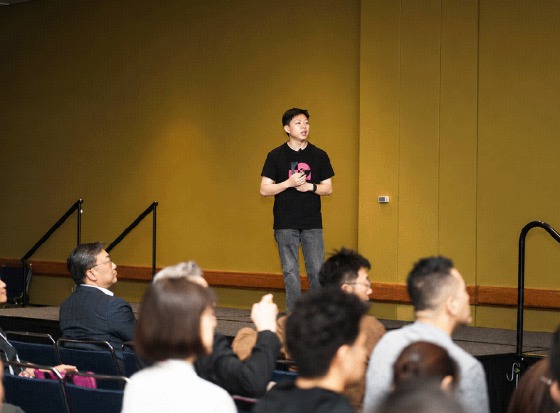
“an AI Digital Worker that can proactively take action”Linxin Wen, Chowbus’s May 2026 launch recap
The ambition extends beyond calls. Chowbus’s March 2026 funding announcement put an $81 million Series E behind expansion into AI-supported marketing, accounting, supply ordering and other restaurant services. Prysm Capital and Left Lane Capital led the round. These wider service plans should be read as a direction of travel, rather than proof that every proposed service is already delivered.
March 2026
transaction volume*
*Company-reported at the March 2026 announcement. Transaction volume is restaurant spending processed, not Chowbus revenue.
That announcement also reported $120 million in annual recurring revenue. ARR, processed spending and funding measure different things; placing them in the same sentence does not make them interchangeable. Together, the reported figures describe the scale of Chowbus’s bet on becoming more deeply involved in restaurant work.
What another founder can borrow
The transferable move is to study a customer group until its exceptions become obvious. Chowbus’s delivery years put it near independent restaurants. Its software business addresses details those relationships made visible: repeated order entry, service rules, language and the coordination between counter and kitchen.
An operator can borrow the same discipline. Find the task staff repeat or correct during a rush. Measure the time it consumes. Test one connected workflow with the real menu before changing the whole room. If ordering becomes faster but preparation remains the bottleneck, a kiosk alone will not solve the queue. If guests need help with screens, keep a workable human route.
Chowbus’s next act will be judged in those ordinary moments. The correct sugar level. The permitted second round. The phone order that arrives where the cook can see it. A restaurant can forgive a software company for being unfashionable. It has less patience for being wrong about dinner.
Take it to the table
Explore Chowbus, its plans, restaurant blog and latest announcements. Follow the company on LinkedIn, X and Facebook, or visit its GitHub organization.
Watch: Chowbus’s all-you-can-eat POS demo ↗