At noon, the philosophical difference between “cloud-native” and “edge-enabled” becomes a line of hungry people staring at a frozen register. The network coughs. A payment stalls. A digital order fails to reach the kitchen. Somewhere in the back office, three dashboards insist everything is fine. Qu, a restaurant-software company based in Arlington, Virginia, built its pitch around this small catastrophe: lunch must continue even when the internet does not.
The company sells an enterprise commerce platform for quick-service and fast-casual chains. Point of sale is the front door, but behind it sit kiosks, drive-thru orders, online ordering, delivery integrations, kitchen displays, menus, payments and reporting. Qu's bet is that these are not separate products. They are one journey - take the order, make the order, serve the order - and they work better when they share the same data model.
That sounds like sensible housekeeping. At chain scale, it is closer to urban planning. A burger can have different prices, modifiers, availability and tax rules by location and channel. A franchisee needs local control; headquarters needs consistency. DoorDash, the brand app and the counter terminal all need to describe the same lunch to the same kitchen. Every extra bridge between systems becomes another place for the order to fall into the river.
The old register failed before the new ideas could start
Jack in the Box offers the cleanest view of the problem. Its point-of-sale system was roughly 20 years old. It could ring up food, but digital ordering, real-time analytics and AI had arrived in a different century. Menus were fragmented, data lived in silos, training took too long and outages threatened the revenue-producing core of more than 2,100 restaurants.
What failed first was not necessarily the physical register. It was the chain's ability to change. A promotion or menu update that should take hours could become a slow coordination exercise. New channels added more seams. The system still worked in the narrow sense, but it imposed a tax on every new idea.
Qu and deployment partner World Wide Technology replaced that foundation across the Jack in the Box system in 15 months. The restaurant company says kiosk check averages rose 16 percent, staff training became 50 to 60 percent faster and locations could continue operating through network or cloud outages. Those figures come from the customer and vendor, not an independent audit, but they are specific enough to show where enterprise buyers expect a return: more revenue per order, less labor spent learning the screen and fewer sales lost to failure.
“We deployed across 2,100 restaurants in just 15 months. That's an incredible achievement.”Doug Cook, CTO, Jack in the Box
The order journey, treated as one system
Cloud brains, local reflexes
Qu's technical distinction is easier to understand through a human body than a cloud diagram. Central systems provide the memory and broad view; the restaurant keeps enough reflexes on site to move without asking permission from a distant server. Qu calls the current edge platform Qube. Terminals and devices can communicate with the public cloud, with one another and with an in-store computing layer. If connectivity breaks, the location can keep its POS, kiosks and kitchen display system operating and can process payments offline.
In 2025 Qu said Qube delivered 99.99 percent uptime. Taco John's reported 80 percent faster order routing in its deployment. DoorDash provided a different test: its Preferred Integrations Program measured Qu at a 99.8 percent order-success rate, more than three times the industry average cited by Qu, and gave it the program's highest rating. Reliability is not an ornamental feature here. A failed digital order can charge a guest, confuse the kitchen, trigger a refund and lose a customer in one neat bundle.
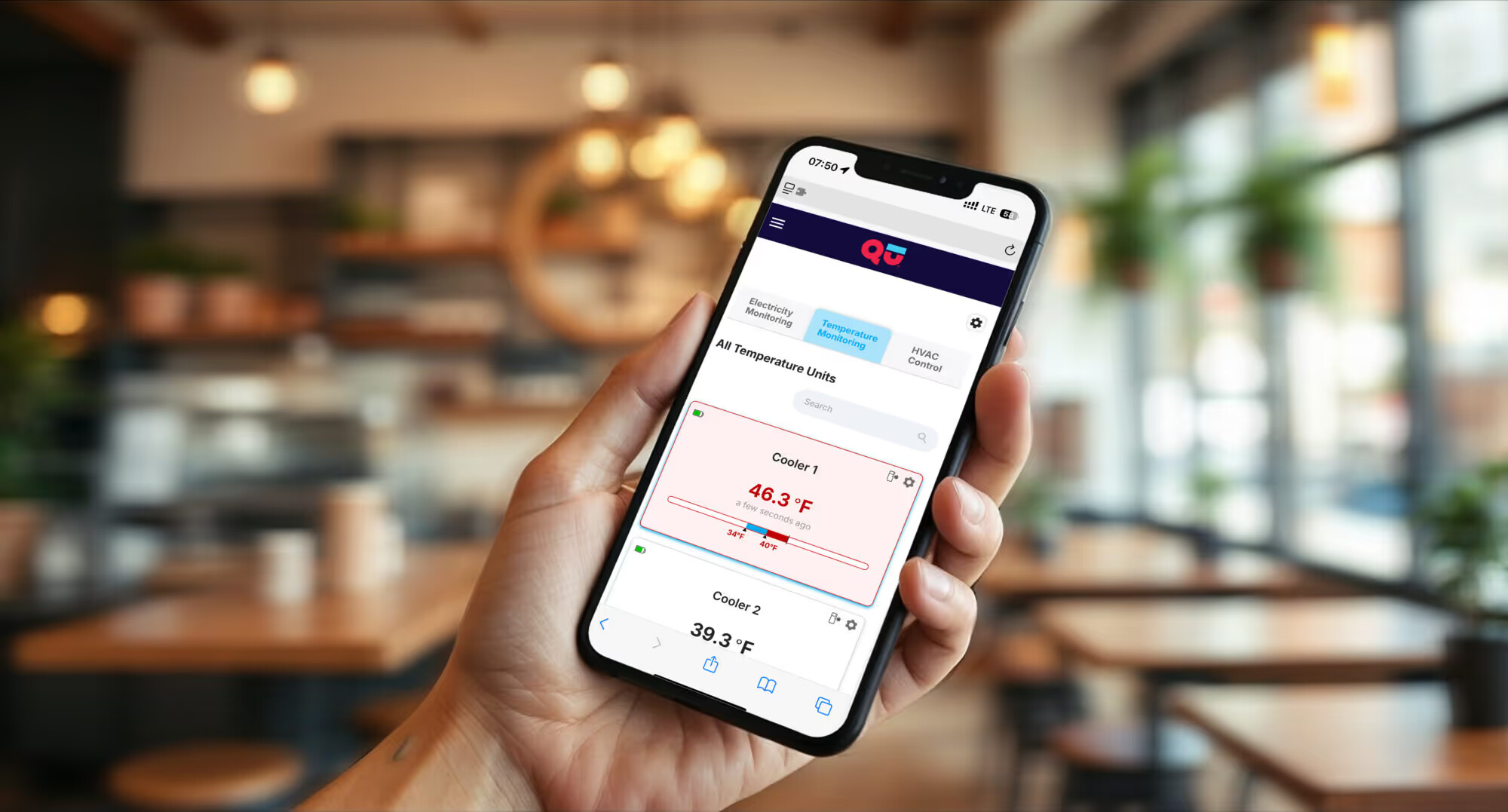
The edge strategy also creates a beachhead for less urgent work. Qu's Smart Kitchen uses IoT sensors and equipment data to monitor temperatures, energy use and maintenance needs. The company says energy optimization can reduce utility costs by up to 15 percent. Voice ordering, vision systems, predictive prep and tailored upsells can run closer to where their data is produced, with less latency and less dependence on a flawless connection.
The customer is a chain, not a corner café
Qu began in 2012 as Gusto POS - no relation to the payroll company - and later sharpened its identity around enterprise QSR and fast casual. That choice matters. Toast and SpotOn serve broad restaurant markets; Oracle MICROS and NCR Aloha bring long enterprise histories; PAR Brink is a close cloud-POS alternative. Qu chose a narrower swim lane: multi-unit brands whose order volume, franchise structures and channel sprawl make a generic small-business register buckle.
The named roster includes Jack in the Box, Shake Shack, Dave's Hot Chicken, Golden Corral, Blaze Pizza, Taco John's, Golden Chick and Roy Rogers. GoTo Foods selected Qu as the single POS platform for Auntie Anne's, Cinnabon, Carvel, Jamba, McAlister's Deli, Moe's Southwest Grill and Schlotzsky's - seven brands inside a portfolio of more than 6,700 locations. One franchisee case study claims a store installation took 90 minutes, staff learned the system in 10 minutes and daily service calls fell from 10 to zero.
What changed buyers' minds was not a prettier terminal. It was the mounting cost of keeping the old estate. Downtime stole transactions. Manual menu work consumed headquarters time. Middleware made digital orders brittle. Slow reporting sent managers to bed wondering what happened that day. Once those costs were counted together, replacing the core became less frightening than preserving it.
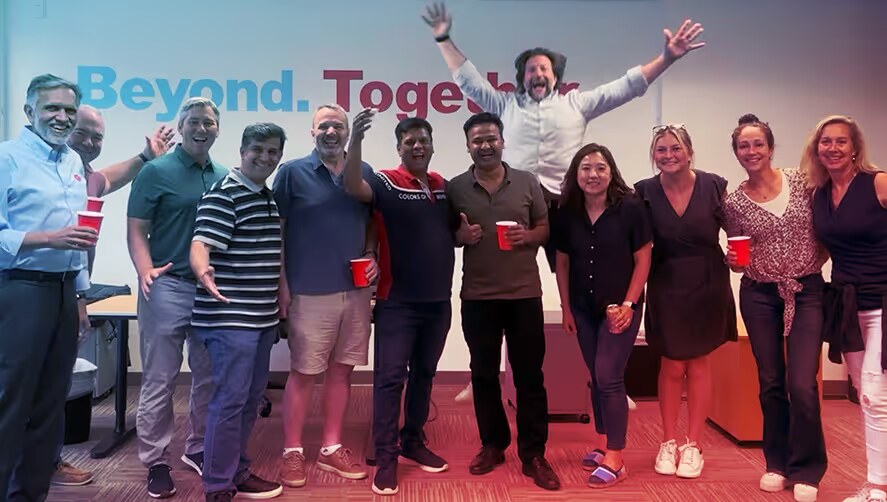
Qu says its roughly 200-person, mostly virtual team operates by four values: courage, agility, responsibility and excellence. The last two do extra work in its marketing. Restaurants are not test labs after 11:30 a.m.; a clever release that destabilizes the line is a bad release. Niko Papademetriou, who joined as the third employee in 2014, was formally named co-founder by the board in 2023 - a rare bit of corporate housekeeping that acknowledges company-building does not always fit the original cap-table story.
The bill is private; the economics are not
Qu does not publish list prices. This is negotiated enterprise software, where the actual cost depends on locations, modules, hardware, installation, support and payments. The absence of a public sticker price is frustrating but normal in this tier. A buyer should model total switching cost, including parallel systems, store downtime, menu conversion, training and franchisee support - then compare it with the ongoing cost of failed orders, manual reconciliation, third-party commissions and delayed changes.
The company makes money from software subscriptions and enterprise services, and its 2026 launch of Qu Pay adds payment-processing economics. Qu Pay combines processing, guest identity, order intelligence and access to working capital. Qu says onboarding can be up to 75 percent faster and that as many as 65 percent of legacy transactions provide no usable guest identity. By tying a payment to its order, location, channel and guest, the processor becomes part of the restaurant's data system rather than a utility bolted beside it.
Investors have funded the expansion. Public databases report a $2.9 million Series A in 2014 and a $10 million Series B in 2019. In 2023, Enlightened Hospitality Investments, affiliated with Union Square Hospitality Group and co-founded by Danny Meyer, joined Cota Capital, NRD Capital and Bobby Cox Companies in an undisclosed investment. Qu reported 112 percent recurring-revenue growth and 125 percent site growth in 2024. It ranked No. 855 on the 2026 Inc. 5000. The company remains private, and its valuation and audited revenue are not public.
Pick a customer with expensive downtime. Map one complete, mission-critical workflow. Give every channel the same underlying object. Preserve partner choice through APIs. Measure failure rates in production, not applause in demos.
AI arrives after the plumbing
Qu's timing is convenient. Restaurant leaders want AI, but their data is often too fragmented to support it. Qu's own 2026 survey of restaurant operators found 73 percent were investing in AI or planned to, while only 5 percent reported measurable operational value so far. The gap is a sales argument for the foundation Qu already built. Forecasting prep, recognizing a repeat guest or suggesting an upsell is easier when the menu, order and payment do not disagree about what happened.
There are conditions where the approach is a poor fit. A single independent café may not need an enterprise data model, edge appliance or multi-brand controls; a simpler POS can be cheaper and faster. A chain unwilling to standardize menus, identifiers and operating processes will merely centralize its mess. Edge resilience does not excuse weak store networks, payment controls or disaster plans. And an API-friendly platform still requires disciplined governance: freedom to choose partners can recreate the fragmentation Qu was hired to remove.
The larger risk is expansion. Payments, kitchen equipment, AI, analytics and ordering are each substantial businesses. As Qu adds them, it must keep the promise that made the company interesting: fewer seams and less stress. Hiring Brink POS founder Paul Rubin as chief product and technology officer in August 2026 gives that problem to someone who has watched restaurant platforms mature before.
The useful thing about Qu is that its vision can be tested at 12:05 p.m. Does the order arrive? Does the kitchen see it? Can the guest pay? Can the manager change the menu without calling three vendors? The company has wrapped a grand phrase - intelligent commerce - around a very grounded standard. When the Wi-Fi dies, the fries should not.