credit-unions
(18)
Chandan Pal Makes a Human Case for Smarter Credit
A computer-science engineer turned marketing chief, Pal has spent a decade translating the machinery of underwriting into a plain-language argument about judgment, access and trust.

Keith Floen Has Spent Four Decades Keeping the Bank’s Name on the Card
Long before fintech learned to speak fluent API, Keith Floen was asking a stubbornly human question: does a card program make a bank’s customer relationship stronger? His career is a quiet history of how that question survived four decades of new technology.
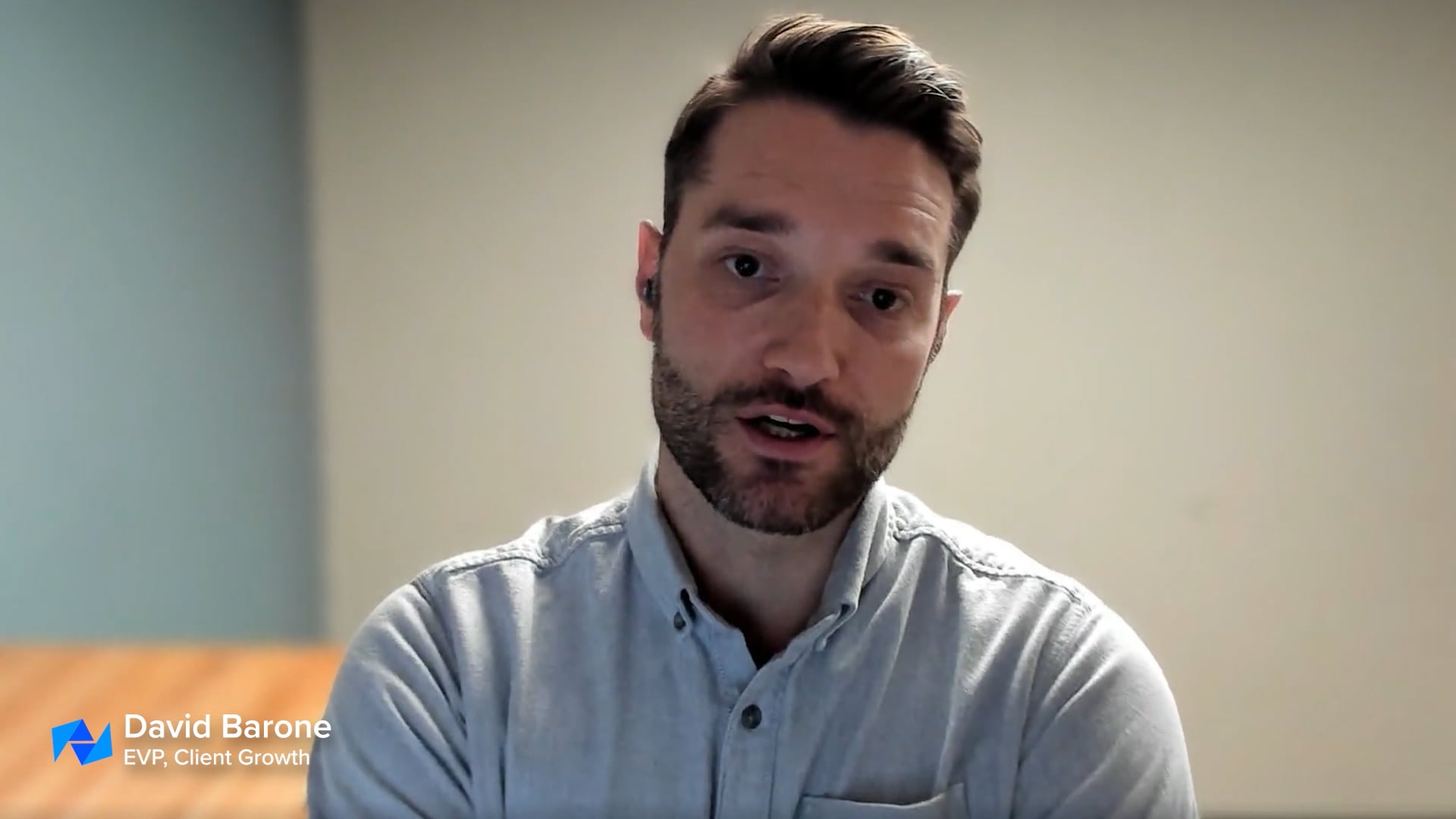
David Barone Is Turning Banking Strategy Into a Team Sport
The former Syracuse rower built a career around coordinated motion - first in advertising, then in financial services. At Nymbus, he is making the case that modern banking wins through accountable partnerships, focused growth and technology that can carry its share of the load.

Brian Otte Has Spent 25 Years Learning What Banks Really Buy
Before he led sales and marketing at Jack Henry, Brian Otte audited networks, helped build a security startup, lived in six countries, and learned a durable lesson: in banking technology, service is part of the product.

Arcady Lapiro’s Second Act Is a Box of Banking Legos
After helping build a European digital bank through the dot-com bust and 9/11, the French-born founder is trying to give community banks a way around the software they cannot afford to replace.

Keith Kelly Has Spent Nearly 18 Years Turning the Refinance Into a Button
The FINOFR co-founder has carried one stubborn idea through a patent, two rebrands and several interest-rate cycles: a loan should be able to adapt without making its borrower start over.

Jennifer Addabbo Built a Fintech Consultancy by Making the Vendor Sit on the Other Side of the Table
She spent years selling financial technology. Then she crossed the table, built Engage fi around the buyer, and learned that the most useful growth strategy begins with people.

Ron Daly Put a Bank Vault Inside the Browser
After 20 years as a financial-institution CFO, Ron Daly found his second act in an unglamorous corner of fintech: the sensitive document nobody should send by email.

Gregory Feniak Is Making the Credit Card Feel Local Again
The Calgary payments executive has spent two decades turning back-office complexity into products credit-union members can actually use. His latest chapter carries the same collaborative instinct from the card network into the community.

Danial Jameel Is Building AI for the Work Banks Never Put in the Brochure
After turning campus confusion into Ready Education, Danial Jameel reunited with longtime collaborators to tackle a less visible maze: the manual back office of banks and credit unions.
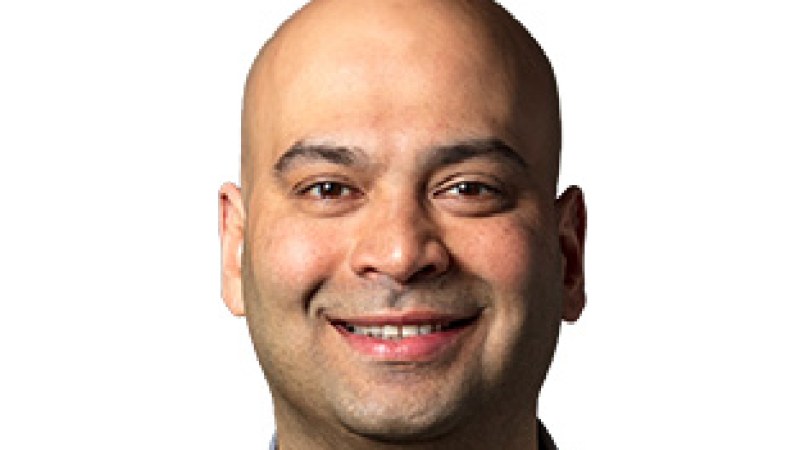
Milind Borkar
Milind Borkar is the founder and CEO of Illuma, a Plano, Texas company that uses passive voice biometrics and synthetic-voice detection to authenticate callers and stop phone-channel fraud at credit unions and community banks. He holds a PhD in electrical and computer engineering from Georgia Tech, is named on 21 patents, and spent a decade at Texas Instruments launching more than 50 products before founding Illuma in 2016.

Shawn Melamed
Shawn Melamed is the co-founder and CEO of Spiral, a New York fintech that plugs charitable giving into the banking apps of credit unions and community banks. Before Spiral he ran Morgan Stanley's Technology Business Development and Innovation Offices and built two prior fintech companies, StrikeNET (sold to TMX Group) and Correlix. He was named one of The Financial Technology Report's Top 50 Fintech CEOs of 2024.
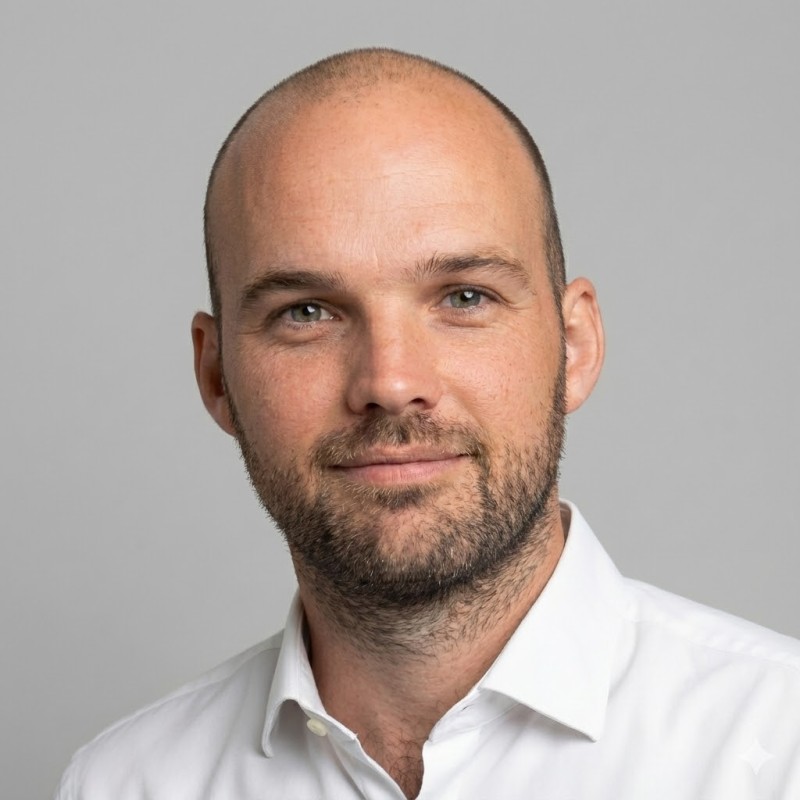
Andreas Wallendahl
Andreas Wallendahl is a co-founder and COO of Tenet, a New York fintech that makes electric-vehicle ownership cheaper by rewiring how EV loans get made. An MIT-trained engineer and former McKinsey consultant who helped build businesses inside Ethereum studio ConsenSys, he now partners with credit unions, green banks and asset managers to originate lower-cost EV financing, and bundles free smart-charging so customers save while they drive. Tenet has raised roughly $73 million in equity plus more than $100 million in committed loan funding.

Jordan Mackler
Jordan Mackler is the CEO and Co-Founder of ScribeUp, an AI-powered embedded subscription management platform helping banks and credit unions give their members full visibility and control over recurring bills. A University of Michigan and MIT MBA graduate who left his MBA program mid-stream to build ScribeUp, Mackler has grown the company from idea to a $3M seed-backed fintech with partnerships across a growing network of credit unions - turning the mundane problem of mystery subscription charges into a strategic retention weapon for financial institutions.
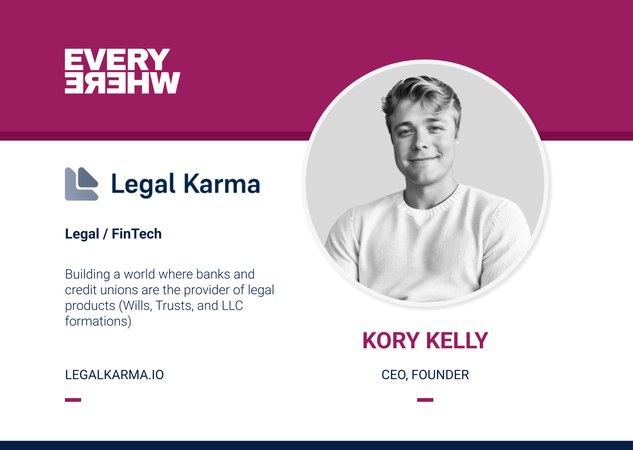
Kory Kelly
Kory Kelly is the co-founder and CEO of Legal Karma, an Austin-based legal tech company that lets banks and credit unions sell wills, trusts, and powers of attorney to their members as easily as opening a checking account. A farm-town Texan turned university lecturer turned founder, Kelly has grown Legal Karma from a rejected idea pitched to skeptical lawyers into a B2B2C platform powering estate planning for over 100 financial institutions.

Shanthi Shanmugam
Shanthi Shanmugam is the co-founder and CEO of Casap, a New York fintech that uses AI to automate payment disputes, chargebacks, and first-party fraud detection for banks, credit unions, and fintechs. A UC Berkeley electrical engineering and computer science graduate, she cut her teeth as a product manager at Facebook and spent roughly five years at Robinhood, where she launched the first crypto trading feature and later ran customer-care products. Watching back-office breakdowns erode consumer trust convinced her the dispute process was broken, so she reconnected with a former Facebook colleague, Saisi Peter, and started Casap in 2023. In August 2025 the company raised a $25M Series A led by Emergence Capital, bringing total funding to $33.5M.

Christopher Coleman
Christopher Coleman is the Co-Founder and Chief Product Officer of Clutch (withclutch.com), a San Francisco-based fintech company transforming how credit unions compete in the digital age. A MIT mechanical engineering graduate and Stanford MBA, Coleman co-founded Carlypso (a Y Combinator-backed used-car marketplace sold to Carvana in 2017) before joining Carvana as Senior Product Director and then launching Clutch in 2020 with co-founder Nicholas Hinrichsen. Clutch has raised $106 million in total funding, including a $65M Series B in January 2025 led by Alkeon Capital with participation from Andreessen Horowitz, and now serves 150+ credit unions - including 6 of the top 10 largest in the country - having facilitated over $10 billion in consumer loans and deposits.

Marshall Hayner
Marshall Hayner is the Founder and CEO of Metallicus, a San Francisco-based blockchain infrastructure company building compliant, regulation-forward digital banking tools for credit unions and financial institutions. A Bitcoin miner since 2009, Hayner pioneered social crypto payments with QuickCoin (the first Facebook-integrated Bitcoin wallet) in 2014, then spent a decade building Metallicus into the only blockchain company certified as a service provider for the Federal Reserve's FedNow instant payment rail. His company's flagship products - Metal Pay, Metal Blockchain, and the Digital Banking Network - sit at the intersection of traditional finance and decentralized infrastructure.