A mortgage has a peculiar talent for making adults feel as though they have been summoned to the principal’s office. There are forms, disclosures, appraisals, signatures and waiting. Then rates fall, the borrower wants a better deal, and the pageant begins again. Keith Kelly has spent much of his career arguing that the second ceremony is often unnecessary.
His answer is almost comic in its visual modesty: a button. Click it, accept the eligible rate or term, sign electronically, and keep the remaining life of the loan rather than beginning from year one. The borrower sees a small interface. Behind it sit servicing rules, financial-institution criteria, documents, identity checks and the unromantic machinery of lending. Simplicity, in this case, is complexity that has agreed to work backstage.
Kelly came to software by way of retail mortgage banking, not the usual founder pilgrimage through a dorm room. A public biography credits him with more than 29 years in the business and nearly two decades of homeowner education. He also hosted MyMortgageWatchDog on Washington radio station WMAL, a title with the charming subtlety of a flashing porch light. The recurring subject was closing costs: how homeowners could understand them and, where possible, avoid paying them again.
The patent before the company
The idea took legal form before it took corporate form. In November 2007, U.S. Patent No. 7,292,995 was issued with Kelly named as inventor. Its title, “System and method for providing compensation to loan professionals,” does not exactly beg to be adapted into a musical. Its underlying mechanism is livelier: it describes a modifiable mortgage, a borrower’s election to reset an interest rate, and compensation tied to the servicing income and later triggering events.
The economic design matters because a friendlier borrower experience survives only if the other participants have a reason to support it. The borrower can improve a qualifying loan without a conventional refinance. The lender can retain the relationship and servicing stream. The originator can participate in recurring economics. Kelly was not merely deleting paperwork. He was trying to rearrange incentives so fewer people would miss it.
In December 2008, Kelly co-founded Mortgage Harmony with Bob Catalanotto. By the end of 2009, the company announced that 1st Commonwealth Bank of Virginia would become the first bank to sell its Harmony Loan. In 2012 and 2013, the team demonstrated the product at Finovate. The pitch was remarkably concrete: a consumer-initiated rate change, an electronic signature, no new credit check or underwriting, and no traditional closing.
At FinovateSpring 2013, the company listed eight employees and 12 customers. This was not a mass-market app bypassing the banking system. It was software made to live inside the institutions that already owned the loans. GTE Financial was an early customer. PenFed later white-labeled the experience as One Click Rate Reset Protection for its members. The button wore the lender’s uniform.
The product kept outgrowing its name
Mortgage Harmony was a good name until mortgages stopped being the whole plan. In a January 2014 interview, Kelly said the company was building an auto-loan product and expected to launch it with an existing partner. By December, Mortgage Harmony became Rate Reset. Kelly explained that the technology could apply to auto and personal loans, as well as certificates of deposit. The new name described the mechanism rather than the first market.
Rate Reset then expanded around the moment before and after a loan. In 2019, it collaborated with TransUnion on instant digital prequalification, combining the platform with credit data and risk capabilities. A consumer could check eligible rates and terms without a hard inquiry affecting the score. Kelly called the product The Button. One begins to suspect he has little patience for feature names requiring a semicolon.
By 2023, Rate Reset had become another undersized label. The company rebranded as FINOFR, pronounced “fin-off-er” and shortened from Financial Offer. The shift made room for instant offers, acquisition, retention and post-close products. Its newer work with Allied Solutions and Securian Financial has included digital offers for vehicle protection, debt protection, preapprovals and resets across auto loans, personal loans and credit cards.
The three names form a tidy record of how a founder learns. Mortgage Harmony named the original beachhead. Rate Reset named the action. FINOFR names the broader job: show a person a financial option that the institution is prepared to honor, then make accepting it less of an expedition.
There is a second lesson in the sequence. Each expansion stayed adjacent to a decision the institution already understood. Reset an existing balance. Prequalify a member. Add protection after an auto purchase. The company did not ask a credit union to become a different species. It asked the credit union to turn more of its existing rules into immediate, visible choices. That is slower than simply announcing a consumer app, but it is also how an interface gains permission to touch a loan.
Friction is not the same as caution
Financial software has an awkward assignment. It must remove effort without removing judgment, and speed up access without throwing open the door to fraud. Kelly’s public comments about FINOFR’s identity-verification layer reveal the distinction. The company asks for a mobile number and date of birth at the start, then verifies the device is in the applicant’s possession before letting the application proceed.
In one case described by verification provider Prove, a credit union’s instant-prequalification page received more than 100,000 bot hits. Kelly said none advanced beyond the first layer. The anecdote turns the usual fintech slogan inside out. A good front door can be both quick for a person and firmly locked to a machine pretending to be one.
The latest rate cycle has given the original product fresh relevance. In January 2026, an episode of the Chrisman Commentary podcast reported that FINOFR had reset more than $1.33 billion in mortgages during the previous 120 days, across 1,139 transactions. The company reported a consumer completion time under 90 seconds and a 90 percent mortgage retention rate. These are FINOFR’s figures, but they neatly express the business case Kelly has made since the beginning: the customer saves a process, and the lender saves a relationship.
A button meets the bond market
The hardest obstacle is not always interface design. In 2024, Kelly signed FINOFR’s response to a Consumer Financial Protection Bureau request for information about mortgage closing costs. The filing argued that the Harmony Loan had performed well in financial-institution portfolios but faced limits in the secondary mortgage market, where existing investment structures constrained liquidity for the alternative.
This is where the friendly yellow button runs into the less photogenic architecture of American housing finance. A product can please borrowers and work for a credit union’s portfolio yet remain difficult to scale if investors cannot comfortably buy the resulting loans. FINOFR said it was working with partners on a stronger incentive structure and wider secondary-market acceptance.
The useful founder lesson: start with a painfully specific transaction, remove its avoidable steps, then follow every remaining constraint. Eventually the obstacle may be a form, a core-system connection, an identity check or an entire capital market. The customer still experiences all of them as waiting.
Kelly’s ambition, as expressed across interviews and company statements, is equal access to financial opportunities through a secure, self-service experience. It sounds broad. His career makes it tangible. Access can mean discovering an eligible offer. It can mean keeping the remaining term of a loan. It can mean avoiding another set of closing costs. Freedom occasionally arrives wearing the plain clothes of administrative relief.
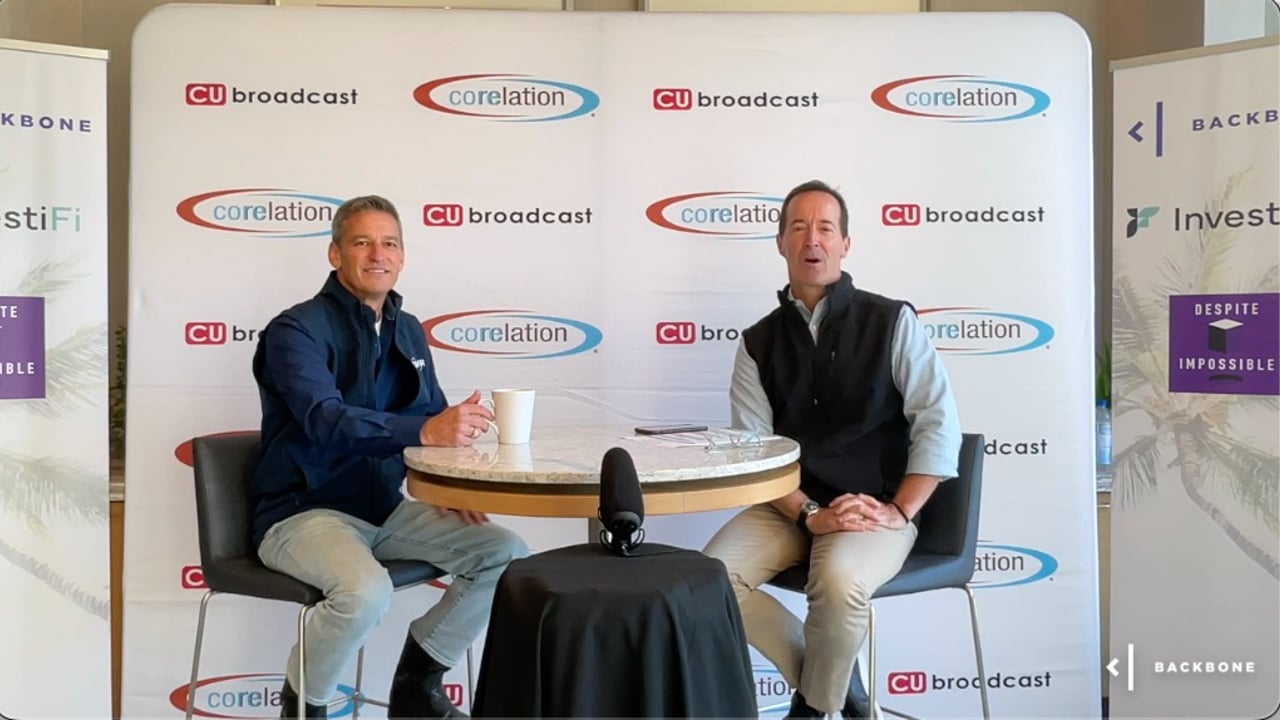
In a 2025 CUbroadcast conversation, Kelly looked back at the reset product’s early difficulties, discussed the newer products around it, and teased future collaborations. There is an instructive lack of finality here. He did not solve lending in 2007 when the patent arrived, in 2008 when the company began, or in 2023 when the latest name went on the door. He kept narrowing the distance between an institution’s “yes” and a customer’s ability to use it.
The button is therefore less a piece of interface furniture than a standard. If an eligible financial action can be secure, understandable and quick, why should it remain slow? For nearly 18 years, Keith Kelly has been asking lenders that impolite little question. The paperwork has yet to produce a convincing reply.